Update March, Once again painters' pottery.
Once again painters' pottery, an article that by now has become virtually extinct. With a few exceptions, it has become almost impossible to find. For this month, on the doorsteps to Spring, we like to show ceramics for social gatherings, sake bowls and bottles, bowls, plates and saucers.
Taste them (with your eyes) even if it is just for joy.
Noro Kaiseki (1747-1828)
& Nanki Otokoyama
Nichôsai (1751-1802)
Nukina Kaioku (1778-1863)
Shiokawa Bunrin (1801-1877)
Tomioka Tessai (1837-1924)
Hirao Chikka (1856-1939) & Hakuun
Ueda Tangai (1863-1939) & Hakuun
Umemura Keizan (1866-1934)
& Saitô Kairaku
Nakajima Kahô (1866-1939)
Matsumoto Shigenobu (1864-1950)
Takahashi Dôhachi V (1869-1914)
Hattori Gorô (1871-1930)
Yamamoto Sekisô (1872-1944)
Takahashi Dôhachi VI (1881-1941)
Shimizu Kôshô (1911-1999)
Yasuhiro Okuda (1920-1999)
Tanomura Chokunyû (1814-1907)
& Kinkazan
Bokusei (dates unknown)
Landscapes and views
Last month we added a new section: “Monographs” to our website. It has been well received. With this section we intend to publish monographs of Japanese painters. Chō Gesshō (1772-1832) was the first. The next one will be coming soon …
‘Monographs’ can be found on the website in the left-hand button bar under ‘Gallery’, and can be scrolled down. If you would like to have them as a booklet, just let us know. We will send you the PDF file, which you can print (or have printed) double sided, staple the pages in the centre and fold it.
Now that global warming seems to feel at home here and the weather is getting warmer, spring is also arriving sooner than before and so we will be able to enjoy the outdoors, now that we have left January.
But first things first:
Landscapes and views
Kanô Tan’yû (1602-1674)
Soga Shôhaku (1730-1781)
Minagawa Kien (1734-1807)
Ki Baitei (1734-1810)
Noro Kaiseki (1747-1828)
Uragami Shunkin (1779-1846)
Sō Aiseki (c.1780-1837)
Nogiwa Saichô (1773-1849)
Tanomura Chokunyû (1814-1907)
Fujimoto Tesseki (1817-1863)
Shinten'ô (1823-1885)
Sekiguchi Rôun (1836-1901)
Okuhara Seiko (1837-1913)
Himejima Chikugai (1840-1928)
Nagasaka Sekitai (1846-1925)
Hirano Taikei (1897-1945)
Ogawa Kojo (1884-1973)
A beautiful year of the horse
In this unhealthy and unhappy world
against the tide Oranda Jin wishes you
a healthy and happy and with new acquisitions
a beautiful year of the horse.
Maruyama Ôkyo (1733-1795)
Hara Zaichû (1750-1837)
Matsumura Go Shun (1752-1811)
Taikô Sôgen (1772-1860)
Tanaka Nikka (1773-1845)
Kiyomizu Rokubei II (1790-1860)
Ôtagaki Rengetsu (1791-1875)
Ônishi Chinnen (1792-1851)
Yokoyama Seiki (1792-1864)
Shiokawa Bunrin (1801-1877)
Murase Taiitsu (1803-1881)
Itô Tôzan I (1846-1920)
Zengoro Eiraku XIV (1852-1927)
Taniguchi Kôkyô (1864-1915)
Nakajima Kahô (1866-1939)
Tsuji Kakô (1870 -1931)
Okutani Shûseki (1871-1936)
Kawai Gyokudô (1873-1957)
Ikegami Shûho (1874-1944)
Konoshima Ôkoku (1877-1938)
Takahashi Dôhachi VI (1881-1941)
Kondô Kôichiro (1884-1962)
Almost winter already
Such a last month, the end of autumn, almost winter already, looking ahead to more light,
indoors by the stove, for those who still have a stove, pictures on the wall.
Homesickness, nostalgia, looking back to when it was still light: back then it was still light...
Maybe browsing at Oranda Jin will help a little.
We wish you brightness, a Merry Christmas and, when the time is there, a smooth transition into the New Year.
Noro Kaiseki (1747-1828)
Sengai Gibon (1750-1837)
Watanabe Kiyoshi (1778-1861)
Shibata Gitô (1780-1819)
Ônishi Chinnen (1792-1851)
Ôhara Donshû (1792-1857)
Hakurin (c.1800)
Kishi Renzan (1804-1859)
Shibata Zeshin (1807-1891)
Doi Gôga (1817-1880)
Takamori Saigan (1847-1917)
Shimomura Izan (1865-1949)
Nishiyama Suishô (1879-1958)
Nakajima Kahô (1866-1939)
Suma Taisui (1868-1955)
Hashimoto Dokuzan (1869-1938)
Katô Eishû (1873-1939)
Mio Goseki (1885-1952)
Kimura Kyôen (1885-1957)
On the sidelines of the PAN
Oranda Jin started November on the sidelines of the PAN showing a nice and varied group of paintings.
Now that the PAN has ended, we have added 11 new paintings to the previously selected 9 to complete the November update.
Enjoy the lot.
Maruyama Ôkyo (1733-1795)
Matsumura Go Shun (1752-1811)
Nagasawa Rosetsu (1754-1799)
Gan Tai (1782-1865)
Nishiyama Hôen (1804-1867)
Kita Kadô (1812-1879)
Yamaoka Tesshû (1836-1888)
Hashimoto Kaikan (1852-1935)
Hashimoto Dokuzan (1869-1938
Nakai Ikka (1869-1940)
Niwayama Kôen (1870-1942)
Okutani Shûseki (1871-1936)
Kawai Gyokudô (1873-1957)
Ikegami Shûho (1874-1944)
Yazawa Gengetsu (1886-1952)
Takahashi Chikunen (1887-1967)
Deiryû (1895-1954)
“Nantembô 1922”
Gotô Junichi (1948-..)
Nihonga landscapes
This month's topic is a traditional one: Japanese landscapes. Paintings from the early 20th century. Landscapes in the Nihonga, Japanese, style that, despite Western influences, seeks to innovate without becoming Westernised.
A mix of Japanese styles, not specifically Nanga, not specifically Shijô, Kanô, or Rimpa, but different. Hard to describe.
These painters are less well known in the West, but certainly standing out and generally not “small fry”.
Nagasaka Sekitai (1846-1925)
Nomura Bunkyo (1854-1911)
Irie Shikai (1862-1940)
Tachika Chikuson (1864-1922)
Shimomura Izan (1865-1949)
Nakamura Fusetsu (1866-1943)
Tsuji Kakô (1870 -1931)
Takebe Hakuhô (1871-1927)
Kawai Gyokudô, (1873-1957)
Kawakita Kahô (1875-1940)
Matsubayashi Keigetsu (1876-1963)
Odake Kokkan (1880-1945)
Mitsui Hanzan (1881-1934)
Hashimoto Kansetsu (1883-1945)
Kobayashi Shunshô (1888 -> 1926)
Hirai Baisen (1889-1969)
Hirano Taikei (1897-1945)
Japanese fan paintings
After a very nice and successful summer exhibition we kind of start a new year.
Important announcement. To our great regret, until further notice we are unable to ship to the U.S. Due to new US custom regulations and uncertainty about new tariffs. … We will keep you informed.
With this new start of this “season” we like to show fan paintings, with an introduction by Anna Beerens on Japanese fan paintings in the nanga style. The fans in this “show” also represent fan paintings from the Maruyama, Shijo and Kishi schools.
A certain independence of spirit
Japanese fan paintings
by Anna Beerens
The fan has been part of Japanese culture for some 1500 years. The uchiwa 団扇,
the round, flat fan with a handle, is of Chinese origin and was introduced in Japan during the sixth century. The folding fan (ōgi 扇), however, is a rarity in the history of cultural exchange between China and Japan: it is actually a Japanese invention! It developed in Japan during the seventh century and was subsequently exported to the Chinese mainland. The fan was (and, despite the introduction of air conditioning, still is) a highly valued tool during the humid and oppressive Japanese summers. The fact that traditional architecture provided little privacy probably also contributed to the popularity of what could be seen as a personal portable ‘screen’. A fan is intimate and revealing at the same time; it gives comfort and pleasure to the person who uses it, but it also divulges his or her tastes and circumstances. In Japan it has always been considered a powerful status marker and an ideal vehicle for display and expression.
Decorating a folding fan poses several challenges. The painter has to deal with – or tastefully ignore – its curved shape and the effect of radiance caused by the way it is mounted on its sticks. Furthermore, there should be a certain logic to the design when the fan is opened from right to left. A fan is not a hanging scroll or a ‘real’ screen; the painter can therefore use a lighter touch, be somewhat less aloof. On the other hand, the design should not be flimsy, but strong enough to give enduring satisfaction to the fan’s user and send ‘the right messages’ to the user’s environment.
Now, what would these messages have been in the case of a folding fan decorated in the nanga style? In order to answer this question we should first explore what nanga actually stood for. Literally the term nanga 南画 means ‘Southern painting’. It is a Japanese abbreviation of the Chinese nanzhong hua (南宗画, Jap. nanshūga), ‘painting in the Southern style’. It is important to realize that ‘Southern’ – and, for that matter, ‘Northern’ – does not refer to anything geographical. The use of ‘Southern’ and ‘Northern’ to describe two fundamentally different approaches to painting originated in the circle of the Chinese painter, calligrapher and art theorist Dong Qichang (1555-1636). In order to clarify the development of an ‘impressionist’ and a ‘realist’ style of painting, Dong and his friends used an analogy from the world of chan (禅, Jap. zen) buddhism that is summarised by the dictum: ‘sudden South, gradual North’ (南頓北漸, Chin. nandun beijian, Jap. nanton hokuzen). In the chan/zen tradition too this has little to do with actual geography, but refers to the two
different ways of reaching Enlightenment: either suddenly and unexpectedly, or gradually after long years of patient meditation. The art theorists of the Ming period (1368-1644) considered this an appropriate parallel to denote the difference between the painter who, on the spur of the moment, gave a highly individual and inspired rendering of his subject, and the painter who studied long and worked painstakingly in order to achieve a perfect likeness. Although the Ming theorists were aware that a rigid dichotomy was debatable, by and large they saw professional painters as the ‘Northern realists’, whereas educated officials for whom art was a leisure activity (文人, Chin. wenren, Jap. bunjin) were seen as the ‘Southern impressionists’. ‘Painting in the literati style’ (文人画, Chin. wenrenhua, Jap. bunjinga) became a synonym for ‘Southern-style painting’ (nanga).
In Japan the fall of the Ming dynasty in 1644 and the subsequent influx of a considerable number of Chinese refugees led to an upswing in the study of Chinese art and scholarship. The discussion and assimilation of the latest Chinese insights brought about an intellectual and creative outburst the resonance of which would be felt throughout the eighteenth century. The ideas of the Ming art theorists were part of it all. Many Japanese painters, both professionals and non-professionals, were inspired by the spontaneity and individuality of the Chinese ‘Southern-style’. They took the professional/amateur dichotomy in their stride; the leisured elite that the Chinese theorists associated with nanzhong hua did not exist in Japan anyway. What mattered was not whether one should or should not sell one’s work, but one’s artistic integrity – the importance of maintaining a certain independence of spirit. The fact that much of what the Japanese nanga painters did would not have been recognized as nanzhong hua by their Chinese counterparts did not bother them very much either. The Chinese example, whether properly understood or not, gave them creative force – a ‘new vision’, as Stephen Addiss put it. Significantly, they found their very own ‘Northern’ opposites in the artists of the Kanō and Tosa schools, who, it was felt, had become bogged down in empty formalism. The knowledge that these were the preferred styles of the shogun, the provincial lords (daimyō) and the imperial court gave an anti-establishment touch to their standpoint.
The user of a fine nanga folding fan would have it all to himself: the eloquence of brushwork and ink tones; the subtle use of colour; a landscape to explore (a glimpse of an idealized China) or the simple dignity of orchids or bamboo; a deeply personal rendering of familiar objects or an empathetic expression of a fleeting moment. At the same time the people around him could admire his modern, sophisticated taste – or condemn him for his daring. We can be sure that the messages of independence and individualism were registered and understood.
By the end of the eighteenth century the novelty and radicalism had worn off, but the individualism remained a hallmark of the nanga style. This is probably why it continues to fascinate today. The nanga folding fan has the additional attraction of its quaint and challenging shape. Its most enganging feature, though, must be that it could actually be held and be used and cherished.
1 Compare Lowe, Japanese Crafts, New York 1983, p. 54: “Perhaps the folding fan once gave the Japanese the same sense of security that dark glasses give to some people today”.
2 See Kurt A. Gitter, Japanese fan paintings from Western Collections, New Orleans, 1985 pp. 7-8.
3 For an extensive discussion of the development of the North/South dichotomy in China see Susan Bush, The Chinese literati on painting: Su Shih (1037-1101) to Tung Ch’i-ch’ang (1555-1636), Cambridge Mass., 1971, chapter 5.
4 Stephen Addiss, Japanese quest for a new vision, the impact of visiting Chinese painters, 1600-1900, Lawrence, 1986. Excellent information about the context and practice of eighteenth century nanga can be found in Felice Fischer & Kyoko Kinoshita, Ike Taiga and Tokuyama Gyokuran, Japanese masters of the brush, New Haven/London 2007.
5 See Yoshiho Yonezawa & Chu Yoshizawa, Japanese painting in the literati style, New York/Tokyo, 1974, chapter 6.
Settei (18th)
Haruki Nanko (1759-1839)
Oka Yûgaku (1762-1833)
Nagayama Kôin (1765-1849)
Tani Shun'ei (1772-1832)
Murakami Shôdô (1776-1841)
Uragami Shunkin (1779-1846)
Sô Kazan (1788-1872)
Nakajima Raishô (1796-1871)
Kumasaka Ransai (1799-1875)
Murata Kagen (.. -1849)
Shiokawa Bunrin (1801-1877)
Hashimoto Sesshô (1802-1877)
Fukuda Hankô (1804-1864)
Takahashi Kyôson (1805-1868)
Nakanishi Kôseki (1807-1884)
Shibata Zeshin (1807-1891)
Hirano Gogaku (1810-1893)
Hine Taizan (1813-1869)
Gan Rei (1816-1883)
Kanda Kôun (born 1817)
Fujimoto Tesseki (1817-1863)
Okamoto Sukehiko (1822-1883)
Mochizuki Gyokkei (1874-1938)
Hayakawa Baitei (1878-1961)
Shunkô (19th)
Hôshiyo (19th)
Oranda Jin guest at jan van hoof gallery
With this exhibition update, we wanted to put together a nice presentation containing a diverse range of work by exceptional painters, including painters who have dealt with ceramics.
Until now, we have rarely produced a brochure that did not include work by the nun Rengetsu. Rengetsu was a poet, painter and ceramist. Her tragic life led to poems full of melancholy, which she also scratched into her ceramics and calligraphed on her paintings. Very special is a bowl for green tea with a frog at the bottom of it. You slurp your green tea and among the duckweed a frog suddenly pops up....
Okumura Sekiran made an insane painting that seems to us ideally suited for a cultural-historical study, a searching picture in which all kinds of people and gods, young and old have fun together.
There is also a fine portrait of Rengetsu's protégé and friend Tomioka Tessai, painted by his pupil Nakajima Kahô.
Thrilling is a large painting by Okada Kakyô in which three huge oxen curiously approach you.
And for the first time, we have a chawan (tea bowl) by Shijô painter Toyohiko.
And there will be more surprises.
Soga Shôhaku (1730-1781)
Gibon Sengai (1750-1837)
Go Shun (1752-1811)
Chô Gesshô (1772-1832)
Okamoto Toyohiko (1773-1845)
Kawamura Bumpô (1779?-1821)
Fûgai Honkô (1779-1847)
Ôtagaki Rengetsu (1791-1875)
Murase Taiitsu (1803-1881)
Kita Kadô (1812-1879)
Tanomura Chokunyû (1814-1907)
Kishi Chikudô (1826-1897)
Okumura Sekiran (1834-1895)
Nantembô (1839-1925)
Takamori Saigan (1847-1917)
Suzuki Kason (1860-1919)
Irie Shikai (1862-1940)
Nakajima Kahô (1866-1939)
Yamada Kaidô (1869-1924)
Yamamoto Shunkyo (1871-1933)
Takahashi Dôhachi VI (1881-1941)
Fujii Shûnen (1888-1955)
Hirai Baisen (1889-1969)
Okada Kakyô (1894-1981)
Sanda Yasushi (1900-1968)
Ohira Kasen (1913-1983)
Yasuki Nosaka (1931-2021)
Announcing the summer exhibition
Oranda Jin guest at jan van hoof galerie.
Exhibition of scroll paintings and painters’ ceramics from the 17th through 20th centuries.
will be on view from Sunday July 13 through Sunday July 27. More details later.
Leading up to the summer exhibition we like to present some of our best paintings and painters’ ceramics from the past.
A rediscovery of the Tosa school, Jiun Onkô, Hokusai school, Santô Kyôden, Buson, Ryôtai, Beisanjin, Ôkyo, Rosetsu just to name a few and from the potters: Rokubei, Dôhachi and Itô Tozan.
Anonymous Tosa school
Hokusai school
Yosa Buson (1716-1783)
Jiun Onkô (Sonja) (1718-1804)
Tatebe Ryôtai (1719-1774)
Soga Shôhaku (1730-1781)
Maruyama Ôkyo (1733-1795)
Okada Beisanjin (1744-1820)
Nagasawa Rosetsu (1754-1799)
Santô Kyôden (1761-1816)
Taikô Sogen (1772-1860)
Tanomura Chokunyû (1814-1907)
Fujimoto Tesseki (1817-1863)
Doi Gôga (Yûkaku) (1817-1880)
Shinten'ô (1823-1885)
Yasuda Rôzan (1830-1882)
Kobayashi Kiyochika (1847-1915)
Hashimoto Kaikan (1854-1935)
Kawai Zuihô I (1863-1943)
Takeuchi Seihô (1864-1942)
Bessho Seidô (born 1866)
Yamamoto Shunkyo (1871-1933)
Kawai Gyokudô (1873-1957)
Kawakita Kahô (1875-1940)
Kiyomizu Rokubei V (1875-1959)
Kubota Kinsen (1875-1954)
Mitsui Hanzan (1881-1934)
Takahashi Dôhachi VI (1881-1941)
Itô Tozan III (1901-1970)
Takatsuru Jun'ichi (1940 -> 2003)
Hayami Shôkin jo (..-..), female painter
Flowers, fruits and greens and on bowls & paintings By: Matsumura Go Shun (1752-1811) Matsumura Keibun (1779-1843) Uragami Shunkin (1779-1846) Doi Gôga (1817-1880) Yasuda Rôzan (1830-1882) Suzuki Shônen (1848-1918) Miura Chikusen I (1854-1915) Hashimoto Kaikan (1854-1935) Shimomura Izan (1865-1949) Yamada Kaidô (1868-1924) Fujioka Ryûhô (born 1870) Mochizuki Gyokkei (1874-1938) Kiyomizu Rokubei V (1875-1959) Nishiyama Suishô (1879-1958) Daimaru Hôpô (1879-1959) Mitsui Hanzan (1881-1934) Takahashi Dôhachi VI (1881-1941) Fujii Tatsukichi (1881-1964) Tatewaki Taizan (1886-1970) Gôtô Shûgai (born 1886) Asami Kôjô (1890-1974) Kuwana Seika (c. 1900-50) Yohei Seifu V (1921-1990) Nakamura Tôkô II (dates unknown) Sansen Hyakusa (dates unknown)
A trip on the Shinkansen
A trip on the Shinkansen to take you through Japanese landscapes which are framed by the window . So beautiful, so varied. Oranda Jin couldn't resist sharing it with you this way.
Fellow passengers:
Tokuda Rinsai (1880-1947)
Hatta Kôyô (1882-1944)
Hayashi Buntô (1882-1966)
Yamashita Chikusai (1885-1973)
Yukimatsu Shunpo (1897-1962)
Yokoyama Hasei (1899-1974)
Kojima Ikkei (1900-1974)
Kaji Kiichi (1904-1980)
Kasao Hiromichi (1907-1982)
Taniguchi Hideo (born 1908)
Watari Irako (1909-1994)
Yoneshige Tadao (1910-1992)
Mikami Hakyo (1913-1985)
Sawano Bunshin (1914-2005)
Maeda Eki (born 1922)
Kuramitsu Hiroshi (dates unknown)
Ando (dates unknown)
Spring
It is March, a beginning of spring. At Orandajin too. Birds; just birds.
Katô Bunrei (1706-1782)
Tatebe Ryôtai (1719-1774)
Tokuyama (Ike) Gyokuran (1728- 1784)
Shunkei (dates unknown)
Chô Gesshô (1772-1832)
Yokoyama Seiki (1792-1864)
Kishi Gan Ryô (1798-1852)
Mori Ippô (1798-1872)
Kita Kadô (1812-1879)
Kunii Ôbun (1833-1887)
Kikuchi Hôbun (1862-1918)
Hattori Sekisen (1864-1920)
Umemura Keizan (1866-1934)
Satô Shozan (act Meiji-Taishô)
Mano Kyôtei (1874-1934)
Okumura Sekitei (1874-1945)
Hashimoto Kansetsu (1883-1945)
Itô Keisui (1883-1967)
Yamashita Chikusai (1885-1973)
Matsumoto Ichiyô (1893-1952)
Ken’ichi, .. (dates unknown)
Stains and scratches.
The New Year has started...
During the first few weeks. mist, fires, floods,Trump.
Have a look at this months gallery, stains and scratches.
Beautiful, meant to be landscapes and flowers.
By:
Watanabe Kiyoshi (1778-1861)
Shiokawa Bunrin (1801-1877)
Kita Kadô (1812-1879)
Hashimoto Gahô (1835-1908)
Okuhara Seiko (1837-1913)
Hattori Sekisen (1864-1920)
Shimomura Izan (1865-1949)
Nakamura Fusetsu (1866-1943)
Hashimoto Dokuzan (1869-1938)
Tsuji Kakô (1870-1931)
Hishida Shunsô (1874-1911)
Tomita Keisen (1879-1936)
Fujii Tatsukichi (1881-1964)
Hira Baisen (1889-1969)
Imao Keiju (1891-1965)
Tanaka Saichirô (1900-1967)
Ceramics by Tomioka Tessai
Oranda Jin wishes you a happy New Year of the Snake in a much happier world than the one at present.
Tomioka Tessai (1837-1924) is mainly known as a painter, as ‘The last great exponent of the Nanga school.’
Next to painting he has also contributed much to the Chanoyu, the tea ceremony for which he created many ceramic objects for use in the tea ceremony.
Tessai was born in Kyoto into a family selling robes and accessories for the Buddhist clergy. As a result of a childhood illness he became partly deaf. It was therefore considered improbable that he would ever become a successful shopkeeper. Instead he went to study the Japanese classics in order to become a Shinto priest. He also did Chinese studies, specializing in the teachings of the neo-confucianist Wang Yang-Ming. Later he would study Buddhism, literature and Shingaku, a semi-religious system for self-cultivation.
As a youth Tessai met Ōtagaki Rengetsu (1791-1875) and became her special protégé. She taught him waka and encouraged his artistic inclinations. Tessai was mainly self-taught, indepently studying Nanga painting and learning from friends. He was, however, strongly influenced by Shinten’ô (1823-1885).
In the final years of the Tokugawa era Tessai was involved in the pro-imperialist movement. For fear of being arrested he left Kyoto in 1861 and travelled to Nagasaki. It was the first of many trips; Tessai became and avid traveller. In 1882 he settled in Kyoto where he spent the rest of his life. Although he worked as a priest at several Shinto shrines, he saw painting as his chief occupation. Between 1894 and 1904 he was a teacher at the Kyoto Prefectural Art School and he was a regular contributor to exhibitions of the Nanga Society. In 1917 he was appointed Artist to the Imperial Household and towards the end of his life he received an honorary court-rank. Tessai is often seen as the last great exponent of the Nanga school.
Reference:
Europalia, 89, Leuven België, 1989
Tomioka Tessai Retrospective, Aichi prefectural Museum, 1996
and many more
No Pan
For Oranda Jin a year without PAN was a rather new experience for. From the participants we understood that it was a success for most of them. Yet we have no regrets not being there. So along the sideline, we still felt that we participated a bit and we enjoyed it. In other words, last year was our last PAN.
For December, we have a regular update consisting of more than 20 recent acquisitions. Paintings from quite early to somewhat more recent, or from Tosa to modern.
We have two very nice portraits of the usually drunken Chinese statesman Li Shizi by the two drinking brothers Rosetsu and Kien. It is known that they paid for their drinking with their own work. which makes the story complete. Nice too that we could once again find two charming paintings by Rengetsu.
Have a nice month of December and keep it warm.
This months company:
Tosa school (17th century)
Kiyohara Yukinobu (1643-1682)
Shunko-me (18th century)
Minagawa Kien (1734-1807)
Gan Ku (1749-1838)
Matsumura Go Shun (1752-1811)
Nagasawa Rosetsu (1754-1799)
Azuma Tôyô (1755-1839)
Matsumura Keibun (1779-1843)
Fûgai Honkô (1779-1847)
Ôtagaki Rengetsu (1791-1875)
Yokoyama Seiki (1792-1864)
Gan Ryô (1798-1852)
Reigen Dorin (dates unknown)
Maruyama Banka (1867-1942)
Tsuji Kakô (1870 -1931)
Shimomura Kanzan (1873-1930)
Konoshima Ôkoku (1877-1938)
Yamashita Chikusai (1885-1973)
Tamamura Zennosuke (1893-1951)
Matsumoto Ichiyô (1893-1952)
Sansen Hyakkusa (dates unknown)
Kaika (dates unknown)
Maruyama, Shijô and Kishi painters
Too bad we won't be doing PAN this year. So you will lack our booth and have to do without us
Although, just before the PAN we will present a new web update with recent purchases.
A number of well-known painters are included, names such as Ôkyo, Rosetsu, Gan Ku, Go Shun, Bunvhô, but also early Tosa paintings that we have rarely shown in the past. We'll keep you informed.
But first.
In September we showed Nanga landscape paintings.
This month we thought it would be nice to focus on the landscapes from the Maruyama, Shijô and Kishi schools. These were schools under the leadership of the painters Ōkyo, Go Shun and Gan Ku. Thanks to their patronage, their paintings look different from the hitherto familiar styles such as Kano, Tosa, Rimpa and Ukiyo-e.
The Maruyama, Shijô and Kishi painters, carried on these styles well into the 19th century and the first decades of the 20th.The landscape paintings of these schools are often minimalist; with just a few strokes and a single wash encompassing the world and suggesting the seasons.
From the mid-18th century, under the influence of the Kanô and Nagasaki schools in the Kansai district, Kyoto and Osaka, a number of innovative painting styles developed more or less simultaneously, including the Maruyama-Shijô school.
Its founder Maruyama Ōkyo (1733-1795) had a brief training in the Kanô school, and came into contact with Western pictures depicting perspective and shadow. Studying this, Ôkyo started painting after nature, shaseiga.
In comparison to other schools Ōkyo taught his pupils a completely new approach: looking and taking notice are more important than technique. Learned them to paint more freely from an individual approach to art.
‘An artist who works only with old examples and fails to look with fresh eyes at the object itself is like a scholar who keeps re-reading old books. It is necessary for painters, to keep sketching objects from nature on repeat. Sketching like this gives new insights and is thus of utmost importance. It is even more important than refining brush technique.’ Ōkyo
Shijô for which the school is also named stands for the studio of Matsumura Go Shun (1752-1811) that was located on Kyoto's fourth street, Shijôdori.
After the great fire in Kyoto in 1788, Go Shun and Ôkyo met. Go Shun had been a pupil of Buson, the great haiku poet and Nanga painter. Go Shun often using the Karabake, a flat brush, which was a commonly used technique to suggest atmospheric conditions. Due to the influences by Ōkyo he definitely changed his style to a form of Maruyama painting. He also added everyday life of the ‘common people’ to his paintings. In the up-date you will find landscapes in which ‘common people’ act, a fisherman, woodworkers, and enjoying a picknick under sakura (cherry blossom).
The term Maruyama-Shijô became broader after the Kishi and Mori schools also became part of it.
The Kishi style originally was a mix of styles developed by Kishi Gan Ku (1749-1838).
Gan Ku had worked in the Kanô style, and had been influenced by Shen Nan-P'in (an influential Chinese painter from Nagasaki) and Ôkyo. Like Gan Ku, almost all painters in the Kishi family were specialized in tiger and dragon paintings based on Chinese examples.
The stripes in the tiger's fur became characteristic of the brushstroke of the Kishi style, dragging the brush while lifting it without detaching from the paper (or silk)
Tanke Gessen (1721-1809) (pupil of Ôkyo)
Maruyama Ôkyo (1733-1795)
Go Shun (1752-1811)
Yamaguchi Sôken (1759-1818) (pupil of Ôkyo)
Chô Gesshô (1772-1832) (pupil of Go Shun)
Gan Tai (1782-1865) (pupil of Gan Ku)
Mochizuki Gyokusen (1794-1852) (pupil of Go Shun)
Mori Ippô (1798-1871) (pupil of Ôkyo)
Shiokawa Bunrin (1801-1877) (pupil of Go Shun)
Nishiyama Hôen (1804-1867) (pupil in the line of Go Shun)
Kita Kadô (1812-1879) (pupil of Gan Ku)
Mori Kansai (1814-1894) (pupil in the line of Ôkyo)
Kishi Ryuzan (1816-1889) (pupil of Gan Ku)
Hasegawa Gyokuhô (1822-1879) (pupil in the line of Go Shun)
Okumura Sekiran (1834-1895) (pupil in the line of Go Shun)
Kawabata Gyokushô (1842-1913) (pupil in the line of Ôkyo)
Yamamoto Shunkyo (1871-1933) (pupil in the line of Ôkyo)
Okutani Shûseki (1871-1936) (pupil in the line of Ôkyo)
Uejima Hôzan (1875-1920) (pupil in the line of Ôkyo)
Kobayashi Shunshô (1888 -> 1926) (pupil in the line of Ôkyo)
Yamamoto Sekisô and Shimizu Kôshô
This month at Oranda Jin:
Yamamoto Sekisô (1872-1944)
Shimizu Kôshô (1911-1999)
Two painters who made their mark in making and decorating tea ceramics. Both painters, however, come from completely different backgrounds. Sekisô was trained in traditional Nanga painting from the Nagoya area. Koshô, on the other hand, developed himself through Buddhist education to become the abbot of the Todai-ji. Then after his retirement, he spent the rest of his life making “Zen” related art, traveling throughout Japan while making his ceramics with various potters and at various kilns.
Yamamoto Sekisô, also known as Sekiyô was a Nanga painter from Handa Owari Province (Nowadays Aichi prefecture). He was the son and pupil of Yamamoto Baisô (1846-1921). Baisô has been a pupil of Nukina Kaioku (1778-1863) who in his time was considered to be one of the three Nanga masters together with Kodama Katei (1841-1913) and Yoshitsugu Haizan (1846-1915).
Sekisô ‘decorated’ a lot Inuyamayaki, often in cooperation with the famous Owari potter Matsumoto Shigenobu (1864-1950).
Shimizu Kôshô was born in the famous castle town of Himeji . In 1927 he entered Todai-ji-Temple in Nara. Upon his graduation in Buddhist studies from Ryokoku University in 1933 he took up residence at Tenryu-ji. Under the guidance of the Abbot Seki Seisetsu (1877-1945) he studied and practiced Zen for four years. He then returned to Todai-ji, where he made the first steps of his career closely linked to the temple's teaching institutions. In 1947 he became director of the school (to become the still existing Todai-ji High School), in 1959 he was appointed director of the Monks' Academy (Kangakuin) at Todai-ji, and in 1963 he became director of the Todai-ji Girls' School and Todai-ji Kindergarten.
1969 Marked a turning point in Kosho's career, after he was appointed as Head of Religious Affairs of the Kegon Tradition. When in 1975 the Abbot Kamitsukasa Kaiun (1907-1975) died Kôshô was chosen as his successor, becoming the 207th Abbot of Todai-ji. This position he held for only a short time. He resigned in 1981.
For the remaining nearly twenty years of his life, Shimizu Kôshô dedicated his life to be an artist. He became a prolific "eccentric" painter, calligrapher and figurative potter. Unlike most artist-monks, he did not limit himself to painting in only black ink, but enjoyed a full range of colours. His writing and painting styles are what may be described as obsessively impulsive. His clay figures are charmingly naive and sculptural refinement was clearly not one of his aims. In 1994, when the Shosha Art and Craft Museum (in Himeji, Hyogo Prefecture), was founded, Shimizu Kôshô was made its honorary director after he donated a large number of his artworks.
Potters:
Matsumoto Shigenobu (1864-1950)
Yoshino Yoshisuke (1892-1971)
Masanao Ôshio VIII (born 1933-)
Yasuhiro Okuda (1920-1999)
Matsubayashi Hôsai XIV (1921-2004)
Oranda Jin and Nanga Paintings.
There is a lot to tell and explain about Nanga paintings, but perhaps it is better to start at the beginning which is to look at them, or better, view them.
Nanga paintings are often confused with Chinese paintings. Chinese paintings do precede them, but Nanga landscape paintings are definitely Japanese. They are romantic and poetic and generally they tell no more than that it is paradise. Try to see that and not the pre-occupations.
Revisit our 2019 Nanga catalogue (Home page -> Archives-> Previous catalogs -> catalogue 29) and try to recall that summer exhibition and what you liked about it then. For a lot of the guests and visitors the show meant an eye-opener and considered it an unexpectedly beautiful exhibition.
Again in this update, there are important painters with major names, but names are less important, it's what you see that matters in the first place.
Chô Tôsai (1713-1786)
Tatebe Ryôtai (1719-1774)
Okada Beisanjin (1744-1820)
Uragami Gyokudô (1745-1820)
Noro Kaiseki (1747-1828)
Bôsai, Kameda (1752-1826)
Tani Bunchô (1763-1840)
Nakabayashi Chikutô (1776-1853)
Uragami Shunkin (1779-1846)
Rai San'yô (1780-1832)
Imaôji Yûzan (1790-1849)
Watanabe Kazan (1793-1841)
Haruki Nanmei (1795-1878)
Kyôson, Takahashi (1805-1868)
Nakanishi Kôseki (1807-1884)
Nakabayashi Chikkei (1816-1867)
Yasuda Rôzan (1830-1882)
July update
With the update for July and August, Oranda Jin likes to show why Japanese painting is so much pleasure. In addition to the website, we have also made it into a small brochure that can be found on the website as a pdf. In favour of the images, we have included only a minimum of information in Dutch.
From the outside, Japanese paintings seem like a small collecting field. However, if you include the various aspects, only then can you see how wide the field can be. Paintings on paper, on silk, as scroll paintings, as screens, but also on ceramics ... from large to small, from old to fresh (although with us it is still about dead artists), from dark to light, bloody serious, but sometimes also very cosy. If you assemble such a small collection associatively, as we do for exhibitions and websites, you can have a lot of joy with it.
This update and the modest issue are composed of more or less our last 30 purchases. See how surprising.
June update
But first.
On June 30th will be the opening of our summer exhibition at the Jan van Hoof Gallery.
You are cordially invited and we really look forward to show what is new.
Details regarding the show will follow later this month.
June, a summery poem in ceramics:
“Yunomi machaki tokuri
Akuarai kensui chachô
Futa kôro myôwan oboshi
Ichirinzashi hanaire
Tsubo fuchin teaburi
Hôtei shikikairo kyusu
Chagama mizusashi”
Composed by:
Tanomura Chikuden (1777-1835)
Nukina Kaioku (1778-1863)
Matsumura Keibun (1779-1843)
Yamamoto Baiitsu (1783-1856)
Tanomura Chokunyû (1814-1907)
Tomioka Tessai (1837-1924)
Kiyomizu Rokubei IV (1847-1920)
Miura Chikusen I (1854-1915)
Takebe Hakuhô (1871-1927)
Irie Shikai (1862-1940)
Tanaka Hakuin (1866-1934)
Takahashi Dôhachi V (1869-1914)
Mitsui Hanzan (1881-1934)
Ikai Shôkoku (1881-1939)
Dômoto Inshô (1891-1975)
Morino Kakô (1899-1987)
Nishiyama
Mokusen
Yamasawa Shôkô
MAY
This month’s update is just a nice a group of varied paintings. Enjoy!
Further on works by the priests:
Soga Shôhaku (1730-1781)
Makita Chôsai (1738-1801)
Aoki Mokubei (1767-1833)
Imaôji Yûzan (1790-1849)
Hakurin (c. 1800)
Anonymous Rimpa style two-fold screen (c.1800)
Shiokawa Bunrin (1801-1877)
Murase Taiitsu (1804-1881)
Nakanishi Kôseki (1807-1884)
Taki Katei (1830-1901)
Nagasaka Sekitai (Shûni)(1846-1925)
Kikuchi Hôbun (1862-1918)
Irie Shikai (1862-1940)
Seidô, Bessho (born 1866)
Takebe Hakuhô (1871-1927)
Okumura Sekitei (1874-1945)
Kawakita Kahô (1875-1940)
Hatta Kôyô (1882-1944)
Yamashita Chikusai (1885-1973)
Asami Kôjô (1890-1974)
Maeda Eki (born 1922)
Zen and Tea, Calligraphies and chawan.
It is spring, at least we think. And if it is in the mind ...
The focus on Zen has been some time ago.
For a starter two huge Calligraphies by Matsumoto Hiroyuki (1945-2006) about 5 meters high.
Further on works by the priests:
Jiun Onkô (Sonja) (1718-1804)
Taikô Sogen (1772-1860)
Nantembô (1839-1925)
Hashimoto Dokuzan (1869-1938)
Keijû Reikyô (1881-1935)
Sagawa Myôshun (1891-1988)
Deiryû (Kanshû Sôjun) (1895-1954)
Hayashi Ekyo (1896-1979)
Yamada Mumon (1900-1988)
Kasumi Bunshô (1905-1998)
and the potters and kilns:
Takahashi Dôhachi VI (1881-1941)
Kiyowa
Tôan (from Higashiyama)
Tôhei
Tôraku
Tôshun
Uchideyaki
SALE, SOLDES, AUSVERKAUF, UITVERKOOP, 大売り出し
Oranda Jin has been collecting paintings for sale for more than 35 years. Over the time it has partly grown into a storehouse. Not quite its goal.
Together with customers, and friends it was nice to talk and discuss paintings while looking at them and making comparisons while creating combinations in small-scale shows.
Over the many years we learned a lot, but we think that a large number deserves a better life and more attention than just being with us and gathering dust and become more and more antique.
While wishing to create some space we hope that these huge discounts will help the paintings to find a new home, and helping Oranda Jin to move on to an even better stock.
• The paintings have no boxes unless signed, or otherwise original
• We only take firm orders and returns are not to be accepted
• For orders over € 250,- (or $ 275) the shipping cost by regular mail is included (No Fedex, UPS, DHL etc.)
• Credit cards are not accepted. Outside the EU if possible pay by bank transfer, otherwise use Paypal with an additional 4% paypal rate
• Within the EU please pay by bank transfer, this should be without cost, if not please take care of all bank costs
Good luck and take your chance. Most discounts are generous; most paintings are wonderful and most of the painters are (well) known. Mind being too eager, check condition and sizes.
Kanô Tan’yû (1602-1674)
Yosa Buson (1716-1783)
Ike Taiga (1723-1776)
Noro Kaiseki (1747-1828)
Go Shun (1752-1811)
Haruki Nanko (1759-1839)
Kanô Eitai (..-1842)
Tanaka Nikka (..-1845)
Nakabayashi Chikutô (1776-1853)
Ônishi Chinnen (1792-1851)
Nakajima Raishô (1796-1871)
Mori Ippô (1798-1872)
Tsubaki Chinzan (1801-1854)
Hoshosai, Kamihara (.. - 1854)
Murase Taiitsu (1803-1881)
Furuichi Kinga (1805-1880)
Shirei Shunsui (dates unknown)
Fujifusa (dates unknown)
Doi Gôga (1817-1880)
Suzuki Hyakunen (1825-1891)
Yasuda Rôzan (1830-1882)
Okuhara Seiko (1837-1913)
Kawabata Gyokushô (1842-1913)
Yoshitsugu Haizan (1846-1915)
Hashimoto Kaikan (1854-1935)
Fukada Chokujô (1861-1947)
Takeuchi Seihô (1864-1942)
Nakajima Kahô (1866-1939)
Sô Seiseki (1867-1923)
Tanaka Raishô (1868-1940)
Hashimoto Dokuzan (1869-1938)
Inui Nanyô (1870-1940)
Yamamoto Shunkyo (1871-1933)
Otaki Uzan (1871-1939)
Ikegami Shûho (1874-1944)
Komuro Suiun (1874-1945)
Kimura Buzan (1876-1942)
Matsubayashi Keigetsu (1876-1963)
Fujii Tatsukichi (1881-1964)
Mizuta Chikuho (1883-1958)
Ogawa Kojo (1884-1973)
Hirai Baisen (1889-1969)
Miyata Shizan (1889-1971)
Shimizu Yoshio (1891-1954)
Iguchi Tôhakushi (1891-1972)
Kabata Tôsen (1897-1985)
Hijiya Bunkei (1899-1951)
Kasao Hiromichi (born 1907)
Shiraishi Katsutoshi (born 1927)
Toda Kôdô (act. 1970s)
Tôshû, .. (dates unknown)
Jokusôdô (dates unkown)
Kashibachi, large bowls for cake, sweets, or fruit.
This month Oranda Jin focuses on kashibachi, large bowls for cake, sweets, or fruit. These bowls are part of the ceramic wares, which are used within the tea ceremony. The displayed bowls we show are gassaku, cooperative productions by painters and potters. They are both beautiful and rare when they are signed, or sealed by both artists.
The painters:
Ueda Tangai (1863-1939)
Anan Chikuda (1864-1928)
Suma Taisui (1868-1955)
Yamamoto Shunkyo (1871-1933)
Yamamoto Sekisô (1872-1944)
Mochizuki Gyokkei (1874-1938)
Tanomura Shôchiku (1877-1945)
Namikawa Goun (born 1880)
Mitsui Hanzan (1881-1934)
Ikai Shôkoku (1881-1939)
Dômoto Inshô (1891-1975)
Takeuchi Seihô (1864-1942)
Gôtô Shûgai (born 1886)
Kawabata Kohaku (born 1903)
The potters:
Kiyomizu Rokubei IV (1847-1920)
Sawamura Tôsai I († 1941)
Kiyomizu Rokubei V (1875-1959)
Daimaru Hoppô (1879-1959)
Takahashi Dôhachi VI (Kachûtei) (1881-1941)
Nakamura Tôkô II
Yoshino Kichikai
Murata Kisui IV
Shôju
Heian Hakuun
Uchide kiln
Zeze kiln
Year of the dragon
Oranda Jin wishes you health and happiness with a view on a promising year of the dragon.
Igarashi Shunmei (1700-1781)
Totoki Baigai (1749-1804)
Go Shun(1752-1811)
Sumi Raizan (1757-1821)
Tani Bunchô (1763-1840)
Tanaka Totsugen (1767-1823)
Nakabayashi Chikutô (1776-1853)
Aiseki (c.1780-1824)
Kita Kadô (1812-1879)
Doi Gôga (Yûkaku) (1817-1880)
Yasuda Rôzan (1830-1882)
Yoshitsugu Haizan (1846-1915)
Nakamura Fusetsu (1866-1943)
Fujii Tatsukichi (1881-1964)
Kobayashi Shunshô (1888->1926)
Hamada Saburô (1892-1973)
Yukimatsu Shunpo (1897-1962)
Kaji Kiichi (1904-1980)
Shimizu Kôshô (1911-1999)
Katô Shinmei (1910-1998)
Hayami Shôkin
Oranda Jin's treasure box
The Pan fair has finished. Thank you all for visiting our booth, the fair went well!
The still life photos that appeared in your mailbox during the last month have been made into a small brochure: ”Oranda Jin's treasure box“. You can find it in a pdf version on the website.
There will be no new web-update of the modern landscape paintings, but our wish for everyone is to feel the light and warmth of later this month.
Oranda Jin, Jon en Senne de Jong
Pan
This update, this newsletter covers the PAN. On Saturday 18 November it opens to invited guests; the official opening is on Sunday 19. The fair will close on Sunday 26 November.
You can find Oranda Jin at booth 91, at the same location as last year. We look forward to seeing each other again and introducing you to our new offerings.
We hope to repeat the success we had last year with our modern Japanese landscape paintings. In addition to our traditional selection during PAN, we will therefore bring a few more of this style than you are used to from us. This November update shows some of them.
Enjoy them in advance:
Hashimoto Eihô (1886-1944)
Yano Tetsuzan (1894-1975)
Hama Kosho (1894-1990)
Hasei, Yokoyama (1899-1974)
Kojima Ikkei (1900-1974)
Kojima Tanyô (1902-1975)
Kaji Kiichi (1904-1980)
Kasao Hiromichi (1907-1982)
Taniguchi Hideo (born 1908)
Watari Irako (1909-1994)
Yoneshige Tadao (1910-1992)
Funada Gyokuju (1912-1991)
Mikami Hakyo (1913-1985)
Sawano Bunshin (1914-2005)
Nakamura Keiichirô (dates unknown)
Ando (dates unknown)
Bizan (dates unknown)
A kick off
Oranda Jin likes to call this October up-date a kick off to
the PAN fair at the RAI in Amsterdam from 19 – 26 November
We fancy it and prospects look good to make it all look fine.
When the event comes closer we will feed you with more information.
Enjoy some forethought with:
Kanô Tan’yû (1602-1674)
Jiun Onkô (1718-1804)
Minagawa Kien (1734-1807)
Okada Beisanjin (1744-1820)
Sengai Gibon (1750-1837)
Santô Kyôden (1761-1816)
Tani Bunchô (1763-1840)
Jippensha Ikku (1765-1831)
Taikô Sogen (1772-1860)
Watanabe Kiyoshi (1778-1861)
Mitsuii Takanari (1786-1857)
Watanabe Kazan (1793-1841)
Shirei Shunsui (dates unknown)
Murase Taiitsu (1803-1881)
Mori Kansai (1814-1894)
Shinten'ô (1823-1885)
Asai Chû (1856-1907)
Hirai Chokusui (1859 -?)
Ikebe Yoshikata (1861-1923)
Suda Seika (1862-1927)
Shimomura Izan (1865-1949)
Donge (1866-1956)
Yamamoto Sekisô (1872-1944)
Hishida Shunsô (1874-1911)
Watanabe Kôkan (1877-1938)
Fujii Tatsukichi (1881-1964)
Imao Keiju (1891-1965)
Yoshisuke Yoshino (1892-1971)
A fresh start
Today, September first, exactly 100 years ago, Japan was hit by the Great Kanto Earthquake.
A 7.9 on the Richter scale hit the Kanto region and levelled Tokyo and Yokohama.
Your holidays most probably came to a well-rested end with enough energy for a fresh start.
Let’s call it a new season with the PAN fair in November as its highlight.
It will take place at the RAI in Amsterdam from 19 – 26 November. More information later.
Enjoy our varied offer of scroll paintings at Oranda Jin, from early Ukiyo-e,
to a loving portrait of Chikudô's pregnant wife up to the the Great Kanto Earthquake
This month with contributions by:
Anonymous Ukiyo-e (c. 1700)
Ike Taiga (1723-1776)
Gyokudô, Uragami (1745-1820)
Kankanshi (1752-1827)
Fûgai Honkô (1779-1847)
San'yô, Rai (1780-1832)
Aiseki (c.1780-1837)
Kanô Eitai (..-1842)
Kamei Hanji (1801-1851)
Murase Taiitsu (1804-1881)
Kishi Chikudô (1826-1897)
Hashimoto Gahô (1835-1908)
Takase Hako (1853-1924)
Shimomura Izan (1865-1949)
Omura Taiun (1883-1938)
Ogawa Kojo (1884-1973)
Mio Goseki (1885-1952)
Fujifusa (Kunisada school) (c. 1840-60)
Taikei (-1923-)
Holiday time Holiday time. Try to get a tan and an empty head Find some sun, some rain and a refreshing breeze. This new web update may look a little different than usual ... and that is fun (we think) Different fields and media of painting Two albums and two sets of beautiful handscrolls of the Tokaidô Manga-kai from 1921. Lacquerwork by Zeshin, Sekka and Kôshô. Nineteenth century eramics by Chikutô and Rengetsu. Two chawan by the priests Mumon and Bunshô and two horse cups by Keigetsu. And last but not least a couple of charming scroll paintings. So have a great summer with: Hosoi Heishû (1728-1801)Taikô Sogen (1772-1860) Nakabayashi Chikutô (1776-1853) Ôtagaki Rengetsu (1791-1875) Shibata Zeshin (1807-1891) Yasuda Rôzan (1830-1882) Okuhara Seiko (1837-1913) Nantembô (1839-1925) Kawanabe Kakyo (1844-1928) Tamura Gesshô (1846-1918) Fukada Chokujô (1861-1947) Kamisaka Sekka (1866-1942) Yamamoto Shunkyo (1871-1933) Chigusa Soun (1873-1944) Yoshiki Oe (born 1874) Matsubayashi Keigetsu (1876-1963) Matsuo Bansui (born 1877) Chikusen Nishida ( 1879-1951) Okamoto Taikô (1880-1945) Itô Keisui (1883- 1967) Kamisaka Yûkichi (1886-1938) Konishi Fukunen (1887-1959) Terajima Shima (1892-1978) The 18 artists From the Tokyo Manga-kai: Mizushima Niou (1884-1958) Kondô Kôichiro (1884-1962) Shimizu Taigaku (1884-1970) Hosogibara Seiki (1885-1958) Kouchi Jun’ichi (born 1886) Okamoto Ippei (1886-1948) Ikebe Hitoshi (1886-1969) Hattori Ryôei (1887-1925) Ogawa Jihei (1887-1925) Maekawa Senpan (1888-1960) Shishido Sakô (1888-1969) Morishima Naozô (born 1889) Yamada Minoru (1889-1925) Ikeda Eiji (1889-1960) Arita Shigeru (born 1890) Shimokawa Hekoten (1892-1973) Nakanishi Tatsukoro (dates unknown) Shirota Kazauchi (dates unknown) Yamada Mumon (1900-1988) Kasumi Bunshô (1905-1998) Shimizu Kôshô (1911-1999) Yokote Yoshio (1917-2001) Shôzan (dates unknown)
Ink, mostly ink...
In this month of May: Ink, mostly ink... haze, humps, hills, holes, mountains, with here and there a little colour and a tiny boat.
Fujii Tatsukichi (1881-1964)
and a few others:
Kondô Nanshû (1851-1922)
Hashimoto Kaikan (1854-1935)
Tachika Chikuson (1864-1922)
Kawai Gyokudô (1873-1957)
Matsubayashi Keigetsu (1876-1963)
Odake Kokkan (1880-1945)
Hirai Baisen (1889-1969)
Murashima Junichi (1897-1972)
Tahara Teruki (1900-1982)
Tanaka Saichirô (1900-1967)
Kasao Hiromichi (born 1907)
Funada Gyokuju (1912-1991)
Foreign influences on Japanese painting with a time gap of 150 years
This month, Oranda Jin has a slightly different exhibition than usual.
The website has been transformed a bit. The pictures have become larger and hopefully more beautiful to look at when being viewed.
In this exhibition more or less similar Japanese landscape paintings from different foreign influences are displayed side by side. The time difference between them is about 150 years The paintings on the left have their roots in Chinese painting around 1800 and on the right, some 150 years later, have influences from Western painting.
Japan has always been strong in adopting things from other cultures and then improving on them. So is the case with painting; hard to say it improved, but it surely became different and definitely Japanese.
Nanga, a Chinese literary painting style, was adopted in the 18th and 19th centuries on the one hand. On the other, modern Western painting, which largely emerged in the years after World War II.
After the war, new houses and apartment buildings were built in Western styles. Their rooms had different purposes and made different demands on furnishings and interiors. For example, many paintings were made "to hang above the sofa".
We thought it would be nice to juxtapose these two examples to show this aspect of Japanese painting, albeit because of different starting points. It shows that history can repeat itself, thus enriching art.
Tatebe Ryôtai (1719-1774)
Noro Kaiseki (1747-1828)
Totoki Baigai (1749-1804)
Tani Bunchô (1763-1840)
Nakabayashi Chikutô (1776-1853)
Uragami Shunkin (1779-1846)
Aiseki (c.1780-1837)
Imaôji Yûzan (1790-1849)
Kabata Tôsen (1897-1985)
Koike Raseki (1898-1983)
Kojima Ikkei (1900-1974)
Kaji Kiichi (1904-1980)
Toda Kôdô (1907-1982)
Yoneshige Tadao (1910-1992)
Mikami Hakyo (1913-1985)
Kuramitsu Hiroshi (dates unknown)
Ando (dates unknown)
Bizan (dates unknown)
Spring is coming
As we mentioned earlier and as you might have noticed the sale was a success.
See if that success can be prolonged with a regular update showing many new acquisitions.
Still the best news in our opinion at the moment is that spring is coming.
The gallery this month shows works by:
Morisada (act c. 1818)
Tsubaki Chinzan (1801-1854)
Murase Taiitsu (1803-1881)
Tanomura Chokunyû (1814-1907)
Doi Gôga (Yûkaku)(1817-1880)
Kunii Ôbun (1833-1887)
Satô Shozan (act Meiji-Taishô)
Ogata Gekkô (1859-1920)
Terazaki Kôgyô (1866-1919)
Sugawara Jihô (1866-1956)
Ikegami Shûho (1874-1944)
Yamada Kôun (1878-1956)
Takahashi Dôhachi VI (1881-1941)
Hayashi Buntô (1882-1966)
Ishikawa Chikuson (1884-1952)
Yokoyama Hasei (1899-1974)
Kaji Kiichi (1904-1980)
Shimizu Kôshô (1911-1999)
Enjoy
SALE, SOLDES, AUSVERKAUF, UITVERKOOP, 大売り出し
Oranda Jin has been collecting paintings for sale for more than 35 years. Over the time it has partly grown into a storehouse. Not quite its goal.
Together with customers, and friends we had nice talks and discussions while looking at them and making comparisons while creating combinations in small-scale shows.
Over the many years we learned a lot, but we think that a large number deserves a better life and more attention than just being with us and gathering dust and become more and more antique.
While wishing to create some space we hope that these huge discounts will help the paintings to find a new home, and helping Oranda Jin to move on to an even better stock.
- The paintings have no boxes unless signed, or otherwise original
- We only take firm orders and returns are not to be accepted
- For orders over € 250,- (or $ 275) the shipping cost by regular mail is included (No Fedex, UPS, DHL etc.)
- Credit cards are not accepted. Outside the EU if possible pay by bank transfer, otherwise use Paypal
- Within the EU please pay by bank transfer, this should be without cost, if not please take care of all bank costs
Kanô Tan’yû (1602-1674)
Naitô Tôho (1728-1788)
Okada Beisanjin (1744-1820)
Ichida Banri (1770-1842)
Okamoto Toyohiko (1773-1845)
Fûgai Honkô (1779-1847)
Aiseki (c.1780-1837)
Tanaka Nikka († 1845)
Okada Hankô (1782-1846)
Yokoyama Seiki (1792-1864)
Kishi Renzan (1804-1859)
Murase Taiitsu (1804-1881)
Kita Kadô (1812-1877)
Fujimoto Tesseki (1817-1863)
Doi Gôga (1817-1880)
Shinten'ô (1823-1885)
Suzuki Hyakunen (1825-1891)
Okajima Seikô (1827-1877)
Sasaki Naganobu (1830-1916)
Sugawara Hakuryû (1833-1898)
Okumura Sekiran (1834-1895)
Kawamura Ukoku (1838-1906)
Nantembô (1839-1925)
Hashimoto Ryôka (act. late Meiji)
Kawabata Gyokushô (1842-1913)
Yoshitsugu Haizan (1846-1915)
Ishikawa Ryûjô (1847-1927)
Watanabe Seitei (1851-1918)
Hashimoto Kaikan (1854-1935)
Tachika Chikuson (1864-1922)
Tanaka Hakuin (1866-1934)
Umemura Keizan (1866-1934)
Nakajima Kahô (1866-1939)
Washimi Shunrin (1868-1949)
Yuki Somei (1875-1956)
Sakamoto Kôjô (1875-1969)
Kimura Buzan (1876-1942)
Sengai, Ikawa (1876-1961)
Tomita Keisen (1879-1936)
Tanaka Tesshû (1879-1937)
Goto Kôho (1882-1958)
Ogawa Sen’yô (1882-1971)
Hashimoto Kansetsu (1883-1945)
Ogawa Kojo (1884-1973)
Shimizu Yoshio (1891-1954)
Iguchi Tôhakushi (1891-1972)
Takahashi Keibi (1892-1978)
Hijiya Bunkei (1899-1951)
Kitsuda Eihô (1902-1974)
Miyahara Akira (1905-1968)
Hirai Seigan (20th century)
Happy year of the rabbit

Oranda Jin wishes you all a healthy, and very happy 2023, year of the rabbit; less hassle, more peace, more understanding and a start for a better environment.
Hoping we can contribute to a more beautiful world again this year with our Japanese paintings and painters' ceramics.
For a start with works by:
Naitô Tôho (1728-1788)
Sakai Hôitsu (1761-1829)
Kano Isen'in (1775-1828)
Tanaka Nikka (? -1845)
Mochizuki Gyokusen (1794-1852)
Nakajima Raishô (1796-1871)
Mori Ippô (1798-1871)
Murase Taiitsu (1803-1881)
Furuichi Kinga (1805-1880)
Hasegawa Gyokuhô (1822-1879)
Hananosha Yui (1823-1894)
Kiyochika, Kobayashi (1847-1915)
Suzuki Shônen (1848-1918)
Hattori Sekisen (1864-1920)
Takeuchi Seihô (1864-1942)
Okutani Shûseki (1871-1936)
Katô Eishû (1873-1939)
Ikegami Shûho (1874-1944)
Hashimoto Kansetsu (1883-1945)
Yokoyama Hasei (1899-1974)
Kawajima Hiroshi (1910-1994)
Hirakawa Toshio (1924-2006)
CATALOGUE 32 - Again
December up-date: more pleasantly scrolling through CATALOGUE 32.
Also thanks to you, both Catalogue 32 and PAN Amsterdam have been a success for Oranda Jin.
As a result, the current gallery of Catalogue 32 on the website has become a bit of a disappointment when you scroll through it because pretty much half has been sold.
Now we have made it a little less disappointing for this month by removing what has been sold.
Enjoy scrolling again.
CATALOGUE 32
PAN AMSTERDAM 2022
ORANDA JIN - BOOTH 90
From 20-27 November the PAN fair in Amsterdam will take place.
At the
RAI (Hall 8)
Europaplein 20
1078 GZ Amsterdam
Opening hours:
From 20-27 November daily from 11.00 am 18.00 pm.
We look forward to welcome you in our booth where we will present newly acquired Japanese paintings and painters’ pottery as well as our new catalogue.
CATALOGUE 32
Times are still not normal, but fortunately we are – as far as we have ever been normal.
We are happy with this new catalogue, number 32 already. It will support us again at the PAN. Our previous PAN catalogue, number 30, had to do without PAN.
We have used these past two years to assemble a collection, which has brought us a number of very good and unusual paintings. As always, we also managed to acquire fine painters’ pottery, although it has become much harder to come by. It was rare already, but now it almost seems as if it has dried up.
Because we put together our collections, our catalogues tend to be somewhat similar. Regular guests, regular themes, and the occasional joke like Zeshin putting Okame into a bathtub, or Ikku using mirror writing in a drunken stupor.
Some of the frequent guests include Tatsukichi, Kaikan and Kiyoshi. As for Seihô, it is nice to see six chawan, all made in collaboration with the Isuzu kiln and all different.
There are also two paintings we find difficult to part with: some fruit by Go Shun and an orchid by Rosetsu.
It’s a catalogue that we are proud of.
Otani Hiroshi, Henri Kerlen, Anna Beerens and Hans thank you so very much for your professional assistance and support.
The painters, priests and potters presented:
Kanô Tan’yû (1602-1674)
Kanô Tsunenobu (1636-1713)
Yosa Buson (1716-1783)
Jiun Onkô (Sonja) (1718-1804)
Tanke Gessen (1721-1809)
Yoshida Zôtaku (1722-1802)
Ike Taiga (1723-1776)
Gôchô Kankai (1749-1835)
Tokuyama (Ike) Gyokuran (1728- 1784)
Minagawa Kien (1734-1807)
Reizei Tameyasu (1736-1816)
Okada Beisanjin (1744-1820)
Totoki Baigai (1749-1804)
Gan Ku (1749-1838)
Sengai Gibon (1750-1837)
Go Shun (1752-1811)
Yosen’in (1753-1808)
Nagasawa Rosetsu (1754-1799)
Yamaguchi Sôken (1759-1818)
Santô Kyôden (1761-1816)
Tani Bunchô (1763-1840)
Jippensha Ikku (1765-1831)
Nakai Rankô (1766-1830)
Tanaka Totsugen (1767-1823)
Aoki Mokubei (1767-1833)
Taikô Sogen (1772-1860)
Okamoto Toyohiko (1773-1845)
Isen'in (1775-1828)
Tanomura Chikuden (1777-1835)
Watanabe Kiyoshi (1778-1861)
Mitsuii Takanari (Bokuzan) (1786-1857)
Ueda Kôchô (1788-1850)
Ôtagaki Rengetsu (1791-1875)
Watanabe Kazan (1793-1841)
Gan Ryô (1798-1852)
Murase Taiitsu (1803-1881)
Shibata Zeshin (1807-1891)
Mori Kansai (1814-1894)
Tanomura Chokunyû (1814-1907)
Shinten'ô (1823-1885)
Suzuki Hyakunen (1825-1891)
Kishi Chikudô (1826-1897)
Kunii Õbun (1833-1887)
Mochizuki Gyokusen (1834-1913)
Okuhara Seiko (1837-1913)
Tomioka Tessai (1837-1924)
Nantembô (1839-1925)
Kôno Bairei (1844-1895)
Imao Keinen (1845-1924)
Yamada Bunkô (1846-1902)
Morikawa Sôbun (1847-1902)
Kiyomizu Rokubei IV (1847-1920)
Kogai Gyokusen (1853 -1928)
Hashimoto Kaikan (1854-1935)
Asai Chû (1856-1907)
Hirai Chokusui (1859-?)
Suzuki Kason (1860-1919)
Ikebe Yoshikata (1861-1923)
Fukada Chokujô (1861-1947)
Kikuchi Hôbun (1862-1918)
Suda Seika (1862-1927)
Takeuchi Seihô (1864-1942)
Shimomura Izan (1865-1949)
Terazaki Kôgyô (1866-1919)
Donge (Sugawara Jihô) (1866-1956)
Suma Taisui (1868-1955)
Takahashi Dôhachi V (1869-1914)
Tsuji Kakô (1870 -1931)
Yamamoto Sekisô (1872-1944)
Hishida Shunsô (1874-1911)
Uejima Hôzan (1875-1920)
Hirose Tôho (1875-1930)
Matsubayashi Keigetsu (1876-1963)
Kubota Chikubun (1877-?)
Watanabe Kôkan (1877-1938)
Odake Chikuha (1878-1936)
Kodowaki Shunsui (1878 -1937)
Nishiyama Suishô (1879-1958)
Fujii Tatsukichi (1881-1964)
Ishikawa Chikuson (1884-1952)
Kitamura Seibô (1884-1987)
Shita Ryôsô (1887 - 1926?)
Takahashi Chikunen (1887-1967)
Imao Keiju (1891-1965)
Honma Kunio (1891-1973)
Yoshisuke Yoshino (1892-1971)
Tomitori Fûdô (1892-1983)
Yano Tetsuzan (1894-1975)
Deiryû (Kanshû Sôjun) (1895-1954)
Hirano Taikei (1897-1945)
Iwakichi Tan’ami (1901-1992)
Kasumi Bunshô (1905-1998)
Shimizu Kôshô (1911-1999)
Funada Gyokuju (1912-1991)
Hokusai (act. late 18th)
Kankansai Unpô (active c.1850)
Preliminary designs for ukiyo-e prints
Heading towards the PAN, from Nov. 20 - 27 and a new catalogue, nr. 32 we look back at pictures from long ago, a love from long ago: preliminary designs for ukiyo-e prints. The love for Japanese painting distanced us from the world of ukiyo-e and pushed it into the background to slowly fade away... until now.
Encountering the handwriting, the soul of an artist is what attracts us to Japanese art. Japanese prints, the collaboration of artist, printer and publisher made them perfect, rich and colourful, but the soul was missing.
It is a pleasure to show the different stages from sketch, to drawing, to tracing. The final tracing usually disappears when the printing blocks are cut.
We also show a few 'fumpon': large preliminary drawings for paintings, in this case for sliding doors, and two drawings made for "fun" that have never been published.
Sketches and drawings by Yoshitora, Kunichika, Hiroshige II and attributions to Kuniyoshi, Hiroshige and Kunisada.
The modern variants of preliminary woodblock designs are four watercolours by Natori Shunsen.
Not quite regular landscapes
Oranda Jin wishes that everyone has had his and / or hers best post Covid holidays in years.
Our past exhibition felt like holidays, next to the show we had our terrace with a wonderful view, and lots of nice people.
With September things will start to be “regular” again so we begin with an up-date of “not quite regular” landscapes.
by:
Kondô Nanshû (1851-1922)
Tachika Chikuson (1864-1922)
Shimomura Izan (1865-1949)
Nakamura Fusetsu (1866-1943)
Hashimoto Dokuzan (1869-1938)
Ikegami Shûho (1874-1944)
Yuki Somei (1875-1956)
Matsubayashi Keigetsu (1876-1963)
Tomita Keisen (1879-1936)
Odake Kokkan (1880-1945)
Fujii Tatsukichi (1881-1964)
Hashimoto Kansetsu (1883-1945)
Takahashi Keibi (1892-1978)
Hijiya Bunkei (1899-1951)
Tanaka Saichirô (1900-1967)
Jokusôdô (dates unkown)
Oranda Jin te gast bij jan van hoof galerie.
Nu de opening achter ons ligt is de tentoonstelling deze maand verder te zien
tot en met zondag 31 juli 2022, van vrijdag t/m zondag
van 14.00 tot 18.00 uur en op afspraak.
Oranda Jin as a guest at gallery jan van hoof
Now that the opening is behind us, the exhibition can be visited further
this month until Sunday, July 31, 2022 from Friday till Sunday
from 2pm to 6pm and by appointment.
jan van hoof galerie, Vughterweg 58-60, 5211 CM ’s-Hertogenbosch
Oranda Jin
Jon en Senne de Jong
www.orandajin.com
orandajin@home.nl
073-6218951
mob 06-347 4444
Gan Tai (1782-1865)
Ônishi Chinnen (1792-1851)
Shiokawa Bunrin (1801-1877)
Kita Kadô (1812-1879)
Hasegawa Gyokuhô (1822-1879)
Tomioka Tessai (1837-1924)
Kawabata Gyokushô (1842-1913)
Mochizuki Kimpô (1846-1915)
Kiyomizu Rokubei IV (1847-1920)
Suzuki Shônen (1848-1918)
Fukada Chokujô (1861-1947)
Shimomura Izan (1865-1949)
Tanaka Raishô (1868-1940)
Okutani Shûseki (1871-1936)
Yamamoto Sekisô (1872-1944)
Katô Eishû (1873-1939)
Nishiyama Suishô (1879-1958)
Mio Goseki (1885-1952)
Yoshino Yoshisuke (1892-1971)
Takamiya Tesseki (-1882-)
Ikeda Kimpô (act from 1880-1902)
Hashimoto Ryôka (act. late Meiji period)
Kawamoto Rekitei (1894-1975)
Kaji Shugetsu (act. 1920s)
Tôkô, Seisai, Rikusen & Kyûsai (dates unknown)
Horinouchi Sōshin (1919-2021)
Kyoshû Mochizuki (born 1949)
Sakakibara Yuichi (born 1968)
Twigs, branches and grasses
Spring is feasting. Fresh opportunities approach and summer holidays beckon.
On July 10 at 2.00 PM, when most people enjoy their holidays Oranda Jin will be opening its summer exhibition at Gallery Jan van Hoof. More details later.
So while waiting for that moment we show our June up-date, which is dedicated to twigs, branches and grasses on paper, silk and stone.
By:
Kameda Bôsai (1752-1826)
Tani Bunchô (1763-1840)
Tanomura Chikuden (1777-1835)
Matsumura Keibun (1779-1843)
Uragami Shunkin (1779-1846)
Ôtagaki Rengetsu (1791-1875)
Doi Gôga (1817-1880)
Yushô, Nakajima (1837-1905)
Shiseki Renju (Renshu)(1842-1914)
Suzuki Shônen (1848-1918)
Koya Butsugai (1849-1928)
Satô Kairaku (dates unknown)
Watanabe Seitei (1851-1918)
Tanaka Hakuin (1866-1934) with
Hashimoto Dokuzan (1869-1938)
Yamamoto Shunkyo (1871-1933)
Yamamoto Sekisô (1872-1944)
Kawai Gyokudô (1873-1957)
Sakakura Shinbei XII (1881-1960)
Fujii Tatsukichi (1881-1964)
Deiryû (Kanshû Sôjun) (1895-1954)
Yokoyama Shunkei (1900-1979) & Heian Shôun
Kôshô, Shimizu (1911-1999)
Takatsuru Jun'ichi (born 1940)
Fan paintings
It will soon be summer again and possibly warm. And when it might get hot a fan might help, may be even its suggestion alone will help.
Besides scroll paintings, kakejiku, there are more shapes and sizes, folding screens, hand scrolls, albums, tanzaku and shikishi, even pottery, but so also fan paintings. This month Oranda Jin is happy to show some of them, also in different appearances, mounted as fans, mounted as kakejiku, but most are just fan blades. Some have never been mounted as fans, but others have been taken off the ribs to be remounted for another season or on another occasion, or just to be collected. They were collected in albums, on screens, and of course in boxes.
The fan has been part of Japanese culture for some 1500 years. The uchiwa 団扇,
the round, flat fan with a handle, is of Chinese origin and was introduced in Japan during the sixth century. The folding fan (ōgi 扇), however, is a rarity in the history of cultural exchange between China and Japan: it is actually a Japanese invention! It developed in Japan during the seventh century and was subsequently exported to the Chinese mainland. The fan was (and, despite the introduction of air conditioning, still is) a highly valued tool during the humid and oppressive Japanese summers. The fact that traditional architecture provided little privacy probably also contributed to the popularity of what could be seen as a personal portable ‘screen’. A fan is intimate and revealing at the same time; it gives comfort and pleasure to the person who uses it, but it also divulges his or her tastes and circumstances. In Japan it has always been considered a powerful status marker and an ideal vehicle for display and expression.
Decorating a folding fan poses several challenges. The painter has to deal with – or tastefully ignore – its curved shape and the effect of radiance caused by the way it is mounted on its sticks. Furthermore, there should be a certain logic to the design when the fan is opened from right to left. A fan is not a hanging scroll or a ‘real’ screen; the painter can therefore use a lighter touch, be somewhat less aloof. On the other hand, the design should not be flimsy, but strong enough to give enduring satisfaction to the fan’s user and send ‘the right messages’ to the user’s environment.
(introduction by Anna Beerens)
Due to the very reasonable prices, shipping cost by regular mail becomes free of postage for orders over €250,- (or US $ 275)
Kishi Ransai (act 1780s)
Yamaguchi Sôken (1759-1818)
Murakami Shôdô (1776-1841)
Murata Kagen (.. -1849)
Yamamoto Baiitsu (1783-1856)
Arita Issei (act 1830s)
Miura Gomon (1809-1860)
Hirano Gogaku (1810-1893)
Okamoto Sukehiko (1822-1883)
Kubo Shûsetsu (1824-1877)
Kishi Chikudô (1826-1897)
Chô Sanshû (1833-1895)
Numata Kashû (1838-1901)
Suzuki Ukei (1873- >1923)
Konoshima Ôkoku (1877-1938)
Hayakawa Baitei (1878-1961)
Kôgawa Suigaku (born 1905)
Fujii Shôson
KunstRAI 2022
Soon, from April 14 until Easter Monday April 18 the KunstRAI "Focus Japan" will take place at the Europahal (Hal 1) of the Amsterdam RAI. Europaplein 22, 1078 GZ Amsterdam
You will find our booth opposite a number of Japanese modern art galleries. Booth 95 of Oranda Jin with paintings and ceramics of dead painters from that same country.
It is a pleasure to invite you for a visit to the fair. You can book a free entrance ticket via www.kunstrai.nl. Our invitation code is: ORANDAKUNSTRAI2022
You may use this code as often as you like.
We look forward seeing you at the KunstRai 2022 and especially in our booth,
Thursday 14 April from 12:00 - 21:00
Friday 15 April from 12:00 - 21:00 hours
Saturday 16 April from 11 a.m. - 6 p.m.
Sunday 17 April from 11 a.m. - 6 p.m.
Monday 18th April from 11 a.m. - 6 p.m.
As this will be the first time we will be at the KunstRai, we expect a different audience from our usual PAN visitors.
So after a number of theme-based updates in recent months, this April update will look slightly different. We show a jumbled collection of subjects to introduce our range of Japanese Art to this new audience.
Ogata Kenzan (1663-1743)
Jiun Onkô (1718-1804)
Maruyama Ôkyo (1733-1795)
Matsumura Keibun (1779-1843)
Nantembô (1839-1925)
Suzuki Shônen (1848-1918)
Kawai Zuihô I (1863-1943)
Takeuchi Seihô (1864-1942)
Kiyomizu Rokubei V (1875-1959)
Watanabe Kôkan (1877-1938)
Fujii Tatsukichi (1881-1964)
Hashimoto Kansetsu (1883-1945)
Tsuguharu Foujita (1886-1968)
Iguchi Tôhakushi (1891-1972)
Koike Raseki (1898-1983)
Imao Keishô (1902-1993)
Azuma Hekiu (1904-1970)
Shimizu Kôshô (1911-1999)
Hirakawa Toshio (1924-2006)
Hiroyuki Matsumoto (1945-2006)
Yamamoto Takuo (born 1960)
After about 6 attempts to participate in the KunstRai "Focus Japan", it seems to work this time. Opposite a number of modern Japanese art dealers, you will find the booth (95) of Oranda Jin with paintings and ceramics of dead artists from that same country.
The KunstRai takes place at the Europahal of the Amsterdam Rai from April 14 until Easter Monday April 18. More information later.
But first:
Nanga painters from the Meiji (1868-1912) en Taishô era (1912-1926).
Isn’t it wonderful to wander and to get lost in endless landscapes and just be, be where you are and no worries about where you are going.
In general, Nanga landscapes are Chinese landscapes in which the ideal life for bunjin, scholars were depicted. Mostly they are simple coulisse landscapes, the layers of which can be read on various levels and in which you can take endless walks and explorations. The brushwork is complex, composed of various techniques and often quotes from Chinese painters of the past.
Nanga is the painter's equivalent of the bunjin, liberated literati, intellectuals who were engaged in making music (on Chinese instruments), writing poetry (in Chinese), painting landscapes (in a Chinese manner), and in the tea ceremony, the chanoyu. Sinophiles, who called themselves amateurs. Bunjin exalted Chinese culture and travelled far and wide. They visited each other to exchange ideas and knowledge.
After Japan was opened to the West in 1854, it sought as quickly as possible to acquire the knowledge from there. There were major developments in various fields at that time, as well in art. In the late Edo period (1603-1867), Nanga had gone from being rather revolutionary in the beginning to a traditional academic style. In the new momentum, painting became a lot more individualistic and the differences between the various painters also increased.
From the early Meiji period, the scholar painters still painted after the ideals of Chinese landscapes, but slowly but surely it moved into Nihonga.
Murase Taiitsu (1803-1881)
Nakanishi Kôseki (1807-1884)
Hirano Gogaku (1810-1893)
Doi Gôga (Yûkaku)(1817-1880)
Shinten'ô (Yamanaka Seiitsu) (1823-1885)
Yasuda Rôzan (1830-1882)
Taki Katei (1830-1901)
Sugawara Hakuryû (1833-1898)
Sekiguchi Rôun (1836-1901)
Okuhara Seiko (1837-1913)
Kawamura Ukoku (1838-1906)
Yoshitsugu Haizan (1846-1915)
Nagasaka Sekitai (1846-1925)
Hakuin, Tanaka (1866-1934)
Washimi Shunrin (1868-1949)
Yamamoto Sekisô (1872-1944)
Mitsui Hanzan (1881-1934)
Ohashi Kôryô (act early 20th)
Four important Nihonga painters at the beginning of the 20th century.
Takeuchi Seihô (1864-1942)
Seihô was one of the last Maruyama-Shijô style painters.
At the age of 16 he became a pupil and assistant of Kôno Bairei (1844-95).
Strongly influenced by Western painting.
Tsuji Kakô (1870-1931)
Kakô was one the most important painters of the modern Kyoto school.
From 1880 Kôno Bairei taught both him and Takeuchi Seihô. He was an individualist, more innovative and daring and had Zen as an important element in his work.
Hashimoto Kansetsu (1883-1945)
After Kansetsu studied painting with his father he became a disciple of Takeuchi Seihō. Under the influence of his fathers teaching and his many travels to China his work bears a strong Nanga character.
Hirai Baisen (1889-1969)
Baisen graduated from the Kyoto Municipal School of Arts and Crafts in 1906. Unlike his fellow students he continued his studies independently. Only one year after his graduation, in 1907, he exhibited at the Bunten. His best work lightly related to Rimpa he made before 1920.
And the potters:
Kawai Zuihô I (1863-1943)
ItôTôzan II (1871-1937)
Kuze Kyûhô I (1874-1947)
Kiyomizu Rokubei V (1875-1959)
Takahashi Dôhachi VI (1881-1941)
Hyakkaen
Oranda Jin wishes you all the best for the year of the tiger 2022.
壬寅, Mizunoe-Tora, a year of new growth when buds start to grow after the harsh winter.
A happy and healthy year free from whatever variant of Covid.
As a little extra, we would like to announce a book on the East Asian zodiac, which will be released soon. In this book you will find the New Year cards from over a period of 36 years of Oranda Jin. They are completed with prints of the elements.
Louise de Blécourt, entree fourth Dan calligrapher, has created the corresponding calligraphies of both the animals and the elements in the 4 variant styles: Kaisho, Sosho, Seal script and Gyosho.
It has become a surprising combination to see the calligraphic characters facing the pages with the prints. So it has also just become a beautiful book to flip through.
Professor Willem van Gulik has written down the history and stories surrounding these animals in a pleasantly readable way, along with an extensive explanation of the role of the elements and the zodiac in timekeeping.
Stephen Addiss, well known for his books on calligraphy, Nanga and Haiga in his article sheds light on the meaning of calligraphy in contemporary Japan
In a limited edition of 200 numbered and signed copies of both the English edition “The Magnificent Twelve” as well as the Dutch “De twaalf uit het Oosten” can be ordered with us, orandajin@home.nl, or with Louise, louise.de.blecourt@me.com. The price is € 29,50. If you wish to receive them by mail please add € 10,- within The Netherlands (max 2 copies per package) and € 20,- per book outside The Netherlands.
We start this January up-date with a little bit of tiger, a little bit of snow, a few symbols as pine shoots, turtles, related gods, lobster from Ise and a New Years decoration together with some blue and white porcelain decorated with flowers to look forward to.
Naitô Tôho (1728-1788)
Tanaka Nikka († 1845)
Mochizuki Gyokusen (1794-1852)
Ôtagaki Rengetsu (1791-1875)
Hasegawa Gyokuhô (1822-1879)
Kobayashi Kiyochika (1847-1915)
Nomura Bunkyo (1854-1911)
Hattori Sekisen (1864-1920)
Fukui Kôtei (1866-1937)
Nakajima Kahô (1866-1939)
Takebe Hakuhô (1871-1927)
Yamamoto Shunkyo (1871-1933)
Okutani Shûseki (1871-1936)
Kimura Buzan (1876-1942)
Takahashi Dôhachi VI (Kachûtei) (1881-1941)
Miyata Shizan (1889-1971)
Dômoto Inshô (1891-1975)
Morino Kakô (1899-1987)
Takahashi Shunsai (1927-2011)
And dates unknown:
Hôjô
Tenzen
Sôichi
Nanga related landscape paintings.
The evening before the Pan fair started with a big shock of uncertainty, "Should it continue". Relieved and with adjusted opening hours the fair took off and went well for the majority of participating art dealers.
With many new customers the walls of our booth have been changing constantly.
However, an interesting and beautiful part of our collection received too little attention in our booth. We like to make up for that and give it the attention it should deserve in this December update: Nanga related landscape paintings.
Noro Kaiseki (1747-1828)
Nakabayashi Chikutô (1776-1853)
Uragami Shunkin (1779-1846)
Fûgai Honkô (1779-1847)
Rai San'yô (1780-1832)
Aiseki (c.1780-1837)
Haruki Nanmei (1795-1878)
Murase Taiitsu (1803-1881)
Nakabayashi Chikkei (1816-1867)
Fujimoto Tesseki (1817-1863)
Shinten'ô (1823-1885)
Tomioka Tessai (1836-1924)
Himejima Chikugai (1840-1928)
Nagasaka Sekitai (1846-1925)
Sô Seiseki (1867-1923)
Hashimoto Dokuzan (1869-1938)
Ikegami Shûho (1874-1944)
Yuki Somei, (1875-1956)
Matsubayashi Keigetsu (1876-1963)
Fujii Tatsukichi (1881-1964)
Takeda Ekishû (1896-1989)
Hijiya Bunkei (1899-1951)
PAN Amsterdam
From 14-21 November the PAN fair in Amsterdam 2021 will take place.
As in previous years Oranda Jin will participate.
We look forward getting together again after a gab of a few years and to welcome you in our in booth 94.
As you have come to expect from us we will offer a variety of Japanese pictorial art, paintings, albums as well as painted pottery.
In this November update a tiny preview in which we show a number of co-productions:
By the fathers and sons, Okada Beisanjin (1744-1820) and Okada Hankô (1782-1846),
Gan Ku (1749-1838) and Gan Tai (1782-1865),
by the painter and poetess, Kishi Renzan (1804-1859) and Ôtagaki Rengetsu (1791-1875) and by painters and potters.
With the PAN in mind we also have two large paintings by Tani Bunchô (1763-1840)
and Tanaka Shôsai (1867-1924).
PAN AMSTERDAM
Amsterdam Rai (Hall 8)
Europaplein
1078 GZ Amsterdam
https://www.pan.nl
Opening hours: Sunday 14 november 11.00 – 19.00 uur
Monday 15 november 11.00 – 20.00 uur
Tuesday 16 november 11.00 – 20.00 uur
Wednesday 17 november 11.00 – 20.00 uur
Thursday 18 november 11.00 – 18.00 uur
Art Evening (Invite only) 18:00-21:00
Friday 19 november 11.00 – 18.00 uur
Art Evening (Invite only) 18:00-21:00
Saturday 20 november 11.00 – 19.00 uur
Sunday 21 november 11.00 – 18.00 uur
Tatebe Ryôtai (1719-1774)
Yoshida Zôtaku (1722-1802)
Okada Beisanjin (1744-1820)
Gan Ku (1749-1838)
Tani Bunchô (1763-1840)
Nogiwa Saichô (1773-1849)
Fûgai Honkô (1779-1847)
Okada Hankô (1782-1846)
Gan Tai (1782-1865)
Ôtagaki Rengetsu (1791-1875)
Fujifusa (dates unknown)
Kishi Renzan (1804-1859)
Shibata Zeshin (1807-1891)
Kita Kadô (1812-1879)
Noguchi Mokuyama (1826-1872)
Maekawa Bunrei (1837-1917)
Miura Chikusen I (1854-1915)
Takeuchi Seihô (1864-1942)
Tanaka Shôsai (1867-1924)
Tsuji Kakô (1870 -1931)
Yamamoto Shunkyo (1871-1933)
Asami Gorosuke II (act. from 1895)
Mochizuki Gyokkei (1874-1938)
Kuze Kyûhô I (1874-1947)
Kiyomizu Rokubei V (1875-1959)
Bikaku (dates unknown)
Nishiyama Suishô (1879-1958)
Fujii Tatsukichi (1881-1964)
Hirai Baisen (1889-1969)
Shimizu Kôshô (1911-1999)
Ken Matsuzaki (born 1950)
19th Century Maruyama–Shijô and Kishi landscapes
Next month: The Pan fair from 14-21 November
For now:
19th Century Maruyama–Shijô and Kishi landscapes.
It is some time ago that we paid some attention to Maruyama–Shijô and Kishi landscapes. Landscape painting from the Kansai district, the area in and around Kyoto and Osaka. Most of you will know, but for those who don’t, a brief explanation.
The Maruyama style made its start halfway the 18th century in the studio of Maruyama Ôkyo (1733-1795). After Ôkyo had met with Western pictures that used shadow and perspective he developed and taught his students the art of drawing and painting after nature. This sounds silly to us but was actually revolutionary. All other painting styles were formalized: Yamato, strictly Japanese in favour of the Imperial court within its slipstream Rimpa. Kanô, the official government painting style in favour of the Shogunate, the military rulers and Nanga, which developed out of a resistance of the hegemony of the Kanô School, very much leaned on the laws of Chinese painting and poetry.
Shaseiga, emphasizing the artists study after nature and its response to it was meant to individualize the artist; in which looking was more important than technique and to release art from its standards.
After Ôkyo met with Go Shun, Matsumura Goshun (1752-1811) a former student of the important Nanga painter and haikai poet Yosa Buson (1716-1783), became his student. Under the influence of shaseiga Go Shuns style changed. He used the hakegaki, a flat brush, which makes broad washes, to bring atmosphere in his landscapes and to make them more romantic. Go Shun had his studio and his many students on Shijô Street in Kyoto. The combination of styles gave it the name Maruyama-Shijô.
The Kishi style was originally a mixture of styles developed by Gan Ku, Kishi Ganku (1749-1838). Gan Ku had worked in the Kanô style, as well as in the style of Shen Nan-P'in, a Chinese painter who had briefly stayed in Nagasaki, He had also studied with Ôkyo. Like Gan Ku, almost all the painters from the Kishi family were specialised in tiger and dragon paintings based on Chinese examples.
The brushstrokes of the Kishi painters have a special characteristic with elements of hatsuboku, the splashed-ink technique, dragging the soaked brush whereby it is lifted without coming loose from the paper (or silk). The lines can be compared to their trademark, the stripes of a tiger.
The image of painting in the Kansai area during the 19th and the first half of the 20th century was very much determined by these schools.
Gan Ku (1749-1838)
Yamaguchi Sôken (1759-1818)
Chô Gesshô (1772-1832)
Okamoto Toyohiko (1773-1845)
Tanaka Nikka († 1845)
Gan Tai (1782-1865)
Mori Ippô (1798-1871)
Shiokawa Bunrin (1801-1877)
Kansai, Mori (1814-1894)
Suzuki Hyakunen (1825-1891)
Okumura Sekiran (1834-1895)
Kawabata Gyokushô (1842-1913)
Suzuki Shônen (1848-1918)
A fresh start.
This year’s exhibition and holidays belong to the past and hopefully most of Covid too. We now are making a fresh start for a new season. The Pan fair on 14-21 November lies ahead.
But first, new works of art, paintings, ceramics and albums which will be shown on the website for the first time.
Kanô Tan’yû (1602-1674)
Tatebe Ryôtai (Kanyôsai)(1719-1774)
Noro Kaiseki (1747-1828)
Totoki Baigai (1749-1804)
Kameda Bôsai (1752-1826)
Tani Bunchô (1763-1840)
Chô Gesshô (1772-1832)
Tanomura Chikuden (1777-1835)
Watanabe Kiyoshi (1778-1861)
Nukina Kaioku (Sûô) (1778-1863)
Kawamura Bumpô (1779?-1821)
Matsumura Keibun (1779-1843)
Shibata Gitô (1780-1819)
Tanaka Nikka († 1845)
Mori Ippô (1798-1871)
Tsubaki Chinzan (1801-1854)
Kita Kadô (1812-1879)
Hine Taizan (1813-1869)
Tomioka Tessai (1837-1924)
Nantembô (1839-1925)
Atomi Kakei (1840-1926)
Himejima Chikugai (1840-1928)
Gejô Keikokoku (1842-1920)
Tsuda Hakuin (1862-1946)
Tachika Chikuson (1864-1922)
Matsumoto Shigenobu (1864 - 1950)
Shimomura Izan (1865-1949)
Fukui Kôtei (1866-1937)
Okutani Shûseki (1871-1936)
Yamamoto Shunkyo (1872-1933)
Yamamoto Sekisô (1872-1944)
Ikegami Shûho (1874-1944)
Komuro Suiun(1874-1945)
Kubota Kinsen (1875-1954)
Matsubayashi Keigetsu (1876-1963)
Watanabe Kôkan (1877-1938)
Hashimoto Kansetsu (1883-1945)
Yamashita Chikusai (1885-1973)
Itô Tôzan III (1901-70)
Catalogue 31
Traditional Japanese horizontal landscape paintings from the 2nd half of the 20th century, with a special focus on the multidisciplinary artist Fujii Tatsukichi (1881-1964).
Oranda Jin’s biennial summer exhibitions in Galerie Jan van Hoof have always had a catalogue with a special theme or artist. After Nanga fans, albums, Kahō, Taiitsu, painters’ ceramics and Nanga landscapes, we would now like to focus on twentieth-century horizontal traditionally mounted Nihonga paintings. As far as we know, apart from Contemporary painting in traditional style, which was presented during the Europalia in 1989, there have been no exhibitions featuring this medium in Europe.
Tatsukichi was a designer of anything and everything and is currently regarded as the father of the Arts and Crafts Movement and one of the most important figures within contemporary art.
For an introduction to the subject, biographical data on Tatsukichi and a short reading list, check out the pdf version of the catalogue, which also gives a nice overview of the catalogue collection.
The exhibition will be on view from Friday July 9 until Sunday July 18
Opening hours: Friday until Sunday 14.00 -18.00 hours and by appointment
Jan van Hoof Galerie, Vughterweg 58-60, 5211 cm ’s-Hertogenbosch
As an introduction a few pre-war artists:
Tomioka Tessai (1837-1924)
Naito Meisetsu (1847-1926)
Hashimoto Kaikan (1854-1935)
Nozaki Kanen (1862-1936)
Hishida Shunsô (1874-1911)
Kawakita Kahô (1875-1940)
Matsubayashi Keigetsu (1876-1963)
Kawamura Manshû (1880-1942)
Hashimoto Kansetsu (1883-1945)
Nôsu Kôsetsu (1885 - 1973)
Matsumiya Hônen (1886-1970)
Hirai Baisen (1889-1969)
post-war
Fujii Tatsukichi (1881-1964)
Kondō Kōichiro (1884-1962)
Ogawa Kojo (1884-1973)
Suita Sôboku (1890-1983)
Hama Kosho (1894-1990)
Tsuji Hyakkô (1896-1977)
Murashima Junichi (1897-1972)
Koike Raseki (1898-1983)
Yokoyama Hasei (1899-1974)
Yokoyama Hasei (1899-1974)
Kawashima Baikan (1902-1977)
Azuma Hekiu (1904-1970)
Okamura Kôichi (1904-1974)
Kaji Kiichi (1904-1980)
Miyahara Akira (1905-1968)
Kawai Kenji (1908-1996)
Taniguchi Hideo (born 1908)
Watari Irako (1909-1994)
Yoneshige Tadao (1910-1992)
Kawajima Hiroshi (1910-1994)
Funada Gyokuju (1912-1991)
Katô Miyozô (1912-2012)
Mikami Hakyo (1913-1985)
Sawano Bunshin (1914-2005)
Maeda Eki (born 1922)
Domoto Akira (born 1922)
Hirakawa Toshio (1924-2006)
Shiraishi Katsutoshi (born 1927)
Toda Kôdô (act. 1970s)
Matsuo Ôsei (dates unknown)
Kuramitsu Hiroshi (dates unknown)
Katô Akisô (dates unknown)
Bizan (dates unknown)
Ando (dates unknown)
New acquisitions
Lots of news this time, but first, most of the paintings in the June are new acquisitions and never been on the website before.
Other news, next month, on July 4, the summer exhibition of Oranda Jin, as “the guest of the Jan van Hoof Gallery” will open:
“Traditional Japanese horizontal landscape paintings from the 2nd half of the 20th century”. The catalogue is in preparation.
We will inform you about details later.
Now that after a number of times the KunstRai has been postponed it will finally take place from September 9 to 12th.
Also for the PAN fair the date has been set, from November 14 to 21.
Also on these events we will keep you posted.
The June guests are:
Sakai Hôitsu (1761-1829)
Hirano Gogaku (1810-1893)
Hashimoto Kaikan (1854-1935)
Nakajima Kahô (1866-1939)
Tsuji Kakô (1870-1931)
Okutani Shûseki (1871-1936)
Kawakita Kahô (1875-1940)
Sakamoto Kôjô (1875-1969)
Kimura Buzan(1876-1942)
Watanabe Kôkan (1877-1938)
Konoshima Ôkoku (1877-1938)
Adegawa Shinsui (1879-1943)
Fujii Tatsukichi (1881-1964)
Hayashi Buntô (1882-1966)
Hashimoto Kansetsu (1883-1945)
Okada Taishô (1885- c. 1940)
Asami Kôjô (1890-1974)
Ogawa Suison (1902-1964)
Kaji Kiichi (1904-1980)
Shimizu Kôshô (1911-1999)
Mizuno Shinnen (Dates unknown)
Chôjô (Dates unknown)
Kobayashi Tadashi (dates unknown)
May both spring and patience.
It is spring and it will be summer soon. We all wish, Oranda Jin wishes ... life will be summer again soon.
In May all birds lay an egg (In mei leggen alle vogels een ei, en één zwaluw maakt nog geen zomer.) and one swallow does not make a summer yet.
It is too bad that we still need to show more patience, but the month of May will be wonderful.
Birdzzz
Hanabusa Itchô (1652-1724)
Watanabe Gentai (1749-1820)
Murakami Shôdô (1776-1841)
Matsumura Keibun (1779-1843)
Gan Tai (1782-1865)
Shiokawa Bunrin (1801-1877)
Furuichi Kinga (1805-1880)
Yamaoka Seiryô (Taigadô V) (1807-1869)
Shibata Zeshin (1807-1891)
Hara Bunki (c. 1850)
Imao Keinen (1845-1924)
Rokubei Kiyomizu IV (1847-1920)
Watanabe Seitei (1851-1918)
Fukada Chokujô (1861-1947)
Ohashi Suiseki (1865-1945)
Imaizumi Baikei (born 1869)
Kawakita Kahô (1875-1940)
Okumura Sekitei (1874-1945)
Kitazawa Yasuji (Rakuten) (1876-1955)
Takemura Shûhô (1882-1955)
Itô Tôzan III (1901-70)
Kôgawa Suigaku (born 1905)
Ladies month
For a change we managed to get a group together of mostly female artists, rare participants in Japan’s male dominated society.
Five women, a man, a poet and a potter.
The two really known women are both extraordinary.
After her first dramatic 30 years Rengetsu tried through her art, poetry, pottery and painting to beat life and to gather as much artists around her so she would not die in misery. Tessai accompanied her through her last years.
Seiko fled from her noble status by taking the train to Edo where she established herself at the foreground of the Tokyo art and literary circles. She founded a painting school for girls and trained hundreds of them.
And Haruko, poetess and potter, she married Tessai, the same Tessai who was “raised” by Rengetsu.
Of the two other ladies, Bunga and Suiunjo little is known, but at least they managed to play a part in a man’s world.
Yasoshima Bunga (act 1820-40s)
Yamamoto Suiunjo (act. 1830s)
Ôtagaki Rengetsu (1791-1875)
Zengoro XII (1823-1896)
Okuhara Seiko (1837-1913)
Tomioka Haruko (1847-1940)
Tomioka Tessai (1837-1924)
Ono Kozan (1804-1900)
Sho
After a 100% successful sale Oranda Jin is back for a more serious month. Doing Spring, doing Tea, doing Zen, doing Sho (calligraphy) with:
Takuan Sôhô (1573-1645)
Nantembô (1839-1925)
Hashimoto Dokuzan (1869-1938)
Tanaka Tesshû (Chishô) (1879-1937)
(Itô) Keijû Reikyô (1881-1935)
Takahashi Dôhachi VI (1881-1941)
Kawata Ranzan (1881-1957)
Nomura Ryôchô (1883-1977)
Moriyama Kankei (1889-1956)
Shunji Katô II (1892-1979)
Deiryû (Kanshû Sôjun) (1895-1954)
Hayashi Ekyo (1896-1979)
Yamada Mumon (Taishitsu)(1900-1988)
Kasumi Bunshô (1905-1998)
Matsubayashi Hôsai XV (1921-2004)
Nagasawa Eishin IV (born 1938)
Hara Shôyû (Tairaku)(born 1944)
SALE, SOLDES, AUSVERKAUF, UITVERKOOP, 大売り出し
Oranda Jin has been collecting paintings for sale for more than 30 Years. Over the time it has partly grown into a storehouse. Not quite its goal.
Together with customers, and friends we had nice talks and discussions while looking at them and making comparisons while creating combinations in small-scale shows.
Over the many years we learned a lot, but we think that a large number deserves a better life and more attention than just being with us and gathering dust and become more and more antique.
While wishing to create some space we hope that these huge discounts will help the paintings to find a new home, and helping Oranda Jin to move on to an even better stock.
- The paintings have no boxes unless signed, or otherwise original
- We only take firm orders and returns are not to be accepted
- For orders over € 250,- (or $ 300) the shipping cost by regular mail is included (No Fedex, UPS, DHL etc.)
- Credit cards are not accepted. Outside the EU if possible pay by bank transfer, otherwise use Paypal
- Within the EU please pay by bank transfer, this should be without cost, if not please take care of all bank costs
Good luck and take your chance. Most discounts are generous; most paintings are wonderful and most of the painters are (well) known. Mind being too eager, check condition and sizes.
Okada Beisanjin (1744-1820)
Noro Kaiseki (1747-1828)
Totoki Baigai (1749-1804)
Go Shun (1752-1811)
Kameda Bôsai (1752-1826)
Takeda Unshitsu (1753-1827)
Nagasawa Rosetsu (1754-1799)
Tani Bunchô (1763-1840)
Yoshimura Kôkei (1769-1836)
Nukina Kaioku (Sûô) (1778-1863)
Matsumura Keibun (1779-1843)
Uragami Shunkin (1779-1846)
Okada Hankô (1782-1846)
Ônishi Chinnen (1792-1851)
Takaku Aigai (1796-1843)
Harusada (Yasukawa Shuntei) (1798-1849)
Kinoshita Itsuun (1799-1866)
Shiokawa Bunrin (1801-1877)
Murase Taiitsu (1803-1881)
Nishiyama Hôen (1804-1867)
Shibata Zeshin (1807-1891)
Hoashi Kyôu (1810-1884)
Gan Rei (1816-1883)
Taniguchi Aizan (1816-1899)
Nishiyama Kan'ei (1833-1897)
Tomioka Tessai (1837-1924)
Mori Kinseki (1843-1921)
Imao Keinen (1845-1924)
Yoshitsugu Haizan (1846-1915)
Hirao Chikka (1856-1939)
Nakagawa Rogetsu (1859-1924)
Fukada Chokujô (1861-1947)
Irie Shikai (1862-1940)
Nishigawa Tôrei (1865-<1925)
Fukui Kôtei (1865-1937)
Umemura Keizan (1866-1934)
Tanaka Hakuin (1866-1934)
Nakajima Kahô (1866-1939)
Hashimoto Dokuzan (1869-1938)
Yamamoto Shunkyo (1871-1933)
Okutani Shûseki (1871-1936)
Yamamoto Sekisô (1872-1944)
Shimomura Kanzan (1873-1930)
Uejima Hôzan (1875-1920)
Oka Buntô (1876-1943)
Mitsui Hanzan (1881-1934)
Dômoto Inshô (1891-1975)
Kôno Shûson (1894-1987)
Kawashima Baikyu (born 1896)
Yamashita Iwao (1898-1977)
Fujiwara Shigetomi (born 1898)
Hijiya Bunkei (1899-1951)
Yokoyama Shunkei (1900-1979)
Kawashima Baikan (1902-1977)
Deguchi Suien joshi (born 1903)
Senda Sessanshi (1904-1975)
Anzai Keimei (1905-1999)
Kokure Seiki (born 1913)
Takusô Koji (20th)
Happy New Year of the Ox 2021
Dear All of you,
Oranda Jin wishes you just a normal happy New Year of the Ox 2021
and that we can forget about a lot from last year.
We also wish we can meet again this year at fairs and exhibitions.
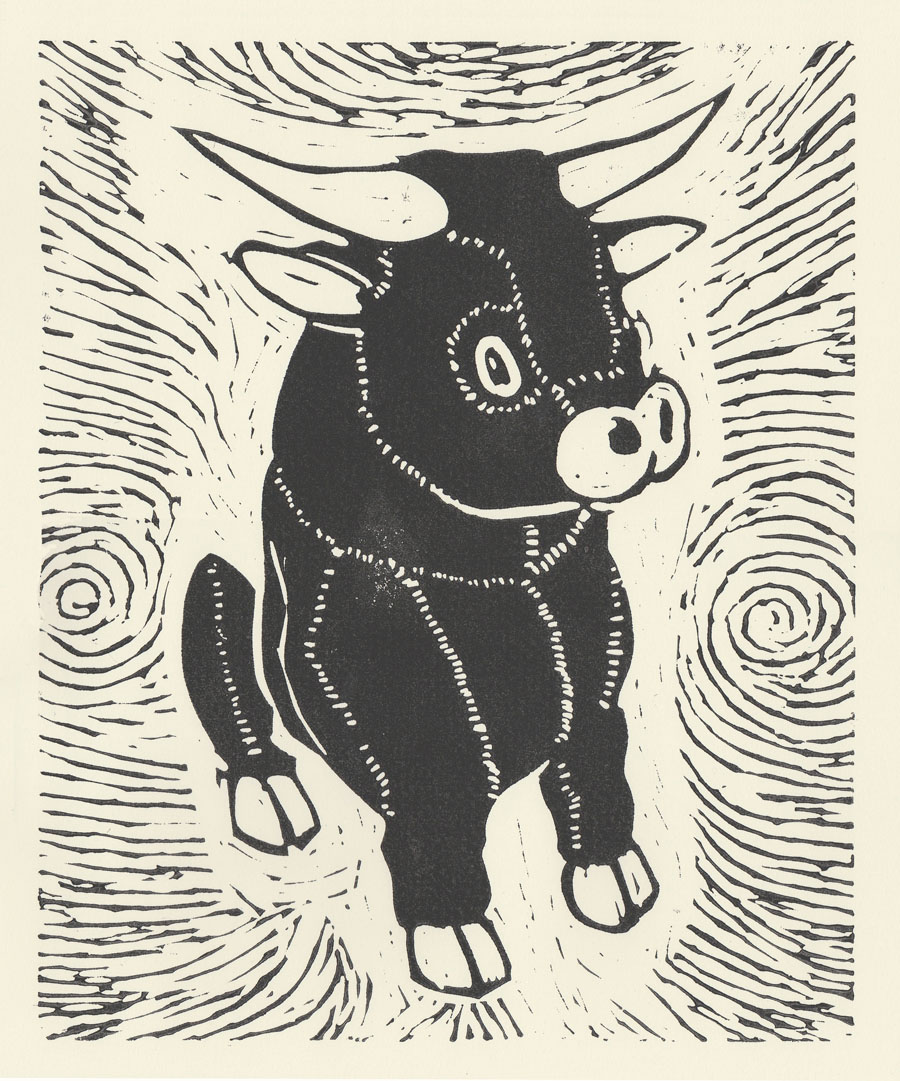
A new sunrise, happiness, fortune, prosperity, longevity and a little snow.
Katô Bunrei (1706-1782)
Naitô Tôho (1728-1788)
Minagawa Kien (1734-1807)
Gan Ku (1749-1838)
Kamo no Suetaka (1752-1842)
Nagazawa Rosetsu (1754-1799)
Teisai Hokuba (1771-1844)
Okamoto Toyohiko (1773-1845)
Nakabayashi Chikutô (1776-1853)
Kawamura Kihô (1778-1852)
Yozan Soshoku (1778-1859)
Kiyoshi, Watanabe (1778-1861)
Matsumura Keibun (1779-1843)
Gan Tai (1782-1865)
Mochizuki Gyokusen (1794-1852)
Ippô, Mori (1798-1872)
Furuichi Kinga (1805-1880)
Hirano Gogaku (1810-1893)
Hasegawa Gyokuhô (1822-1879)
Seiko, Okuhara (1837-1913)
Keinen, Imao (1845-1924)
Chokujô, Fukada (1861-1947)
Tanaka Hakuin (1866-1934)
Yamamoto Shunkyo (1871-1933)
Asami Kôjô (1890-1974)
Gyokusei Jikihara (1904 - 2005)
Shimizu Kôshô (1911-1999)
Yoshiho Morioka III (1937-2009)
Kahô revisited
Now that the storm of the new catalogued has subsided a little, Oranda Jin goes back into calmer waters for a bit.
NAKAJIMA KAHÔ (1866-1939)
In the summer of 2012 we made an exhibition and a catalogue with Nakajima Kahô, a good painter and calligrapher. It has been a while now and again we would like to draw attention to a small number of his works. He produced a lot of haiga, some of them on fans, some of them as lacquer painting. However, the most striking addition to this update are the portraits of his teacher Tomioka Tessai, one of which is the design for Tessai's famous portrait owned by the Kyoto National Museum and that of Tessai's wife Haruko.
Most prices have been reduced to give these pieces the opportunity to light up again after being released from the darkness of our drawers and meet with new owners.
Catalogue 30
October first. As announced, the Oranda Jin catalogue 30 is now online. The both versions: the PDF and the web catalogue, the version with photo’s including pictures of the mountings, signatures and the more detailed descriptions.
It has become a sturdy brochure with over a 100 objects. Last week we already mentioned a number of highlights, now they can also be viewed.
We hope you will like the catalogue as much as we do and in case you’ll find something of your liking we hope it still will be available by the time you would like to order.
For the third time the “KunstRai” has been postponed. This is really bad because now that the catalogue is still fresh the opportunity to see the paintings and pottery ‘live’, in stead from the screen, or from pictures, has passed. For instance concerning paintings by Buson, when will you see four of them together? With Ôkyo, Soken, Tessai and the brazier by Keibun you will miss the impressiveness of their sizes, and in case of for the four Nanga landscapes their comparison. The possibility for another venue due to Covid 19 at this moment is actually impossible.
Kanô Yasunobu (1613-1685)
Sakaki Hyakusen (1697-1752)
Yosa Buson (1716-1783)
Ike Taiga (1723-1776)
Soga Shôhaku (1730-1781)
Maruyama Ôkyo (1733-1795)
Minagawa Kien (1734-1807)
Ki Baitei (Kyûrô) (1734-1810)
Iguchi Kikuni (1744-1817)
Okada Beisanjin (1744-1820)
Gan Ku (1749-1838)
Gibon Sengai (1750-1837)
Go Shun (1752-1811)
Kameda Bôsai (1752-1826)
Nagasawa Rosetsu (1754-1799)
Azuma Tôyô (1755-1839)
Yamaguchi Sôken (1759-1818)
Narita Sôkyû (1761-1842)
Tani Bunchô (1763-1840)
Utagawa Toyokuni (1769-1825)
Ôhara Donshû († 1857)
Hatta Koshû (1760-1822)
Watanabe Nangaku (1767-1813)
Nagasawa Roshû (1767-1847)
Yoshimura Kôkei (1769-1836)
Chô Gesshô (1772-1832)
Oku Bummei (1773-1813)
Ônishi Keisai (1773-1829)
Nishimura Nantei (1775-1834)
Kinoshita Ôjû (1777-1815)
Tanomura Chikuden (1777-1835)
Matsumura Keibun (1779-1843)
Fûgai Honkô (1779-1847)
Shibata Gitô (1780-1819)
Sô Aiseki (c.1780-1837)
Sugai Baikan (1784-1844)
Nankei (Nagasaki dates unknown)
Yoda Chikkoku (1790-1843)
. Ôtagaki Rengetsu (1791-1875)
Mochizuki Gyokusen (1794-1852)
Nakajima Raishô (1796-1871)
Mori Ippô (1798-1871)
Shiokawa Bunrin (1801-1877)
Kishi Renzan (1804-1859)
Murase Taiitsu (1804-1881)
Shibata Zeshin (1807-1891)
Kita Kadô (1812-1877)
Tanomura Chokunyû (1814-1907)
Kiyomizu Shichibei (1818-1891)
Kishi Chikudô (1826-1897)
Kawanabe Kyôsai (1831-1889)
Bunryû (dates unknown)
Tomioka Tessai (1837-1924)
Nantenbô (1839-1925)
Kawabata Gyokushô (1842-1913)
Hashimoto Kaikan (1854-1935)
Kikuchi Hôbun (1862-1918)
Takeuchi Seihô (1864-1942)
Shimomura Izan (1865-1949)
Umemura Keizan (1866-1934)
Nakajima Kahô (1866-1939)
Ueda Manshû (1869-1952)
Tsuji Kakô (1870-1931)
Morohoshi Seishô (1870-1943)
Yamamoto Shunkyo (1871-1933)
Môri Baiyû (1871-1953)
Takeuchi Ryûkei (1874-1944)
Kimura Buzan (1876-1942)
Konoshima Ôkoku, (1877-1938)
Daimaru Hoppô (1879-1959)
Takahashi Dôhachi VI (1881-1941)
Fujii Tatsukichi (1881-1964)
Hashimoto Kansetsu (1883-1945)
Onda Tokuju (1884-1960)
Yamashita Chikusai (1885-1973)
Hirai Baisen (1889-1969)
Dômoto Inshô (1891-1975)
Deiryû (1895-1954)
Kobayakawa Kiyoshi 1899-1948)
Yokoyama Shunkei (1900-1979)
Kaji Kiichi (1904-1980)
Taniguchi Hideo (born 1908)
Kokure Seiki (born 1913)
Shimizu Kôshô (1911-1999)
Couples and Pairs
After two postponed dates for the “KunstRai” in April and June we now aim for October, from 15 until 18. Corona proof! As the KunstRai will be the only important art fair this year it has been expanded with other themes. Focus Japan remains the main theme. More information later.
Meanwhile we have been working on a new catalogue, number 30. The web version and the PDF will be posted on October first. The catalogue itself will arrive a little later because of Covid (and Trumps plans to use US Mail to manipulate the elections), which have made the mail seriously unreliable and it has become impossible for everyone to receive the catalogue more or less at the same time.
But first couples and pairs:
Chô Tôsai (1713-1786)
Noro Kaiseki (1747-1828)
Ôta Nampo (1749-1823)
Gan Ku (1749-1838)
Go Shun (1752-1811)
Kameda Bôsai (1752-1826)
Watanabe Nangaku (1767-1813)
Chô Gesshô (1772-1832)
Matsumura Keibun (1779-1843)
Kanô Eigaku (1790-1867)
Ônishi Chinnen (1792-1851)
Mori Ippô (1798-1872)
Tanomura Chokunyû (1814-1907)
Fujimoto Tesseki (1817-1863)
Doi Gôga (1817-1880)
Shinten'ô (1823-1885)
Katei, Taki (1830-1901)
Okuhara Seiko (1837-1913)
Suzuki Shônen (1848-1918)
Kikuchi Hôbun (1862-1918)
Ueda Tangai (1863-1939)
Sekisen, Hattori (1864-1920)
Nakajima Kahô (1866-1939)
Kawai Gyokudô (1873-1957)
Miyata Shizan (1889-1971)
Deiryû (1895-1954)
Post war landscape paintings
After the Second World War many of the traditional houses had disappeared due to the violence of war and people who moved to the city for reconstruction were housed in flats that were pounded out of the ground in large quantities. A number of traditional lifestyles no longer functioned and residents hung their paintings over the couch. There was a growing demand not only for framed work, but also for horizontal scroll paintings of romantic countryside landscapes. Many of these paintings and scrolls look western, but are absolutely Japanese.
Fujii Tatsukichi (1881-1964)
Hatta Kôyô (1882-1944)
Tatewaki Taizan (1886-1970)
Dômoto Inshô (1891-1975)
Hama Kosho (1894-1990)
Sakakibara Shikô (1895-1969)
Kawashima Baikyu (born 1896)
Murashima Junichi (1897-1972)
Fujiwara Shigetomi (born 1898)
Yamashita Iwao (1898-1977)
Koike Raseki (1898-1983)
Kojima Ikkei (1900-1974)
Kitsuda Eihô (1902-1974)
Kaji Kiichi (1904-1980)
Toda Kôdô (1907-1982)
Taniguchi Hideo (born 1908)
Kawajima Hiroshi (1910-1994)
Mikami Hakyo (1913-1985)
Maeda Eki (born 1922)
Toda Kôdô (act. 1970s)
Bizan (20th century)
Nisui (dates unknown)
Albums
It's June now, a promise for summer.
And June feels like more promises. The pixels of light from last month life slowly turn to lighten up life again.
When you feel like browsing? This June update shows a lot of pictures by many different artists from about 20 albums.
Yamataka Suichô (act c. 1840)
Hirose Seison 1819-1884)
Ômi Kaidô(1823-1879)
Yamanaka Shinten'ô (1823-1885)
Kakita Yûrin (1825-1891)
Shiki Shôgaku (act. Meiji)
Mori Yûzan (18..-1917)
Sugi Chiyôu (1835-1920)
Mori Shungaku (1837- 1918)
Tomioka Tessai (1837-1924)
Miyoshi Ranseki (1838-19..)
Takahashi Chikunen (1840-1922)
Mori Kinseki (1843-1921)
Watanabe Shôeki (1848- > 1920)
Himejima Chikugai (1840-1928)
Ishii Kinryô (1849-1926)
Nagamatsu Shunyô (1849-1931)
Nagamatsu Shunyô (1849-19..)
Fukushima Yasumasa (1852-1919)
Kimura Rippô (1853-1915)
Kishinami Ryûkei (1855 -1935)
Wakabayashi Shôkei (1859-1938)
Hagio Kyûkô (1861-1923)
Fukada Chokujô (1861-1947)
Miyake Gogyô (1864-1919)
Tanaka Ikka (1864-1924)
Katsurada Kojô (1865 - >1944)
Takami Kiyôen (1865-19..)
Nakajima Kahô (1866-1939)
Kunii Ôyô (1868-1923)
uwabe Chokutei (1868-1940)
Yamada Kaidô (1870-1924)
Iwaya Sazanami (1870-1933)
Muramatsu Ungai (1870- 19..)
Kobayashi Gokyô (1871-1929)
Yamamoto Shunkyo (1871-1933)
Okutani Shûseki (1871-1936)
Morimura Gitô (1871-1938)
Ōshima Tessui(1871-1945)
Itaya Keishû (1871-19..)
Kitamura Hyakkusen (1872-19..)
Shimomura Kanzan (1873-1930)
Kanokogi Takeshirô (Futô) (1874-1941)
Ishino Kônan (1874-1943)
Kimura Buzan (1876-1942)
Shiio Benkiyô (1876-1971)
Uehara Konen (1877-1940)
Yamada Shühei (1877-19..)
Odake Chikuha (1878-1936)
Takahashi Shûka (1878-19..)
Tomita Keisen (1879-1936)
Fukuda Seitô (1879-1954)
Nakagawa Wadô (1880-1943)
Odake Kokkan (1880-1945)
Isoda Chôshû (1880-1947)
Kuwagayama Hakuhô (1880-19..)
Kawabata Shunsui (1882-1934)
Ogawa Senyô (1882-1971)
Satô Suikei (1884-1926)
Suiseki Hironomi (1884-1944)
Kimura Kyôen (1885-1961)
Uenaka Chokusai (1885-1977)
Onishi Kinpô (1885-19..)
Sugai Kôson (1888-19..)
Funai Shuho (1889-19..)
Tomomatsu Entai (1895-1973)
Fukuda Seitô (1897-1988)
Nishioka Tsuguji (1900 – 19..)
Nishioka Tsuguji (1900 – 19..)
Yoneda Ryûsô (1904-1966)
Fukiyo Etsuo (1908-1981)
Asada Sosen (1911-19 ..)
Unseki (act c. 1940)
Tanyô Sokô (dates unknown)
May in a bizarre year
It's May in a bizarre year, a spring we'll never forget.
No one wants this for his or hers fellow humans
Slowly, pixels of freedom appear on the horizon.
And fortunately, nature, its views are still a consolation we can focus on.
For two-, and a few three-dimensional views you can come to Oranda Jin.
Okuhara Seisui (1854-1921)
Fukuda Chokujô (1861-1947)
Tachika Chikuson (1864-1922)
Nakajima Kahô (1866-1939)
Tsuji Kakô (1870-1931)
Yamamoto Shunkyo (1871-1933)
Yamamoto Sekisô (1872-1944)
Kawai Gyokudô (1873-1957)
Kawakita Kahô (1875-1940)
Kiyomizu Rokubei V (1875-1959)
Matsubayashi Keigetsu (1876-1963)
Konoshima Ôkoku (1877-1938)
Yamada Kôun (1878-1956)
Daimaru Hoppô (1879-1959)
Mitsui Hanzan (1881-1934)
Ikai Shôkoku (1881-1939)
Hashimoto Kansetsu (1883-1945)
Mizuta Chikuho (1883-1958)
Yamashita Chikusai (1885-1973)
Yokoyama Hasei (1899-1974)
Yokoyama Shunkei (1900-1979)
Kawabata Kohaku (born 1903)
Murata Kisui IV
Most and for the most news at the moment it is not the best news.
Corona kills people but covid-19 also kills culture. For many of us you cannot encounter art life, no museums, or galleries, no concerts, no theatre, no cinema. Happily we can still read.
The Art fair KunstRAI in Amsterdam has been postponed. Not April, but at end of June now. From June 25 – 28.
Let us hope that some parts of the world, including ours will have then turned into something recognisable from the old world and that we will be allowed to meet again.
Our contribution to please you and the internet will be the up-date of Oranda Jin for April. We tried to make it a pleasant one .....
Tsuruta Takuchi (1768-1846)
Chô Gesshô (1772-1832)
Nakajima Raishô (1796-1871)
Kishi Gan Ryô (1798-1852)
Mori Ippô (1798-1872)
Shibata Zeshin (1807-1891)
Gan Rei (1816-1883)
Kiyomizu Rokubei III (1820-1883)
Nishiyama Kan'ei (1833-1897)
Kikuchi Hôbun (1862-1918)
Kawai Zuihô I (1863-1943)
Takeuchi Seihô (1864-1942)
Nishigawa Tôrei (1865-<1925)
Terazaki Kôgyô (1866-1919)
Tsuji Kakô (1870-1931)
Kodera Untô (1871-1930)
Yamamoto Shunkyo (1871-1933)
Yamamoto Sekisô (1872-1944)
Shimomura Kanzan (1873-1930)
Mano Kyôtei (1874-1934)
Ikegami Shûho (1874-1944)
Okumura Sekitei (1874-1945)
Uejima Hôzan (1875-1920)
Kiyomizu Rokubei V (1875-1959)
Matsubayashi Keigetsu (1876-1963)
Tanomura Shôchiku (1877-1945)
Namikawa Goun (born 1880)
Ikai Shôkoku (1881-1939)
Takemura Shûhô (1882-1955)
Kondō Kōichirō (1884–1962)
Kawai Unosuke (1889-1969)
Kondô Kennen (1894-1984)
Itô Shinsui (1898-1972)
Heian Hakuun
Iwasaki Kenzô (Zezeyaki)
Yamasawa Shôkô (dates unknown)
Nanga, the third generation
A moment to look forward to is our presence at the Art fair for modern and contemporary art the “KunstRAI”, which will take place from April 29 until May 3rd at the Rai in Amsterdam.
This year the KunstRai has chosen for Japan as special theme of attention. The goal of Oranda Jin is to show the relation and influence on modern and contemporary western art.
We will remain true to our motto “Dead artists from far away” which will also include a number of post war scrolls and painted pottery, still by dead painters. More information later.
Meanwhile for March Oranda Jin presents Nanga, the third generation.
Chô Tôsai (1713-1786)
Tanke Gessen (1721-1809)
Makita Chôsai (1738-1801)
Noro Kaiseki (1747-1828)
Aoki Mokubei (1767-1833)
Ichida Banri (1770-1842)
Nakabayashi Chikutô (1776-1853)
Nukina Kaioku (1778-1863)
Uragami Shunkin (1779-1846)
Fûgai Honkô (1779-1847)
Rai San'yô (1780-1832)
Aiseki (Mokusô Shinkei) (c.1780-1837)
Okada Hankô (1782-1846)
Imaôji Yûzan (1790-1849)
Haruki Nanmei (1795-1878)
Kinoshita Itsuun (1799-1866)
Among the many Japanese painting styles, Nanga is perhaps hardest to understand and appreciate.
The fall of the Ming dynasty in 1644 brought a considerable number of Chinese refugees to Japan, which led to an upsurge in the study of Chinese art and scholarship. Chinese painting manuals, such as Hasshū gafu (The Eight Categories of Painting) and Kaishien gaden (The Mustard Seed Garden Manual of Painting) were of tremendous influence. They contained examples of Chinese painting techniques and various structures of plants and scenery, as well as actual existing Chinese landscapes. Refugee monks of the Ōbaku Zen sect, who brought paintings as well as painters, played an important part in all of this.
The most prominent painting style of the 17th century was the Kanō School, which had its roots in the 15th century and, like Nanga, was based on Chinese painting traditions. Quite unlike Nanga, however, Kanō had a strongly institutionalized character and was favoured by the aristocracy. Nanga painters turned away from Kanō, which they saw as formal and rigid.
Nanga paintings are usually Chinese landscapes depicting an ideal life or, perhaps better, a life with ideals. They are scenic landscapes with many layers that can be read in various ways, and present us with endless walks and discovery tours. The brushwork is complex, often consisting of various techniques, which show the influence of famous artists of the Chinese tradition of landscape painting.
Nanga literally means ‘southern painting’, but the term has nothing to do with any specific ‘south’ – it is derived from Zen Buddhism. Here, too, it has little to do with geography, but refers to the two different ways of reaching Enlightenment: suddenly and unexpectedly (‘south’), or gradually after years of meditation (‘north’). Since spontaneity was one of the ideals of the so-called bunjin (literati), who are so often depicted in Nanga paintings, this type of landscape art became associated with ‘south’. It may be stated that Nanga is not a ‘school’ or a ‘style’ but simply illustrates the ideals of the bunjin way of life.
Bunjin were supposed to be leisured intellectuals, Sinophiles who called themselves amateurs and spent their time making music (on Chinese instruments), writing poetry (in Chinese), drinking tea (in the Chinese manner), and painting landscapes (in the Chinese style). Bunjin worshipped Chinese culture. They were often part of extensive networks of like-minded friends and would travel up and down the country to visit each other as ‘ink guests’ (bokkyaku). Quite a few of them were Confucian scholars.
Very generally speaking we can discern four generations of Nanga painters. The ‘precursors’ were born before 1700; the next generation, born between1700 and 1750, built on their predecessors’ work to develop a distinctly Japanese version of the Chinese style (more or less contemporaneously with the development of the Maruyama School with its interest in painting from life). The third generation, roughly born between 1750 and 1800, were theorists, ‘puritans’ who favoured a return to Chinese originals – this was a time of creative copying and quoting. The fourth generation, born between 1800 and 1850, were active in the run-up to and during the Meiji period. They returned to a free and individualistic manner. Those who followed are now usually categorized as Nihonga painters.
There are also differences between Nanga from Kansai (Kyoto and Osaka), from the former province of Owari (Nagoya), and from Kantō (Edo and surroundings).
Nihonga painters
And now the Asian New Year, with wishes for lots of love and excitement in all fields.
But for now still an easy start, Nihonga painters.
The name Nihonga was meant to distinct it from Western painting.
These painters were familiar with Western painting and incorporated western elements like perspective, but worked strictly in Japanese traditions.
Yamada Kokô (1852-1935) (poet)
Hirao Chikka (1856-1939)
Rogetsu, Nakagawa (1859-1924)
Irie Shikai (1862-1940)
Takeuchi Seihô (1864-1942)
Umemura Keizan (1866-1934)
Tanaka Hakuin (1866-1934)
Nakajima Kahô (1866-1939)
Takahashi Dôhachi V (1869-1914) (potter)
Yamamoto Shunkyo (1871-1933)
Uejima Hôzan (1875-1920)
Konoshima Ôkoku (1877-1938)
Tanomura Shôchiku (1877-1945)
Mitsui Hanzan (1881-1934)
Takahashi Dôhachi VI (1881-1941) (potter)
Ogawa Sen’yô (1882-1971)
Hirai Baisen (1889-1969)
Hashimoto Ryôka (act. late Meiji)
Shintai (dates unknown)
Saitô Kairaku (dates unknown) (potter)
Nakamura Tôkô II (dates unknown) (potter)
Love in the year of the cuddle rat.
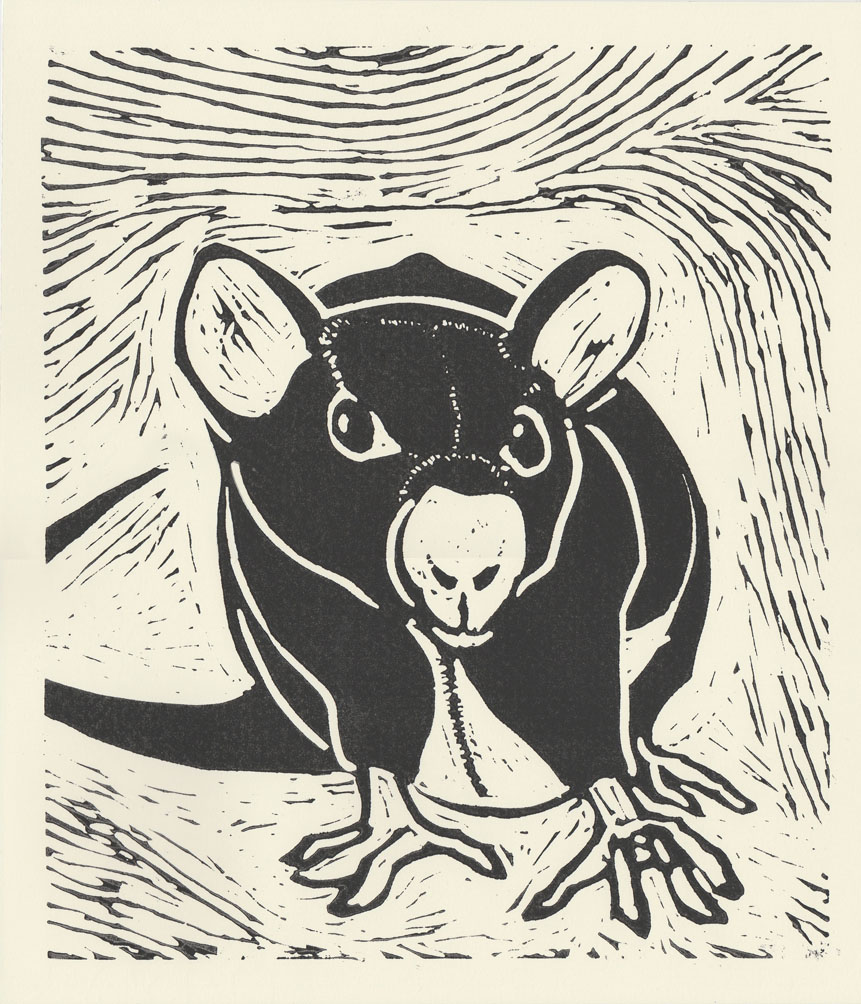
Naitô Tôho (1728-1788)
Soga Shôhaku (1730-1781)
Ôkubo Shibutsu (1767-1837)
Suzuki Nanrei (1775-1844)
Yokoyama Seiki (1792-1864)
Tanomura Chokunyû (1814-1907)
Ueda Kôchû (1819-1911)
Tomioka Tessai (1837-1924)
Nantembô (1839-1925)
Kubo Soshun (1842-1921)
Kobayashi Kiyochika (1847-1915)
Tanaka Hakuin (1866-1934)
Hashimoto Dokuzan (1869-1938)
Tsuji Kakô (1870-1931)
Nakakura Gyokusui (1874-1950)?
Takeuchi Seihô (1864-1942)
Maeda Seison (1885-1977)
Deiryû (1895-1954)
Toda Hokuyô (1903-1987)
Kasumi Bunshô (1905-1998)
Untei
Ishi
Heian Hakuun
Ryûun
Anonymous
Isuzu yaki
December update
Some pottery by priests, some links to Christmas, some snow, some pines and some homesick thoughts on the passed summer. Enjoy.
Imao Keinen (1845-1924)
Suzuki Shônen (1848-1918)
Nomura Bunkyo (1854-1911)
Hashimoto Dokuzan (1869-1938)
Tsuji Kakô (1870-1931)
Yamamoto Shunkyo (1871-1933)
Otaki Uzan (1871-1939)
Yamamoto Sekisô (1872-1944)
Mano Kyôtei (1874-1934)
Odake Chikuha (1878-1936)
Takahashi Dôhachi VI (1881-1941)
Fujii Tatsukichi (1881-1964)
Murase Shôshichi (born 1885)
Moriyama Kankei (1889-1956)
Hirai Baisen (1889-1969)
Shimizu Yoshio (1891-1954)
Shunji Katô II (1892-1979)
Hayashi Ekyo (1896-1979)
Shimizu Kôshô (1911-1999)
Sôichi and Takahashi Shunsai (1927-2011)
Maruyama-Shijô
This year we will not participate at this years PAN fair. We are sorry for both you as visitors and us.
From the middle of the 18th century, a number of innovative painting styles developed more or less simultaneously in the Kansai district, Kyoto and Osaka.
The Maruyama-Shijô school originated in Kyoto was named after its founder Maruyama Ōkyo (1733-1795) and after Shijôdori, Fourth Street, in which the studio of Matsumura Goshun (1752-1811) was located. Both artist were immensely successful and raised many pupils.
Ōkyo painted after nature, shaseiga, to which Goshun added a romantic touch. Painting with the flat brush, hakegaki, became a widely used technique to suggest atmospheric conditions.
The concept of Maruyama-Shijô became broader after the Kishi- and Mori schools became a part of it. These schools largely determined this style of painting in the Kansai area during the 19th and the first half of the 20th century.
Together with the Nanga style the Maruyama-Shijô surpassed the Kanô hegemony. Nanga painting ministered the intellectuals, while the Maruyama-Shijô school served the bourgeois.
Next to a number of paintings, we offer some rare and beautiful handscrolls.
Kishi Ganku (1749-1838)
Matsumura Goshun (1752-1811)
Watanabe Nangaku (1767-1813)
Yoshimura Kôkei (1769-1836)
Chô Gesshô (1772-1832)
Matsumura Keibun (1779-1843)
Tanaka Nikka († 1845)
Okada Kakusen (act. 1833-1844)
Ônishi Chinnen (1792-1851)
Mochizuki Gyokusen (1794-1852)
Mori Ippô (1798-1872)
Shiokawa Bunrin (1801-1877)
Kishi Renzan (1804-1859)
Furuichi Kinga (1805-1880)
Kishi Gan Rei (1816-1883)
Suzuki Hyakunen (1825-1891)
Okumura Sekiran (1834-1895)
Nakajima Yûnen (born 1844)
Some more of our favourites.
Lovely, nothing special. No show, no fair, no catalogue, just moving on to the next month while rain and autumn leafs fall. As vaguely promised we show some more of our favourites this month.
Yamaguchi Sôken (1759-1818)
Nakabayashi Chikutô (1776-1853)
Kawabata Gyokushô (1842-1913)
Hashimoto Kaikan (1854-1935)
Ohashi Kôryô, (act early 20th)
Ogawa Jihei VII (1860-1933)
Ueda Tangai (1863 - 1936)
Kamisaka Sekka, (1866-1942)
Yamamoto Sekisô (1872-1944)
Suzuki Hyôsaku (1874-1943)
Tomita Keisen (1879-1936)
Hashimoto Kansetsu (1883-1945)
Kamisaka Yûkichi (1886-1938)
Suita Sôboku (1890-1983)
Takeuchi Muuju (1896-1972)
Takeda Ekishû (1896-1989)
Koike Raseki (1898-1983)
Hijiya Bunkei (1899-1951)
Tanaka Saichirô (1900-1967)
Kaji Kiichi (1904-1980)
Our favourites!
The opening at Gallery Jan van Hoof was beyond expectations, the weather nice, sushi, customers and visitors great and many. The catalogue made the feast complete.
Quite often people ask us what our best painting is and what our favourite.
From a dealers point of view the best painting is a sold painting. We have had many best paintings.
But there is not one favourite either. It depends on moods and circumstances, but it certainly needs to have a number of qualities. It needs to be strong, preferably free without restraint and even when weak it needs to be convincing.
This month and may be in October too we show a number of what we really like and motivates us to continue. It is a silly remark and kicking in an open door - our customers share our taste. Your response helps us a lot to remain learning continuously.
Artists:
Kan Chazan (1748-1827)
Gan Ku (1749-1838)
Tani Bunchô (1763-1840)
Nakajima Raishô (1796-1871)
Tsubaki Chinzan (1801-1854)
Shiokawa Bunrin (1801-1877)
Murase Taiitsu (1803-1881)
Shinten'ô (1823-1885)
Shiseki Renshu (1842-1914)
Kondô Nanshû (1851-1922)
Hattori Gorô (1871-1930)
Yamamoto Shunkyo (1871-1933)
Matsubayashi Keigetsu (1876-1963)
Odake Kokkan (1880-1945)
Fujii Tatsukichi (1881-1964)
Hashimoto Kansetsu (1883-1945)
Iguchi Tôhakushi (1891-1972)
Shimizu Kôshô (1911-1999)
Summer Exhibition
Oranda Jin as a guest at Gallery Jan van Hoof
Exhibition of Japanese scroll paintings and painters’ pottery from the 18th - 20th century.
With a special focus on "Nanga landscape paintings".
Opening hours: from Thursday 18 – Sunday 21 July from 2.00 - 6.00 P.M.
And from Thursday 25 – Sunday 28 July by appointment
Jan van Hoof galerie
Vughterweg 58-60
5211 cm ’s-Hertogenbosch
Chawan and a pair of teapots.
You can still visit the exhibition of Japanese paintings at “Het Oude Raadhuis” of Aalsmeer. It lasts till June 16.
This years’ summer exhibition: Oranda Jin as a guest at Gallery Jan van Hoof
Exhibition of Japanese paintings and painters’ pottery from the18th – 20th century.
Special theme and catalogue: ”Nanga landscape paintings”
You are cordially invited to attend the opening at Gallery Van Hoof on July 14.
We will let you know now so you can still postpone your holiday plans and to be part of this great event.
Until then:
Chawan and a pair of teapots.
Nin’ami (Dôhachi II) (1783-1855)
Kobori Enshû IIX (1786-1867)
Ôtagaki Rengetsu (1791-1875)
Eiraku Wazen (1823-1896)
Maekawa Bunrei (1837-1917)
Yamamoto Baisô (1846-1921)
Unrin’in Hôzan XII (1849-1937)
Tomioka Haruko (1847-1940)
Suzuki Shônen (1848-1918)
Takeuchi Seihô (1864-1942)
Matsumoto Shigenobu (1864-1950)
Yamamoto Shunkyo (1871-1933)
ItôTôzan II (1871-1937)
Yamamoto Sekisô (1872-1944)
Yamamoto Kôun (1874-1950)
Kiyomizu Rokubei V (1875-1959)
Hashimoto Kansetsu (1883-1945)
Asami Kôjô (1890-1974)
Deiryû (1895-1954)
Yokoyama Hasei (1899-1974)
Yamada Mumon (1900-1988)
Kasumi Bunshô (1905-1998)
Shimizu Kôshô (1911-1999)
Kilns:
Hôzanyaki
Zezeyaki
Uchide-yaki
Isuzu yaki
Kitamura Takashi
Tôrakuyaki
Tango no Sekku, Boy’s Day
4.00 P.M. on Saturday May 4, you are cordially invited at “Het Oude Raadhuis” of Aalsmeer at the opening of an exhibition of Japanese paintings from Oranda Jin and Western ceramics.
The exhibition will last until June 16, 2019
Opening hours, Thursday - Sunday from 14.00 tot 17.00 hours.
Het Oude Raadhuis , Dorpstraat 9, 1431 CA Aalsmeer
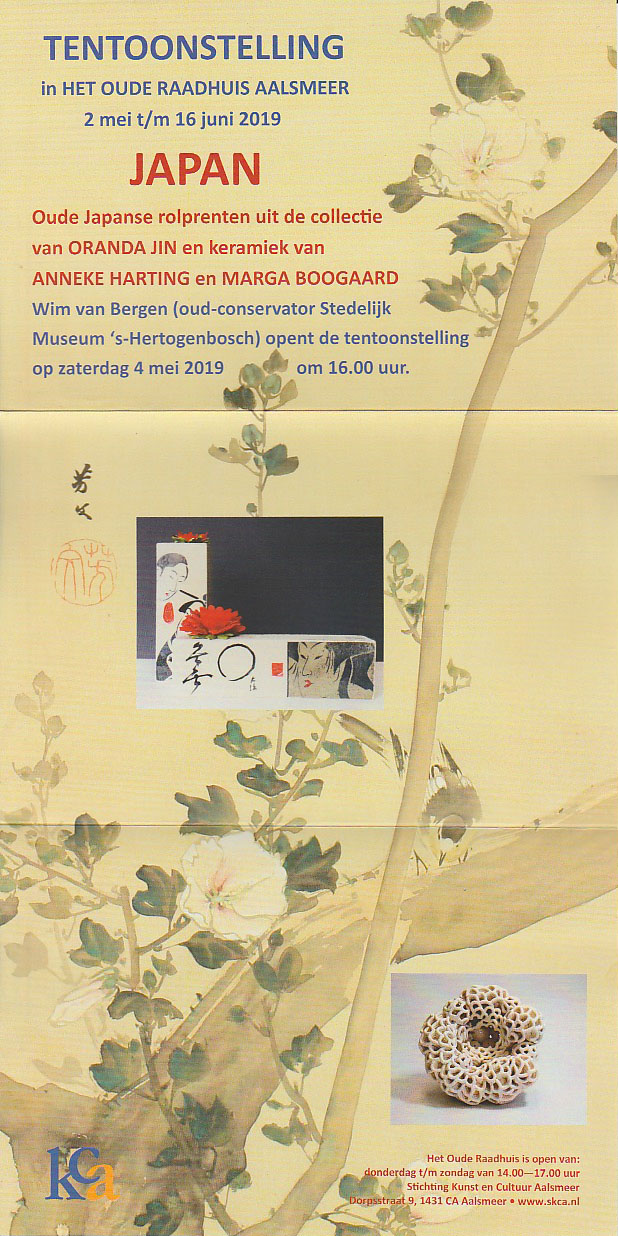
About this months up-date:
“Tango no Sekku”, Boy’s Day in Japan on May 5, the 5th day of the 5th month.
The “Koinobori" is raised, the carp-shaped streamer. It visualizes a carp swimming against the stream.
The carp is a symbol of strength, courage and success as it swimming upstream a waterfall to become a dragon.
Shôki the demon queller, a bogeyman is another symbol. He protects against measles and other contagious illnesses.
Irises are to drive away evil spirits.
For longevity, we added some tortoises
Matsumura Go Shun (1752-1811)
Kameda Bôsai (1752-1826)
Matsumura Keibun (1779-1843)
Ônishi Chinnen (1792-1851)
Murase Taiitsu (1803-1881)
Nishiyama Hôen (1804-1867)
Shibata Zeshin (1807-1891)
Hasegawa Gyokuhô (1822-1879)
Kawai Zuihô I (1863-1943)
Takeuchi Seihô (1864-1942)
Morimura Gitô (1871-1938)
Kiyomizu Rokubei V (1875-1959)
Takahashi Dôhachi VI (1881-1941)
Hashimoto Kansetsu (1883-1945)
Kitakami Seigyû (1891-1970)
Kaji Kiichi (1904-1980)
Shimizu Kôshô (1911-1999)
Spring
On Saturday the 4th of May at “Het Oude Raadhuis” of Aalsmeer will open a modest exhibition of Japanese paintings and ceramics. The show will last until June 16, 2019
Opening hours, Thursday - Sunday from 14.00 tot 17.00 hours.
Het Oude Raadhuis
Dorpstraat 9
1431 CA Aalsmeer
During April Oranda Jin celebrates spring with fresh green willows and sweet pink cherry blossom. Swallows will mark the way to the summer.
Minagawa Kien (1734-1807)
Gan Ku (1749-1838)
Yoshimura Kôkei (1769-1836)
Chô Gesshô (1772-1832)
Uragami Shunkin (1779-1846)
Hiroshige (1797-1858)(attr. to)
Ippô, Mori (1798-1872)
Shiokawa Bunrin (1801-1877)
Yamaoka Seiryô (Taigadô V) (1807-1869)
Nakanishi Kôseki (1807-1884)
Hirano Gogaku (1810-1893)
Kan'ei, Nishiyama (1833-1897)
Numata Kashû (1838-1901)
Tanomura Shôsai (1845-1909)
Yoshitsugu Haizan (1846-1915)
Seitei, Watanabe (1851-1918)
Kikuchi Hôbun (1862-1918)
Eisai, Fukuda (Hansaburô)(act Meiji)
Hijiya Bunkei (1899-1951)
Kawashima Baikan (1902-1977)
SALE, SOLDES, AUSVERKAUF, UITVERKOOP, 大売り出し
Oranda Jin has been collecting paintings for sale for 30 Years and for more than 12 years painters’ pottery. Over the time it has partly grown into a storehouse for paintings and ceramics. Not quite its goal.
Together with customers, and friends we had nice talks and discussions while looking at them and making comparisons while creating combinations in small-scale shows.
Over the many years we learned a lot, but we think that a large number deserves a better life and more attention than just being with us and gathering dust and become more and more antique.
While wishing to create some space we hope that these huge discounts will help the paintings and ceramics to find a new home, and helping Oranda Jin to move on to an even better stock.
- The paintings have no boxes unless signed, or otherwise original
- We only take firm others and the paintings are not to be returned
- For orders over € 250 (or $ 300) the shipping cost as air freight postal parcel is included
- No credit cards are accepted, outside EU if possible pay by bank transfer, otherwise use Pay Pal
- Within the EU please pay by bank transfer, this should be without cost, if not please take care of all bank costs
Good luck and take your chance. Most discounts are generous; most paintings are wonderful and most of the painters are (well) known. Mind being too eager, and check condition and sizes.
To start with tea is a relaxed start.
For this February update Oranda Jin selected a nice group of rare ceramic sets.
Most of them produced in collaboration of potters and painters and the majority of the sets are complete tea services.
Some other ceramic tea ceremony sets and a few wooden serving dishes are included too as well as a set of lacquer work by Sekka and his brother.
Painters:
Tanomura Chokunyû (1814-1907)
Tomioka Tessai (1837-1924)
Himeji Chikugai (1840-1928)
Ueda Tangai (1863-1939)
Kamisaka Sekka, (1866-1942)
Hattori Gorô (1871-1930)
Yamamoto Sekisô (1872-1944)
Mitsui Hanzan (1881-1934)
Shimizu Kôshô (1911-1999)
Bokusei (dates unknown)
Potters:
Ôtagaki Rengetsu (1791-1875)
Matsumoto Shigenobu (1864-1950)
Takahashi Dôhachi V (1869-1914)
Kiyomizu Rokubei V (1875-1959)
Wada Tōzan I (1888-1967)
Nanki Otokoyama
Hakuun
Kinkazan
Mokusen
Hakuzan
Karugayaki
And the lacquer artist Kamisaka Yûkichi (1886-1938)
Best Wishes for 2019
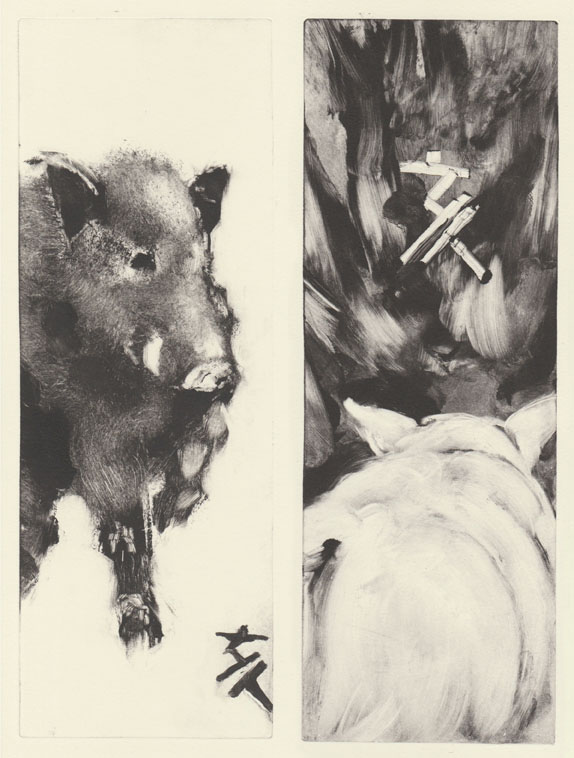
We wish you all the best wishes for a happy and healthy year of the boar.
The last event of 2018, the PAN fair was nice. Again we were happy to see many of you. Alas another many we could not welcome, because of a failure in the digital invitation system of the Pan. More than half of you did not receive our invitations, for which we are deeply sorry. Hopefully next time old-fashioned paper ones will do their job.
The opening of the year will be decorated by some of the nicest painters of Kansai at the start of the 20th century:
Takeuchi Seihô (1864-1942)
Nakajima Kahô (1866-1939)
Tsuji Kakô (1870-1931)
Yamamoto Shunkyo (1871-1933)
Konoshima Ôkoku (1877-1938)
And as a kind of surprise, among them a few paintings by these artists of which their subjects were well asked for and because of that not as ‘unique’ as most people think.
Catalogue 28
Making a catalogue is our excuse to collect. We spent two years in putting together this one: it shows our personal taste and also gives you an idea of what, in our view, can bear our ‘beautiful and interesting’ stamp, although the one is not necessarily the same as the other.
Our new catalogue features a contemplative Murasaki Shikibu, a poetic scream by Minagawa Kien and ‘self portraits’ by Jiun and Nantembō. It also shows a few of the many ways in which you can paint a plum.
Catalogue 26 had a poem by Ryōkan – this time we have one of his tea bowls which, like Rengetsu’s ceramics, goes straight to your heart.
And of course, a few of our regular guests, including Kanō Tan’yū, some early icons of the Maruyama-Shijō school, as well as Bunchō, Kaikan, Kakō, Kahō, Tatsukichi, Kōshō.
The fact that it all suits us makes this a good catalogue.
We would like to thank Anna Beerens for her support and Henri Kerlen for his patience and for making his vast knowledge available to us.
NOTE Unless stated otherwise the poetry and other inscriptions were translated by Henri Kerlen.
Translations of Rengetsu’s poetry by The Rengetsu Foundation Project. http://rengetsu.org/poetry_db/index.php
And the artists that made this catalogue possible:
Kanô Tan’yû (1602-1674)
Kiyohara Yukinobu (1643-1682)
Kanô Terunobu (1717-1763)
Jiun Onkô (1718-1804)
Maruyama Ôkyo (1733-1795)
Minagawa Kien (1734-1807)
Mori Sosen (1747-1821)
Ôta Nampo (1749-1823)
Ganku (1749-1838)
Goshun (1752-1811)
Rokujuen (1754–1830)
Hosoda Eishi (1756-1829)
Ryôkan Taigu (1757-1831)
Yamaguchi Sôken (1759-1818)
Tani Bunchô (1763-1840)
Tsuruta Takuchi (1768-1846)
Teisai Hokuba (1771-1844)
Chô Gesshô (1772-1832)
Okamoto Toyohiko (1773-1845)
Tanomura Chikuden (1777-1835)
Matsumura Keibun (1779-1843)
Yamamoto Baiitsu (1783-1856)
Kikugawa Eizan (1787-1867)
Kiyomizu Rokubei II (1790-1860)
Ôtagaki Rengetsu (1791-1875)
Ônishi Chinnen (1792-1851)
Ganryô (1798-1852)
Mori Ippô (1798-1872)
Tsubaki Chinzan (1801-1854)
Nishiyama Hôen (1804-1867)
Tanomura Chokunyû (1814-1907)
Ganrei (1816-1883)
Murase Sôseki 1822-1877)
Yoshida Shôin (1830-1859)
Kunii Õbun (1833-1887)
Hashimoto Gahô (1835-1908)
Tomioka Tessai (1836-1924)
Nantembô (1839-1925)
Shiseki Renju (1842-1914)
Kôno Bairei (1844-1895)
Nagasaka Sekitai (1846-1925)
Kaitô Unrin (1847-1919)
Tomioka Haruko (1847-1940)
Takebe Hakuhô (c.1850-1920)
Miura Chikusen I (1854-1915)
Hashimoto Kaikan (1854-1935)
Fukada Chokujô (1861-1947)
Takeuchi Seihô (1864-1942)
Nakajima Kahô (1866-1939)
Yamada Kaidô (1868-1924)
Yokoyama Taikan (1868-1958)
Tsuji Kakô (1870-1931)
Yamamoto Shunkyo (1871-1933)
Kawai Gyokudô (1873-1957)
Hishida Shunsô (1874-1911)
Ikegami Shûho (1874-1944)
Kawakita Kahô (1875-1940)
Kiyomizu Rokubei V (1875-1959)
Sakamoto Kôjô (1875-1969)
Tomita Keisen (1879-1936)
Yamada Kôun (1878-1956)
Odake Kokkan (1880-1945)
Ikai Shôkoku (1881-1939)
Takahashi Dôhachi VI (1881-1941)
Fujii Tatsukichi (1881-1964)
Miura Chikusen II (1882-1920)
Hashimoto Kansetsu (1883-1945)
Kondō Kōichirō (1884–1962)
Yamashita Chikusai (1885-1973)
Mochizuki Seihô (1886->1931)
Ikebe Hitoshi (1886-1965)
Tomita Hankei (act 1930s)
Dômoto Inshô (1891-1975)
Yagi Issô (1894-1973)
Hama Kosho (1894-1990)
Umezaki Shujaku (1896-1969)
Morino Kakô (1899-1987)
Tanaka Saichirô (1900-1967)
Nakamura Ganjirô II (1902-1983)
Kawabata Kohaku (born 1903)
Shimizu Kôshô (1911-1999)
Shôbun (act. 20th century)
undated potters:
Yamasawa Shôkô
Jun'ichi
Seizan
Murata Kisui
Ôtsu fu Hanadô
Autumn, moon and melancholy.
For us autumn usually feels like a little good bye, a good bye from the sun and the falling stars of the perseids in summer.
We now welcome the moon and melancholy of autumn.
And look forward to the new catalogue and the PAN fair at the RAI in Amsterdam from Nov. 18-25.
The moon gazers:
Katô Bunrei (1706-1782)
Tani Bunchô (1763-1840)
Nakabayashi Chikutô (1776-1853)
Tanomura Chikuden (1777-1835)
Matsumura Keibun (1779-1843)
Shiokawa Bunrin (1801-1877)
Yamamoto Suiunjo (act. 1830s)
Ueda Kôchû (1819-1911)
Suzuki Shônen (1848-1918)
Katsurada Kojô (1865 - >1944)
Sakai Kuraki (1869-1945)
Okutani Shûseki (1871-1936)
Uejima Hôzan (1875-1920)
Mio Goseki (1885-1952)
Yamashita Chikusai (1885-1973)
Yoshimura Yoshirô (dates unknown)
Hakuun (dates unknown)
Hijiya Bunkei (1899-1951)
Kaname Shuhei (1906-1994)
A new season
That was summer, one of the best ever ...
We now move into autumn, slowly we hope, into a new season, towards a new catalogue, a new PAN fair.
But the start of Oranda Jin is with what we are specialized in, paintings and painters' pottery.
When you open the gallery it shows the two next to each other, each line one painter two media.
Hope you like it as much as we do.
Himejima Chikugai (1840-1928)
Irie Shikai (1862-1940)
Tanaka Hakuin (1866-1934
Yamamoto Sekisô (1872-1944)
Mitsui Hanzan (1881-1934)
Tatewaki Taizan (1886-1970)
Wada Tōzan I (1888-1967)
Dômoto Inshô (1891-1975)
Morino Kakô (1899-1987)
Tanomura Chokugai (1903-1997)
Kasumi Bunshô (1905-1998)
Shimizu Kôshô (1911-1999)
Yohei Seifu V (1921-1990)
Unrin’in Hôzan XX (born 1938)
Summer
And the best news is, it is holiday time. And the up-date will take two months instead of the regular one.
We present a large variety of painted items by a bevy of artists, scroll paintings, painting albums, fans, drawings, ceramics and wooden trays.
Enjoy your holidays in the best possible weather and enjoy the up-date on days that might look less great.
And artists presented:
Tokugawa Mitsumoto (1625-1700)
Mori Sosen (1747-1821)
Kamo no Suetaka (1754-1841)
Haruki Nanko (1759-1839)
Tani Bunchô (1763-1840)
Teisai Hokuba (1771-1844)
Nakabayashi Chikutô (1776-1853)
Kawamura Kihô (1778-1852)
Uragami Shunkin (1779-1846)
Shiokawa Bunrin (1801-1877)
Tanomura Chokunyû (1814-1907)
Sugawara Hakuryû (1833-1898)
Tomioka Tessai (1837-1924)
Imao Keinen (1845-1924)
Morisaki Shunchô (born 1849)
Fukushima Yasumasa (1852-1919)
Nomura Bunkyo (1854-1911)
Hagio Kyûkô (1861-1923)
Fukada Chokujô (1861-1947)
Kunii Õyô (1868-1923)
Yamada Kaidô (1870-1924)
Tsuji Kakô (1870-1931)
Iwaya Sazanami (1870-1933)
Kobayashi Gokyô (1871-1929)
Okutani Shûseki (1871-1936)
Konoshima Ôkoku (1877-1938)
Hayakawa Baitei (born 1878)
Odake Chikuha (1878-1936)
Suzuki Eigyô (born 1880)
Odake Kokkan (1880-1945)
Isoda Chôshû (1880-1947)
Yamaguchi Unpô (born 1881)
Arimoto Goshû (born 1884)
Mio Goseki (born 1884)
Yamamura Kôka (1886-1942)
Natori Shunsen (1886-1960)
Saitô Gogetsu (born 1889)
Miyake Kôhaku (1893-1957)
Hong Sonam (active in Japan c. 1920)
Kôgawa Suigaku (born 1905)
And a number of artists unknown to us
Maruyama-Shijô school paintings
The situation concerning the new EU General Data Protection Regulation (GDPR) reminds me of the joke of the mouse and the elephant. A mouse and an elephant are crossing a bridge, said the mouse: ”Aren’t we making a lot of noise?”
Maruyama-Shijô school paintings by:
Kanô Arinobu (Gyokuei)(1730-1804)
Kamo no Suetaka (1754-1841)
Chô Gesshô (1772-1832)
Kawamura Bumpô (1779?-1821)
Keibun, Matsumura (1779-1843)
Ueda Kôchô (1788-1850)
Yokoyama Seiki (1792-1864)
Okada Kakusen (act. 1833-1844)
Tanaka Nikka (died 1845)
Ôhara Donshû (died 1857)
Kishi Renzan (1804-1859)
Yamamoto Suemamo 1807-1862)
Kita Kadô (1812-1877)
Hasegawa Gyokuhô (1822-1879)
Nishiyama Kan'ei (1833-1897)
Suzuki Shônen (1848-1918)
For communication purposes we have your e-mail address and for closer relations home addresses and in a few cases telephone numbers. That is all.
This information is carefully stored, but alas we don’t have any influence on “the trawl law”, intelligence acquisition and peeping practices of governmental safety services,
If you no longer wish to receive e-mails, concerning the monthly up-dates and/or invitations, you can easily unsubscribe by returning this e-mail to orandajin @ home.nl with the message "Please Remove" in the subject heading.
If we do not hear from you, we assume that the e-mails you receive from us do not bother too much and that we will remain to keep you informed about activities in the field of Japanese painting.
Yours sincerely,
Oranda Jin
Awaiting summer
A number of mostly new acquisitions by:
Nagayama Kôin (1765-1849)
Ueda Kôchô (1788-1850)
Kikuchi Yôsai (1788-1878)
Shibata Zeshin (1807-1891)
Mori Kinseki (1843-1921)
Kiyomizu Rokubei IV (1847-1920)
Koya Butsugai (1849-1928)
Kimura Rippô (1853-1915)
Kishinami Ryûkei (1855 -1935)
Kikuchi Hôbun (1862-1918)
Ueda Tangai (1863-1939)
Tsukioka Kôgyo (1869-1927)
Yamamoto Shunkyo (1871-1933)
Itaya Keishû (born 1871)
Okumura Sekitei (1874-1945)
Komuro Suiun (1874-1945)
Tamai Kôrin (born 1874)
Uejima Hôzan (1875-1920)
Ikeda Zuigetsu (1877-1944)
Yamada Kôun (1878-1956)
Ôdake Kokkan (1880-1945)
Kimura Kyôen (1885-1961)
Onishi Kinpô (1885-19..)
Asami Kôjô (1890-1974)
Yamashita Iwao (1898-1977)
Hijiya Bunkei (1899-1951)
Kitsuda Eihô (1902-1974)
Yoneda Ryûsô (1904-1966)
Katô Miyozô (1912-2012)
Satô Kairaku (dates unknown)
Jisui (dates unknown)
Miscellaneous
On April 25, 16.00 hours during the exhibition of Japanese paintings from the Peter Poldervaart collection, Jon de Jong from Oranda Jin, will be interviewed and talk about collecting Japanese paintings at Arti Amicitiae, Rokin 112, Amsterdam.
The exhibition will still last until May 4.
http://www.arti.nl/tentoonstelling/van-volks-tot-verheven/
Meanwhile enjoy the paintings and a few ceramic pieces on this April up-date by:
Ôtagaki Rengetsu (1791-1875)
Ônishi Chinnen (1792-1851)
Yokoyama Seiki (1792-1864)
Kita Kadô (1812-1877)
Tomioka Tessai (1837-1924)
Nantembô (1839-1925)
Sôhan Gempô (Shôun) (1848-1922)
Suzuki Shônen (1849-1918)
Ogawa Jihei VII (1860-1933)
Matsumoto Shigenobu (1864 - 1950)
Ohashi Suiseki (1865-1945)
Yamamoto Sekisô (1872-1944)
Konoshima Ôkoku (1877-1938)
Keijû Reikyô (1881-1935)
Kitakami Seigyû (1891-1970)
Koike Raseki (1898-1983)
Kaji Kiichi (1904-1980)
Shimizu Kôshô (1911-1999)
Nakamura Kinjô (act Meiji)
Takusô Koji (20th)
Landscapes of coming seasons
This month we wish you to enjoy friendly landscapes; most of them friendlier and much less Chinese than the ones we showed last month. Landscapes of coming seasons.
Gan Ku (1749-1838)
Yoshimura Kôkei (1769-1836)
Chô Gesshô (1772-1832)
Matsumura Keibun (1779-1843)
Tanaka Nikka († 1845)
Shiokawa Bunrin (1801-1877)
Suzuki Hyakunen (1825-1891)
Okajima Seikô (1827-1877)
Kawabata Gyokushô (1842-1913)
Imao Keinen (1845-1924)
Hasegawa Gyokujun (1864-1921)
Tachika Chikuson (1864-1922)
Takeuchi Seihô (1864-1942)
Yamada Keichû (1868 -1934)
Hashimoto Dokuzan (1869-1938)
Okutani Shûseki (1871-1936)
Konoshima Ôkoku (1877-1938)
Hatta Kôyô (1882-1944)
Yamashita Chikusai (1885-1973)
Hirai Baisen (1889-1969)
Until May 4 you can still visit the exhibition of Japanese paintings from the collection of Peter Poldervaart, at Arti Amicitiae/Rokin 112/Amsterdam
http://www.arti.nl/tentoonstelling/van-volks-tot-verheven/
Nanga painting during one of Japan’s most turbulent times c In this up-date we offer a glimpse of painting which we especially like, robust and monumentally. Nanga painting during one of Japan’s most turbulent times, 1850 - 1870s.
Famine, uprisings, the Western world forcing in, nationalist riots, the emperor moving from Kyoto to Tokyo, it meant the end of the traditional hierarchical Edo era, and with a new emperor Meiji it made the start to a modern Japan.
These five painters were part of and witnessed the transition.
Murase Taiitsu (1803-1881) studied with Rai San’yô (1780-1832) and Shinozaki Shôchiku (1781-1851)
Shinten'ô (1823-1885), also studied with Shinozaki Shôchiku (1781-1851)
Fujimoto Tesseki (1817-1863), was heavily influenced by San’yô’s legacy, and a friend of Shinten’ô
Yasuda Rôzan (1830-1882) another friend of Shinten’ô
and Okuhara Seiko (1837-1913) was befriended with Rôzan
In different ways and at different places they met with the equal circumstances and had mutual teachers and mutual friends.
Taiitsu stayed away from the turmoil, Tesseki died from it, both Rôzan and Seiko were allowed to travel, each in their own way, Rozan from China, and Seiko as a woman was allowed to move to Tokyo, and Shinten’ô made his career in the Meiji bakufu.
Exhibition of Japanese paintings from the collection of Peter Poldervaart
From February 8 - May 4, 2018
At Arti Amicitiae/Rokin 112/Amsterdam
http://www.arti.nl/tentoonstelling/van-volks-tot-verheven/
New Year - 2018 Year of the Dog.
The Dog occupies the 11th position in the Chinese zodiac.
It symbolizes loyalty, compatibility and kindness.
Although the Year of the Dog officially begins on February 16 we now like to make the start making the dog wag.
Most themes of this up-date show wishful thinking for the start of the New Year including lots of snow.
Katô Bunrei (1706-1782
) Komai Genki (1747-1797)
Nagazawa Rosetsu (1754-1799)
Nishimura Nantei (1775-1834)
Kawamura Bumpô (1779?-1821)
Kishi Renzan (1804-1859)
Shibata Zeshin (1807-1891)
Hirano Gogaku (1810-1893)
Kan'ei, Nishiyama (1833-1897)
Kamisaka Sekka (1866-1942)
Takahashi Dôhachi VI (1881-1941)
Irie Shikai (1862-1940)
Komai Ryûsen (born 1866)
Maeda Seison (1885-1977)
Miyata Shizan (1889-1971)
Tôsei Kureimitsu (19th century)
Kabata Tôsen (1897-1985)
Itô Shinsui (1898-1972)
Kojima Tanyô (1902-1975)
Azuma Hekiu (1904-1970)
Taniguchi Hideo (born 1908)
Hiroshi, Kawajima (1910-1994)
Maeda Masao (born 1918)
Hôjô (20th century)
Meisetsu (20th century)
PAN FAIR AMSTERDAM 2017
From 19-26 November the PAN fair in Amsterdam will take place.
at the
Rai (Hall 8)
Europaplein 20
1078 GZ Amsterdam
http://www.pan.nl
Opening hours:
19 and 25 November | 12 - 19 pm
20, 21, 22, and 24 November | 12 - 21 pm
23 and 26 November | 12 - 18 pm
As in previous years Oranda Jin will participate in this Art and Antique circus.
Booth 101. We look forward to welcome you and present a variety of Japanese pictorial art, newly acquired as well as pieces that have accompanied us a little longer.
Special for this event we exhibit a wonderful painting of a forest by Yokoyama Taikan (1868-1958). He was one of the most famous painters in Japan in the first half of the 20th century. He also decorated a beautiful blue-and-white set of sake bottles, which he made in cooperation with the equally famous potter Kiyomizu Rokubei V (1875-1959).
And for the first time we are proud to present a lovely fruit bowl by the most famous painter-potter of Japan Ogata Kenzan (1663-1743).
Come and join us, and enjoy.
Part of a nice collection, which we will bring along:
Tatebe Ryôtai (Kan'yôsai) (1719-1774)
Naitô Tôho (1728-1788)
Kagawa Kagemoto (1745-1821)
Noro Kaiseki (1747-1828)
Watanabe Gentai (1749-1820)
Matsumura Keibun (1779-1843) &
Uragami Shunkin (1779-1846)
Mihata Jôryû (act. 1830-43)
Nishiyama Hôen (1804-1867)
Shibata Zeshin (1807-1891)
Tanomura Chokunyû (1814-1907)
Kasai Tôu (Born 1824)
Hibata Joami (act. Meiji)
Okuhara Seiko (1837-1913)
Tomioka Tessai (1837-1924)
Kawabata Gyokushô (1842-1913)
Nakajima Yûnen (born 1844)
Tomioka Haruko (1847-1940)
Hashimoto Kaikan (1854-1935)
Ogata Gekkô (1859-1920)
Nakajima Kahô (1866-1939)
Mano Kyôtei (1874-1934)
Ranzan, Kawata (1881-1957)
Deiryû (1895-1954)
Takeuchi Muuju (1896-1972)
Kaji Kiichi (1904-1980)
Kasumi Bunshô (1905-1998)
Shimizu Kôshô (1911-1999)
Albums and ceramics
As announced for October, we present some painters’ ceramics and albums.
Next month, from November 19-26 the PAN fair in Amsterdam will take place.
The bowls, kashibachi, dishes, zara and chawan, tea bowls on this month’s update are nice examples of co-productions, gassaku of potters and painters.
A number of the albums are gassaku by painters. It is always nice to see who of the ‘better known’ artists were acquainted and shared interests.
Some other albums, of which one handscroll, are solo-projects. Quite often they show a theme like the twelve months, showing seasonal aspects, and sometimes just a bunch of ‘sketches’.
Too bad that in the past many of these albums have been broken up and sold as single sheets, or mounted as paintings.
Artists present in this month’s update are:
Nukina Kaioku (1778-1863)
Nishiyama Hôen (1804-1867)
Taniguchi Aizan (1816-1899)
Kishi Chikudô (1826-1897)
Murata Kôkoku (1831-1912)
Matsumoto Fûko (1840-1923)
Yoshitsugu Haizan (1846-1915)
Mori Yûzan (died 1917)
Tachika Chikuson (1864-1922)
Tanaka Ikka (1864-1924)
Miyake Gogyô (1864-1919)
Nakajima Kahô (1866-1939)
Kamisaka Sekka (1866-1942)
Kunii Ôyô (1868-1923)
Muramatsu Ungai (born 1870)
Tsuji Kakô (1870-1931)
Yamamoto Shunkyo (1871-1933)
Okutani Shûseki (1871-1936)
Yamamoto Sekisô (1872-1944)
Komura Ryûshô (born 1873)
Kiyomizu Rokubei V (1875-1959)
Takahashi Dôhachi VI (1881-1941)
Kôno Seiko (1881-1945)
Ozeki Keishû (1883-1963)
Nomura Ryôchô (1883-1977)
Matsumura Baisô (1884-1934)
Miura Chikken (1900-1990)
Kiyomizu Rokubei VI (1901-1980)
Tanomura Chokugai (1903-1997)
Kasumi Bunshô (1905-1998)
Sakata Shuken II (1911-1979)
Shimizu Kôshô (1911-1999)
Matsubayashi Hôsai XV (1921-2004)
Unrin’in Hôzan (born 1938)
Kaneta Masanao (born 1953)
Tanaka Gekkô (dates unknown)
Yoshimura Chokuhô (dates unknown)
Indian summer
Now it is time for an Indian summer, sorry a Japanese summer, after a Dutch summer at Oranda Jin ... after a beautiful exhibition of the ceramics and paintings in July.
The beginning of a new season with paintings now, ceramics and albums later and the PAN fair in Amsterdam in the near future, from November 19-26.
But first:
Azuma Tôyô (1755-1839)
Hirano Gogaku (1810-1893)
Ueda Kôchû (1819-1911)
Shinten'ô (1823-1885)
Suzuki Hyakunen (1825-1891)
Takeuchi Seihô (1864-1942)
Sakai Kuraki (1869-1945)
Tsuji Kakô (1870-1931)
Yamamoto Shunkyo (1871-1933)
Okutani Shûseki (1871-1936)
Ikegami Shûho (1874-1944)
Uejima Hôzan (1875-1920)
Sakamoto Kôjô (1875-1969)
Shoda Kakuyû (1879-1948)
Fujii Tatsukichi (1881-1964)
Hayashi Buntô (1882-1966)
Koike Raseki (1898-1983)
Deguchi Suien joshi (born 1903)
Kaji Kiichi (1904-1980)
Exhibition at Gallery Van Hoof
The opening of the exhibition at Gallery Van Hoof was a warm and pleasant afternoon with nice guests, water, wine and sales in abundance.
The exhibition showing the ceramics and paintings by painters looks very nice, and so does the catalogue, which is available at the show.
The summer exhibition will last until July 30, 2017
Opening hours Thursday - Sunday from 2.00 – 6.00 PM and by appointment
September will have a new up-date, so enjoy your holidays and spend them well.
Jan van Hoof galerie
Vughterweg 58-60
5211 CM ’s-Hertogenbosch
New Aquisitions
We are making the preparations for the summer exhibition.
‘Japanese painters’ pottery and paintings’ will open on July 9th. Clearly the theme is the relation of pottery by painters in combination with their paintings. It will be the first exhibition, with catalogue, on this relation ever.
Watanabe Kiyoshi (1778-1861)
Suzuki Hyakunen (1825-1891)
Sô Shûshin? (born 1826)
Kitano Gempô (1842-1933)
Imao Keinen (1845-1924)
Nishigawa Tôrei (1865-<1925)
Ueda Manshû (1869-1952)
Okutani Shûseki (1871-1936)
Konoshima Ôkoku (1877-1938)
Hirai Baisen (1889-1969)
Nakamura Reihô, (1898-1980)
Koike Raseki (1898-1983)
Hôjaku (dates unknown)
Kôsai (dates unknown)
Hakutô (dates unnown)
Hisayuki (dates unknown)
Shuku Sanpō (1902-1994)
Tanomura Chokugai (1903-1997)
Kuzuhara Teru (born 1915)
Umemoto Tokyû (1917-1989)
A Sideshow
Most of the time it looks like spring here, but it isn’t. Spending time indoors, we are making the preparations for the summer exhibition, which will open on July 9th.
We don’t have a title yet, but the theme is: "pottery by painters in combination with their paintings".
If all goes well it will be the first exhibition on the relation between the painters’ pottery and the paintings ever. If it will go even better than well, the exhibition will be accompanied with a catalogue on the subject.
For this month, first a sideshow. The inducement was to find a red lacquered kashibachi bowl showing Mount Fuji, and a nice painting with same subject by the charming painter Chokujô. But then, this painting will be the only one in this month’s up-date. All the rest are interesting items, which are not too often shown on our web-site, like a Meiji period scrapbook with a section of Muromachi poetry and calligraphy, preceded by 16 pages of small paintings and calligraphies.
Gan Tai (1782-1865)
Nakanishi Kôseki (1807-1884)
Fujimoto Tesseki (1817-1863)
Kishi Chikudô (1826-1897)
Okumura Sekiran (1834-1895)
Fukuda Chokujô (1861-1947)
Nakajima Kahô (1866-1939)
Hattori Gorô (1871-1930)
Yamamoto Sekisô (1872-1944)
Sano Gofû (1886-1974)
Miyake Kôhaku (1893-1957)
Kôgawa Suigaku ( born 1905)
Yamataka Suichô (dates unknown)
Tanyô Sokô (dates unknown)
Fujii Shôson (dates unknown)
Jin Jiacai (A Chinese painter act. in Meiji Japan)
Spring
Sakura to midori no yanagi. Cherry blossom and willow, fresh pink and even fresher green; sound and twitter of birds with singing spring in their beaks.
Minagawa Kien (1734-1807)
Chôbunsai Eishi (1756-1829)
Yoshimura Kôkei (1769-1836)
Teisai Hokuba (1771-1844)
Chô Gesshô (1772-1832)
Imaôji Yûzan (1790-1849)
Gotôda Nankei († 1867)
Yamaoka Seiryô (1807-1869)
Shiokawa Bunrin (1801-1877)
Okuhara Seiko (1837-1913)
Yoshitsugu Haizan (1846-1915)
Kikuchi Hôbun (1862-1918)
Hasegawa Gyokujun (1864-1921)
Tachika Chikuson (1864-1922)
Umemura Keizan (1866-1934)
Hashimoto Dokuzan(1869-1938)
Seki Seisetsu (1877-1945)
Hijiya Bunkei (1899-1951)
Kawashima Baikan (1902-1977)
Satô Haruyuki (1922-1980)
SALE, SOLDES, AUSVERKAUF, UITVERKOOP, 大売り出し
Oranda Jin has been collecting paintings for sale for 30 Years. Over the time it has partly grown into storing paintings. Not quite its goal.
Together with customers, and friends we had nice talks and discussions while looking at them and making comparisons while creating combinations in small-scale shows.
Over the many years we learned a lot, but we think that a large number, including some albums, deserves a better life and more attention than just being with us and gathering dust and become more and more antique.
2 years ago we created some space, now 2 years later ...
We hope that these huge discounts will help the paintings, but also Oranda Jin to move on to an even better stock.
- The paintings have no boxes unless signed, or otherwise original
- We only take firm others and the paintings are not to be returned
- For orders over € 250 (or $ 250) the shipping cost as air freight postal parcel is included
- No credit cards are accepted, outside EU if possible pay by bank transfer, otherwise use Pay Pal
- Within the EU please pay by bank transfer, this should be without cost, if not please take care of all bank costs
Good luck and take your chance. Most discounts are generous; most paintings are wonderful and most of the painters are (well) known.
Minagawa Kien (1734-1807)
Noro Kaiseki (1747-1828)
Takeda Unshitsu (1753-1827)
Nakai Rankô (1766-1830)
Hosokawa Rinkoku (1779-1843)
Ueda Kôchô (1788-1850)
Õhara Donshû († 1857)
Rai Rissai (1803-1863)
Nakanishi Kôseki (1807-1884)
Miyoshi Unsen (born 1812)
Kita Kadô (1812-1877)
Okamoto Sukehiko (1822-1883)
Teranishi Ekidô (1824-1916)
Kishi Chikudô (1826-1897)
Ôta Bunki (1832-1904)
Kaikôden Shingi (1832-1906)
Miyoshi Rôseki (born 1841)
Bokugyû Sôdô (1841-1920)
Fujisawa Nangaku (1843 -1921)
Ôkura Uson (1845-1899)
Tamura Gesshô (1846-1918)
Watanabe Seitei (1851-1918)
Kondô Nanshû (1851-1923)
Kubota Beisen (1852-1906)
Ônishi Mokudô (born 1853)
Hirao Chikka (1856-1939)
Shizan Eon (1859-1959)
Hagio Kyûkô (1861-1923)
Kawamura Kôgai (1861-1932)
Maeda Kimpû (1863-1945)
Shôshi Suiken (1863-1946)
Niimura Suiseki (1865-1935)
Fukuda Kodôjin (1865-1944)
Shimomura Izan (1865-1949)
Nakajima Kahô (1866-1939)
Tanaka Hakuin (1866-1934)
Hoshino Chôkuô (1867-1937)
Hashimoto Dokuzan (1869-1938)
Uejima Hôzan (1875-1920)
Yamada Kôun (1878-1956)
Tanaka Tesshû (1879-1937)
Kanei Isshô (1879-1944)
Hayashi Buntô (1882-1966)
Matsuyama Shôzan (born 1884)
Yamamoto Shuntei (1889-1985)
Deiryû (1895-1954)
Koike Raseki (1898-1983)
Horie Shunsai (born 1900)
Satô Kôkan (1902-1975)
Anzai Keimei (1905-1999)
Two friends of winter.
Two friends of winter, the pine, remaining green forever and the plum.
The plum now taking over in importance; its blossom in all its fragility announces spring, a New Year that now really starts.
The artists, painters and potters who show their affinity:
Komai Genki (1747-1797)
Nagazawa Rosetsu (1754-1799)
Uragami Shunkin (1779-1846)
Ueda Kôchô (1788-1850)
Hasegawa Gyokuhô (1822-1879)
Ema Tenkô (1825 -1901)
Shiseki Renju (1842-1914)
Yoshitsugu Haizan (1846-1915)
Kiyomizu Rokubei IV (1847-1920)
Suzuki Shônen (1848-1918)
Ueda Tangai (1863-1939)
Nakajima Kahô (1866-1939)
Hoshino Chôkuô (1867-1937)
Fujioka Ryûhô (born 1870)
Yamamoto Sekisô (1872-1944)
Daimaru Hoppô (1879-1959)
Namikawa Goun (born 1880)
Takahashi Dôhachi VI (1881-1941)
Gôtô Shûgai (born 1886)
Hirai Baisen(1889-1969)
Kuze Kyûhô (1925-1987)
Chokushû sanjin (dates unknown)
New Year
2017 Year of the rooster.
The rooster occupies the 10th position in the Chinese zodiac.
It symbolizes confidence, pompousness and motivation.
Most paintings though show a wishful thinking theme for the start of the New Year:
Virginal, white and snow laden.
Nishimura Nantei (1775-1834)
Gan Tai (1782-1865)
Mochizuki Gyokusen (1794-1852)
Fujimori Koan (1799-1862)
Mori Kansai (1814-1894)
Hirose Hakuen (act. 1850-70)
Okajima Seikô (1827-1877)
Nishiyama Kan'ei (1833-1897)
Kobayashi Kiyochika (1847-1915)
Fukui Kôtei (1865-1937)
Komai Ryûsen (born 1866)
Tsuji Kakô (1870-1931)
Yamamoto Shunkyo (1871-1933)
Shimomura Kanzan (1873-1930)
Hirafuku Hyakusui (1877-1933)
Iguchi Kashû (1880-1930)
Kimura Kôhô (born 1884)
Maeda Seison (1885-1977)
Miyata Shizan (1889-1971)
Kabata Tôsen (1897-1985)
Kojima Tanyô (1902-1975)
Azuma Hekiu (1904-1970)
Okamura Kôichi (1904-1974)
Taniguchi Hideo (born 1908)
Kawajima Hiroshi (1910-1994)
Maeda Masao (born 1918)
Hôjô (dates unknown)
Ryûhô (dates unknown)
Catalogue 26
Hope all this was worth the waiting.
For two years we have been acquiring pieces for this new catalogue, and we managed to create a collection that is really to our liking. It is not in any sense ‘complete,’ but represents a wide range to keep it interesting, and interesting to keep it attractive – rare and beautiful hand in hand. Ceramics, albums and paintings: different media and different styles, from different ages. Tan’yû, Taiga, Tessai, and these are only some of those whose name begins with T.
During the big Jheronimus Bosch exhibition that was held in our city earlier this year, a work by a Bosch contemporary from Japan was on the wall opposite my desk, being beautiful, being inspiring and now in the catalogue (#2).
(#1) precedes (#2 ;-), a poem by Japan’s most celebrated hermit priest… anyway, it’s worthwhile to browse: WELCOME TO CATALOGUE 26.
(HK) Henri Kerlen, thank you so much for your expertise and translations.
This digital catalogue gives additional information on the paper one.
Quite a number of artists contributed:
Soami (1472-1525)
Kanô Tan’yû (1602-1674)
Soga Shôshuku (1st half 17th century)
Jikuan Jôin (1696-1756)
Jiun Onkô (1718-1804)
Ike Taiga (1723-1776)
Ike Gyokuran (1727/28- 1784)
Hosoi Heishû (1728-1801)
Maruyama Ôkyo (1733-1795)
Aoki Shukuya (c.1735-1802)
Makita Chôsai (1738-1801)
Noro Kaiseki (1747-1828)
Kan Chazan (1748-1827)
Suzuki Fuyô (1749-1816)
Nichôsai (1751-1802/3)
Go Shun (1752-1811)
Ryôkan Taigyu (1757-1831)
Eue Reishû (1758-1820)
Kushiro Unsen (1759-1811)
Tani Bunchô (1763-1840)
Watanabe Nangaku (1767-1813)
Aoki Mokubei (1767-1833)
Nakabayashi Chikutô (1776-1853)
Tanomura Chikuden (1777-1835)
Watanabe Kiyoshi (1778-1861)
Nukina Kaioku (1778-1863)
Kawamura Bumpô (1779?-1821)
Matsumura Keibun (1779-1843)
Fûgai Honkô (1779-1847)
Yanagawa Seigan (1781-1858)
Okada Hankô (1782-1846)
Yamamoto Baiitsu (1783-1856)
Oda Kaisen (1785-1862)
Ema Saikô (1787-1861)
Murase Tôjô (1790-1853)
Ôtagaki Rengetsu (1791-1875)
Yokoyama Seiki (1792-1864)
Watanabe Kazan (1793-1841)
Kaneko Sessô (1794-1857)
Murase Shûsui (1795-1876)
Haruki Nammei (1795-1878)
Takaku Aigai (1796-1843)
Suzuki Kiitsu (1796-1858)
Nakajima Raishô (1796-1871)
Mori Ippô (1798-1871)
Õhara Donshû (?- 1857)
Shiokawa Bunrin (1801-1877)
Ono Kozan (1804-1900)
Nakanishi Kôseki (1807-1884)
Fujii Chikugai (1807-1866)
Hashimoto Keien (1811-1880)
Kita Kadô (1812-1877)
Hasegawa Rankei (1813-1865)
Hine Taizan (1813-1869)
Shinten'ô (1823-1885)
Eiraku Wazen (1823-1896)
Rai Ôgai (1824-1859)
Suzuki Hyakunen (1825-1891)
Kawanabe Kyôsai (1831-1889)
Araki Kampô (1831-1915)
Takahashi Deishû (1835-1903)
Okuhara Seiko (1837-1913)
Tomioka Tessai (1837-1924)
Nantembô (1839-1925)
Matsumoto Fûko (1840-1923)
Kawabata Gyokushô (1842-1913)
Kôno Bairei (1844-1895)
Imao Keinen (1845-1924)
Mochizuki Kimpô (1846-1915)
Itô Tôzan (1846-1920)
Tomioka Haruko (1847-1940)
Suzuki Shônen (1848-1918)
Watanabe Seitei (1851-1918)
Hashimoto Kaikan (1854-1935)
Kawai Zuihô I (1863-1943)
Hattori Sekisen (1864-1920)
Ôguchi Shûgyo (1864-1920)
Takeuchi Seihô (1864-1942)
Terazaki Kôgyô (1866-1919)
Nakajima Kahô (1866-1939)
Hashimoto Dokuzan (1869-1938)
Tsuji Kakô (1870-1931)
Yamamoto Shunkyo (1871-1933)
Okutani Shûseki (1871-1936)
Mano Kyôtei (1874-1934)
Kiyomizu Rokubei V (1875-1959)
Matsubayashi Keigetsu (1876-1963)
Konoshima Ôkok,(1877-1938)
Kawamura Manshû (1880-1942)
Fujii Tatsukichi (1881-1964)
Hashimoto Kansetsu (1883-1945)
Kimura Kôhô (born 1884)
Hirai Baisen (1889-1969)
Sakakibara Shikô (1895-1969)
Hijiya Bunkei (1899-1951)
Yamada Mumon (1900-1988)
Okamura Kôichi (1904-1974)
Kaji Kiichi (1904-1980)
Toda Kôdô (1907-1982)
Yoshida Tatsumaro (1910-1995)
Shimizu Kôshô (1911-1999)
Fall.
Ah, this month already.
Catalogue is on its way.
Pan coming closer. Next month.
Until then no news, just a beautiful up-date.
Gito Daishin (1656-1730)
Jiun Onkô (Sonja) (1718-1804)
Okamoto Toyohiko (1773-1845)
Yokoyama Seiki (1792-1864)
Mori Kansai (1814-1894)
Tomioka Tessai (1837-1924)
Kawabata Gyokushô (1842-1913)
Kiyomizu Rokubei IV (1847-1920)
Nakajima Kahô (1866-1939)
Yamamoto Sekisô (1872-1944)
Konoshima Ôkoku (1877-1938)
Nishimura Goun (1877-1938)
Hayashi Buntô (1882-1966)
Hirai Baisen (1889-1969)
Koike Raseki (1898-1983)
Kotozuka Eiichi (1906-1982)
Kokure Seiki (born 1913)
Maeda Eki (born 1922)
Yoshino Kichikai (dates unknown)
Kuze Kyûhô (born 1925)
Rogetsu (dates unknown)
Seiki (dates unknown)
Seikôdô Sekisen (dates unknown)
Shôsen (dates unknown)
Tôko (dates unkown)
Warming up
Most holidays are over. Wish you had a good time.
A new ‘season’ coming up with a new catalogue soon and a new booth at the PAN fair. Catalogue 26 is scheduled for the end of next month and the fair as usual at the end of November.
In the up-date during September we have a show of mostly new recently acquired items. It is meant to be warming up, a promise and a selection to get in the mood.
Enjoy and learn, learn and appreciate.
Hatta Koshû (1760-1822)
Watanabe Kiyoshi (1778-1861)
Kikuchi Yôsai (1788-1878)
Mori Ippô (1798-1871)
Okada Kakusen (act. 1833-1844)
Shiokawa Bunrin (1801-1877)
Furuichi Kinga (1805-1880)
Kita Kadô (1812-1877)
Nantembô (1839-1925)
Yamada Kokô (1852-1935)
Hashimoto Kaikan (1854-1935)
Hirao Chikka (1856-1939)
Irie Shikai (1862-1940)
Tanaka Hakuin (1866-1934)
Nakajima Kahô (1866-1939)
Tsuji Kakô (1870-1931)
Kiyomizu Rokubei V (1875-1959)
Takahashi Dôhachi VI (1881-1941)
Hashimoto Kansetsu (1883-1945)
Saka Kōraizaemon (dates unclear)
Hijiya Bunkei (1899-1951)
Shiun (dates unknown)
Sennogi (dates unknown)
Summer
After the tricks the weather played on us it should calm down and just give us sunshine. In other words summer .... and holidays and water of the comfortable kind.
We will be using this summer to work on a new catalogue to warm up the PAN fair in November. For that reason this will be an update for two months, July and August.
Visiting the website should be fun and interesting. So we have tried to make it a varied collection, with some summery themes though, which hopefully will not bore too soon.
Just let us say: Have a good time!
These artists will accompany you:
Minagawa Kien (1734-1807)
Oka Yûgaku (1762-1834)
Morisada (dates unknown)
Okada Hankô (1782-1846)
Shinozaki Shôchiku (1782-1851)
Murase Taiitsu (1803-1881)
Fukuda Hankô (1804-1864)
Ono Kozan (1804-1900)
Nakanishi Kôseki (1807-1884)
Okamoto Sukehiko (1822-1883)
Okuhara Seiko (1837-1913)
Tomioka Tessai (1837-1924) &
Imura Jôzan (1843-1925)
Kôno Bairei (1844-1895)
Nagasaka Sekitai (1845-1924)
Kiyomizu Rokubei IV (1847-1920)
Nomura Bunkyo (1854-1911)
Taniguchi Kôkyô (1864-1915)
Taizan Yobei IX (1864-1922)
Takeuchi Seihô (1864-1942)
Nakajima Kahô (1866-1939)
Hashimoto Dokuzan (1869-1938)
Tsuji Kakô (1870-1931)
Saitô Shôshû (1870-1934)
Kiyomizu Rokubei V (1875-1959)
Konoshima Ôkoku (1877-1938)
Seki Seisetsu (1877-1945)
Yamada Kôun (1878-1956)
Dômoto Inshô (1891-1975)
Hijiya Bunkei (1899-1951)
Miura Chikusen III (Chikken)(1900-1990)
Sawamura Tôsai I (?-1941)
Sakata Shuken (1911-1979) & Miura (1900-1990)
Modern Japanese paintings
So, in continuation of the last two monthly up-dates on Maruyama-Shijô style and Nihonga, Japanese style painting, we move on to an area, which in the West has hardly been explored: Modern (not contemporary) Japanese painting.
Modern Japanese prints, Shin hanga and Sosaku hanga, are already widely accepted.
The modern Japanese paintings though are still waiting for its audience. It seems obvious that it requires a different way of looking. But once you have taken the patience to enter the field you’ll be able to discover and to distinguish really nice pieces of art.
Matsumoto Shisui (1887-1972)
Yamamoto Shuntei (1889-1985)
Kitakami Seigyû (1891-1970)
Hama Kosho (1894-1990)
Fujiwara Shigetomi (born 1898)
Itô Shinsui (1898-1972)
Horie Shunsai (born 1900)
Fukuyo Etsuo (1901-1981)
Satô Kôkan (1902-1975)
Kawashima Baikan (1902-1977)
Senda Sessanshi (1904-1975)
Kaji Kiichi (1904-1980)
Taniguchi Hideo (born 1908)
Kawajima Hiroshi (1910-1994)
Takahata Bunseki (act 1920s)
Nihonga
More or less a continuation of last month up-date on Maruyama-Shijô style painting:
Nihonga, Japanese style painting. Although very Japanese, it looks more Western.
Nihonga is a ‘native’ Japanese style developed in the Meiji period by teachers at the newly established academies. Mixed traditional Japanese styles mixed with Western techniques. Marked differences apparent between the Tokyo and the Kyoto based Nihonga artists.
Watanabe Seitei (1851-1918)
Hagio Kyûkô (1861-1923)
Hasegawa Gyokujun (1864-1921)
Katsurada Kojô (born 1865)
Fukui Kôtei (1865-1937)
Nakajima Kahô (1866-1939)
Tsuji Kakô (1870-1931)
Kobayashi Gokyô (1871-1929)
Yamamoto Shunkyo, (1871-1933)
Okutani Shûseki (1871-1936)
Tanami Gakushô (1878-1928)
Takemura Shûhô (born 1882)
Hatta Kôyô (1882-1944)
Hayashi Buntô (1882-1966)
Matsuyama Shôzan (born 1884)
Hirai Baisen (1889-1969)
Kawamura Riken (1896-1953)
Hijiya Bunkei (1899-1951)
Mori Kôkyo (1903-1979)
Maruyama-Shijô School painting
Maruyama-Shijô style painting is a mixture of a few styles created by Kansai painters, painters from the area of Kyoto and Osaka.
Maruyma Ôkyo (1733-1795) developed the Maruyama style. A style, which emphasizes its artists to study after and to respond to nature. (Shaseiga).
The Shijô style had its founder in Matsumura Goshun (1752-1811) (Go Shun), a painter who was educated by Yosa Buson (1716-1783) and after Buson’s death had his studio in Shijôdori, the fourth street in Kyoto. This style is slightly more poetic, less restricted and with a more daring brush and broad washes.
The Kishi School can be considered a kind of sub-school: It came from Kishi Ganku (1749-1838) (Gan Ku) who painted in mixture of Nagasaki-, Kanô- and Maruyama-Shijô painting styles with a very characteristic dragging brush stroke.
Shinkai Sôken (1744-1812)
Mori Tetsuzan (1771-1841)
Matsumura Keibun (1779-1843)
Nin’ami Dôhachi I (II) (1783-1855)
Kiyomizu Rokubei II (c.1797-1860)
Nikka, Tanaka († 1845)
Ueda Kôchô (1788-1850)
Õhara Donshû († 1857)
Shiokawa Bunrin (1801-1877)
Kishi Renzan (1804-1859)
Kiyomizu Rokubei II (c.1797-1860)
Hasegawa Gyokuhô (1822-1879)
Kiyomizu Rokubei III (1822-1883)
Suzuki Hyakunen (1825-1891)
Kishi Chikudô (1826-1897)
Matsuo Shûzan (act early Meiji)
Nakajima Shûgaku (act Meiji)
Imao Keinen (1845-1924)
Suzuki Shônen (1848-1918)
Kubota Beisen (1852-1906)
Yohika Bokuzan - (born 1852)
Things with spouts
A sake bottle, single pots, but also complete tea sets.
Sometimes for tea sake, sometimes for sake, or both.
To remain sober, to get drunk, to become enlightened.
To pour, to serve, to feel and to make feel special.... ‘;-)
Tanomura Chikuden (1777-1835)
Ôtagaki Rengetsu (1791-1875)
Tanomura Chokunyû (1814-1907)
Eiraku Wazen (1823-1896)
Tomioka Tessai (1837-1924)
Takahashi Dôhachi V (1869-1914)
Yamamoto Shunkyo (1871-1933)
Kiyomizu Rokubei V (1875-1959)
Mitsui Hanzan (1881-1934)
Hakuzan
Mokusen
Plum blossom
The New Year made its start. Its first blossom, its first flowers: Plum blossom.
Fresh blossoms on old branches. So new grows from old and it looks beautiful. Its scent announces spring. February it is.
The artists are:
Kamo Suetaka (1752-1842)
Sakai Hôitsu, (1761-1828)
Chô Gesshô (1772-1832)
Niwa Hankanshi (1773-1841)
Okamoto Toyohiko (1773-1845)
Uragami Shunkin (1779-1846)
Mihata Jôryû (act 1830-43)
Ueda Kôchô (1788-1850)
Miura Gomon (1809-1860)
Hirano Gogaku (1810-1893)
Fujimoto Tesseki (1817-1863)
Yasuda Rôzan (1830-1882)
Kawabata Gyokushô (1842-1913)
Takahashi Dôhachi IV (1845-1897)
Yoshitsugu Haizan (1846-1915)
Kobayashi Kiyochika (1847-1915)
Suzuki Shônen (1848-1918)
Hashimoto Kaikan (1854-1935)
Ikoma Sekkei (born 1862)
Tachika Chikuson (1864-1922)
Konoshima Ôkoku (1877-1938)
Namikawa Goun (born 1880)
Takahashi Dôhachi VI (Kachûtei) (1881-1941)
Dômoto Inshô (1891-1975)
Shimizu Kôshô (1911-1999)
New year
Be happy in the Year of the Monkey! Being happy will make the world a slightly better place in 2016.
At the beginning of this New Year, we have brought together some New Year symbols.
The first dream of the New Year (hatsuyume) is, of course supposed to be auspicious. If you dream about Mount Fuji, falcons and eggplants (ichi-Fuji, ni-taka, san-nasubi), you should be fine! One theory suggests that this combination is lucky because Mount Fuji is Japan's highest mountain, the falcon is a clever and strong bird, and the word for eggplant (nasu or nasubi 茄子) suggests achieving something great (nasu 成す). Another theory suggests that this combination arose because Mount Fuji, falconry, and early eggplants were favourites of the shōgun Tokugawa Ieyasu.
The old year has been swept away. As Buson wrote:
一溌一墨掃破俗塵
Ippatsu ichiboku
Sôha zokuhi
One sweep, one splash, and earthly dust is gone
And as Kakô saw it:
百尺の竿振て、松の雪払う
Hyakushaku no sao furite
Matsu no yuki harau
Wielding a 100-foot bamboo stick to sweep the snow from the pines
Daruma dolls are purchased at the end of the year, and one makes a wish for the New Year while painting in one of the eyes. The other eye is painted in when the wish comes true (quite impossible for a snow Daruma, though…). Yukidaruma matsuri, Snow Daruma Festival was traditionally held early in the Japanese New Year, at the beginning of February.
The ship of the Seven Deities of Good Fortune (the takarabune, or treasure ship), is laden with jewels and precious stones (tama). The Seven Deities are said to bring wealth and long life to all good people. It was a custom to place an image of the treasure ship by one’s pillow on New Year’s Eve to make sure the first dream of the year would be auspicious.
The Seven Deities of Good Fortune (七福神 Shichifukujin):
- Hotei, the fat and happy god of abundance and good health
- Jurōjin, god of long life (Here O-Kame is leading his deer, which carries his attributes.)
- Fukurokuju, god of happiness, wealth and longevity
- Bishamonten, god of warriors
- Benzaiten, goddess of knowledge, art and beauty, especially music
- Daikokuten, god of wealth, commerce and trade
- Ebisu, god of fishermen, farming and commerce
Other symbols of longevity are turtles (especially the ones with long tails of seaweed), and pines and pine shoots which always remain green; Mount Fuji is the mountain of eternity. The crane (tsuru) also symbolises longevity and good fortune because it was thought to have a life span of a thousand years, but it does not appear in this New Year collection. And there is only one glimpse of the red sunrise, but no appearance of the Eternal Couple Jo and Uba of Takasago looking at the rising sun. Jo and Uba, who fell in love when they were very young and lived to a very old age together, symbolise longevity and conjugal harmony.
Ban Kôkei (1733-1806)
Minagawa Kien (1734-1807)
Ôta Nampo (1749-1823)
Kameda Bôsai (1752-1826)
Kamo no Suetaka (1752-1842)
Nagazawa Rosetsu (1754-1799)
Azuma Tôyô (1755-1839)
Kubo Shumman (1757-1820), Ôta Nampo (1749-1823)
Chô Gesshô (1772-1832)
Watanabe Kiyoshi (1778-1861)
Hirose Hakuen (act. 1850-70)
Tanaka Nikka († 1845)
Ônishi Chinnen (1792-1851)
Yokoyama Seiki (1792-1864)
Mori Ippô (1798-1871)
Hasegawa Gyokuhô (1822-1879)
Nishiyama Kan'ei, (1833-1897)
Kobayashi Kiyochika (1847-1915)
Suzuki Shônen (1848-1918)
Irie Shikai (1862-1940)
Nakajima Kahô (1866-1939)
Tsuji Kakô (1870-1931)
Ishikawa Chikuson (1884-1952)
Chokushû sanjin (dates unknown)
PAN FAIR AMSTERDAM 2015/ As in previous years Oranda Jin will participate in the PAN fair from 22-29 November We look forward to welcome you in our booth # 78, Amsterdam RAI (Hall 8), where we will show a wide arrangement of Japanese pictorial art. Paintings made on paper, silk but on pottery as well by various artists and in a variety of styles. We will have on display some rare ceramic works by Tani Bunchô (1763-1840), Matsumura Keibun (1779-1843) and Kamisaka Sekka (1866-1942). And of course we will bring paintings: good, old and charming, Tan’yû (1602-1674), Kaiseki (1747-1828), Bumpô (1779-1821) and others. Preview: Kanô Tan’yû (1602-1674) Noro Kaiseki (1747-1828) Tani Bunchô (1763-1840) Matsumura Keibun (1779-1843) Kawamura Bumpô (1779?-1821) Ueda Kôchô (1788-1850) Kiyomizu Rokubei II (c.1797-1860) Shibata Zeshin (1807-1891) Tanomura Chokunyû (1814-1907) Taki Katei (1830-1901) Nantembô (1839-1925) Sôhan Gempô (1848-1922) Umemura Keizan (1866-1934) Kamisaka Sekka (1866-1942) Hattori Gorô (1871-1930) Kiyomizu Rokubei V (1875-1959) Yamada Kôun (1878-1956) Takahashi Dôhachi VI (1881-1941) Shirai Engan (1894-1976) Fujiwara Shigetomi (born 1898) Kawashima Baikan (1902-1977) Azuma Hekiu (1904-1970) Kiichi Kaji (1904-1980) Taniguchi Hideo (born 1908) Momokawa Joen (3rd generation?)
November 21-29 the PAN fair in Amsterdam is coming closer. It is going to be a beautiful show again.
But:
During October we will have a modest exhibition of Zen paintings and tea ceramics in collaboration with Zen.nl in ‘s-Hertogenbosch.
This will be mainly to comfort students practicing Zazen meditation.
But on 2 Sunday afternoons, October 11 and 18 from 13.00 - 17.00 hours the show will be open for the public.
On Sunday October 18 Zen teacher Rients Ritskes will give a lecture on Zen and the Art (without Motorcycle Maintenance ;-) from 13.00-13.45 hours.
The art works in this October up-date will be on display at:
Zen.nl
Colvenierstraat 2
5211 AV ‘s-Hertogenbosch
Tanomura Chokunyû (1814-1907)
Tomioka Tessai (1837-1924)
Nantembô (1839-1925)
Shôun Gempô (1848-1922)
Shizan Eon (1859-1959)
Kôshitsu Chôkuô (1867-1937)
Hashimoto Dokuzan (1869-1938)
Seisetsu Genjô (1877-1945)
Tanaka Tesshû (1879-1937)
Keijû Reikyô (1881-1935)
Deiryû (1895-1954)
Takeda Ekishû (1896-1989)
Fujii Kaidô (1898-1984)
Yamada Mumon (1900-1988)
Kasumi Bunshô (1905-1998)
Shimizu Kôshô (1911-1999)
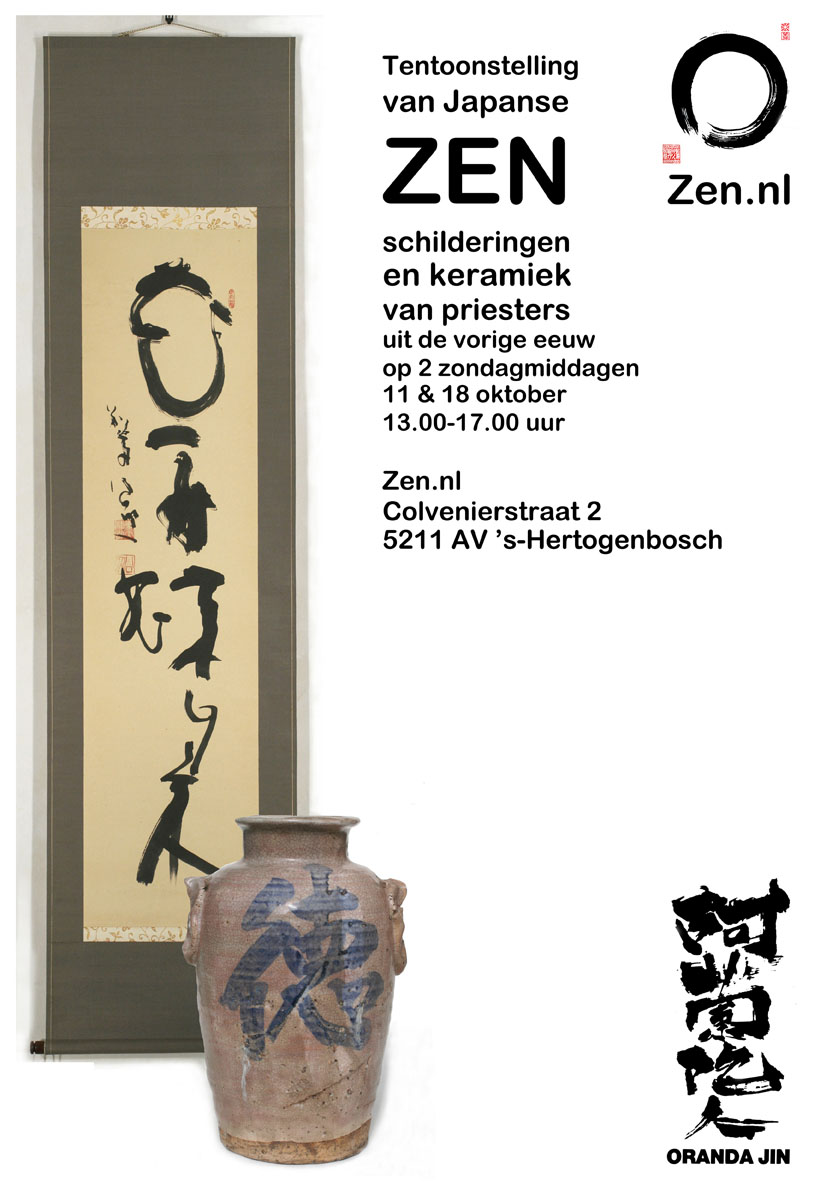
September, fanning away the summer
A relaxed and nice start for a fresh year, a new season at Oranda Jin...
We are fanning away the summer for some, and its heat for others.
Next month we will have a small exhibition of Zen paintings and tea ceramics at ZEN.NL in ‘s-Hertogenbosch. More later.
And still far away, from November 21-29 the PAN fair in Amsterdam
The painters who cause this little breeze at this September up-date are:
Hori Sakudô (act. 1789-1800)
Yamaguchi Sôken (1759-1818)
Maruyama Ôzui (1766-1829)
Haruki Nammei (1795-1878)
Takaku Aigai (1796-1843)
Hayashi Kôsetsu (act c. 1810-30)
Yamamoto Suiunjo (act. 1830s)
Satake Eikai (1803-1874)
Okamoto Sukehiko (1822-1883)
Okamura Sekiran (1834-1895)
Imura Jôzan (1843-1925)
Yamamoto Sankoku (born 1865)
Hayakawa Baitei (1878-19..)
Kôgawa Suigaku (born 1905)
Shunkô (dates unknown)
Ishitani Reizan (dates unknown)
Murase Taiitsu (1803-1881)
Despite the heat wave, despite the omission of an airco, the opening of the exhibition at Gallery Van Hoof was well attended. Water and wine in abundance and nice guests only; a warm and pleasant afternoon.
The catalogue as well as the exhibition of Taiitsu had its start.
So now the catalogue is online, as a regular Oranda Jin web catalogue with prices as well as PDF.
The summer exhibition will last until July 26, 2015
Opening hours Thursday - Sunday from 2.00 – 5.00 PM and by appointment
The show will last until July 26, 2015
September will have a new up-date, so enjoy your holidays and spend them well.
Jan van Hoof galerie
Vughterweg 58-60
5211 CM ’s-Hertogenbosch
June
The AAB Asian Art in Brussels starts on June 10th at 3 pm and will close the 14th at 5pm. This fair will be held in the many galleries around the Sablon in the antique centre of Brussels. http://www.asianartinbrussels.com/
Oranda Jin will be showing at Gallery Laurentin, Ernest Allardstraat 43. At the same address you will find Hotei Japanese prints and Ibasho Japanese photography.
The fair is highly recommended, because at the same time in other galleries around the Sablon two other art fairs are going on: the Brussels Ancient Art Fair (BAAF) and the Brussels Non-European Art Fair (BRUNEAF); a most interesting and varied venue.
As we will show our face in Brussels for the first time we like to a show a good face with important and interesting works in a various range of fields.
We will show another face during the July exhibition at Gallery Jan van Hoof, starting on July 5. Prepare yourself for the looks of Murase Taiitsu (1803-1881).

Kanô Tsunenobu (1636-1713)
Daishin Gitô (1656-1730)
Ogata Kôrin (1658-1716)
Ekaku Hakuin (1685-1768)
Musen Jôzen (1693-1764)
Itô Jakuchû (1716-1800)
Jiun Onkô (1718-1804)
Ike Taiga (1723-1776)
Soga Shôhaku (1730-1781)
Minagawa Kien (1734-1807)
Noro Kaiseki (1747-1828)
Sengai Gibon (1750-1837)
Nichôsai (1751-1802/3)
Go Shun (1752-1811)
Nagazawa Rosetsu (1754-1799)
Aoki Mokubei (1767-1833)
Nakabayashi Chikutô (1776-1853)
Tanomura Chikuden (1777-1835)
Nukina Kaioku (Sûô) (1778-1863)
Matsumura Keibun (1779-1843)
Rai San'yô (1780-1832)
Kiyomizu Rokubei II (c.1797-1860)
Nin’ami Dôhachi I (II) (1783-1855)
Ôtagaki Rengetsu (1791-1875)
Utagawa Kunihisa I (act 1801-1818)
Kunifusa, Utagawa (act 1804-30)
Shibata Zeshin (1807-1891)
Hine Taizan, (1813-1869)
Tanomura Chokunyû (1814-1907)
Kishi Gan Rei (1816-1883)
Hirose Seison (1819-1884)
Ômi Kaidô (1823-1879)
Yamanaka Shinten'ô (1823-1885)
Sugi Chiyôu (1835-1920)
Maekawa Bunrei (1837-1917)
Tomioka Tessai (1837-1924)
Miyoshi Ranseki (b. 1838)
Nantembô (1839-1925)
Himejima Chikugai (1840-1928)
Shiki Shôgaku (act. Meiji)
Hrafuku Suian (1844-1890)
Imao Keinen (1845-1924)
Yoshitsugu Haizan (1846-1915)
Kiyomizu Rokubei IV (1847-1920)
Tomioka Haruko (1847-1940)
Nagamatsu Shunyô (b. 1849)
Ishii Kinryô (1849-1926)
Hirao Chikka (1856-1939)
Wakabayashi Shôkei (1859-1938)
Hagio Kyûkô (1861-1923)
Fukada Chokujô (1861-1947)
Kikuchi Hôbun (1862-1918)
Takami Kiyôen (born 1865)
Kamisaka Sekka (1866-1942)
Tanaka Shôsai (born 1867)
Kunii Ôyô (1868-1923)
Kajino Genzan (1868-1939)
Hashimoto Dokuzan (1869-1938)
Tsuji Kakô (1870-1931)
Yamamoto Shôun (1870-1965)
Yamamoto Shunkyo (1871-1933)
Ōshima Tessui (1871-1945)
Kitamura Hyakkusen (b. 1872)
Kimura Hideo (1872-1944)
Hishida Shunsô (1874-1911)
Mochizuke Gyokkei (1874-1938)
Akaishi Shôun (born 1876)
Shiio Benkiyô,(1876-1971)
Yamada Shühei (b. 1877)
Konoshima Ôkoku (1877-1938)
Takahashi Shûka (b. 1878)
Yoshida Ryûgai (born 1879)
Okumura Setsudô (born 1880)
Kawabata Shunsui (1882-1934)
Hashimoto Kansetsu (1883-1945)
Takahashi Seizan (dates unknown)
Tsuguharu Foujita (1886-1968)
Dômoto Inshô (1891-1975)
Deiryû (1895-1954)
Tomomatsu Entai (1895-1973)
Bokuô, Seki (1903-1991)
Shinso Mizuno (1903-1995)
Inoda Seii (1906-1976)
The AAB Asian Art in Brussels is approaching. From June 10-14 this fair will be held in the many galleries around the Sablon in the antique centre of Brussels. http://www.asianartinbrussels.com/
Oranda Jin will be showing at Gallery Laurentin, Ernest Allardstraat 43. At the same address you may find Hotei Japanese prints and Ibasho Japanese photography.
The fair is highly recommended, because at the same time in other galleries around the Sablon two other art fairs are going on: the Brussels Ancient Art Fair (BAAF) and the Brussels Non-European Art Fair (BRUNEAF); a most interesting and varied venue.
But not June yet we like to amuse you with a general website, things nice: some old, some new, some painted, some fired, some Zen and nothing shocking.
Katô Bunrei (1706-1782)
Sakai Hôitsu (1761-1828)
Oka Yûgaku (1762-1834)
Hasegawa Gyokuhô (1822-1879)
Matsumoto Fûko (1840-1923)
Kiyomizu Rokubei IV (1847-1920)
Watanabe Seitei (1851-1918)
Ogata Gekkô (1859-1920)
Takeuchi Seihô (1864-1942)
Konoshima Ôkoku (1877-1938)
Tatewaki Taizan (1886-1970)
Yagi Issô (1894-1973)
Fujii Kaidô (1898-1984)
Hijiya Bunkei (1899-1951)
Yamada Mumon (1900-1988)
Ganjirô Nakamura II (1902-1983)
Kawajima Hiroshi (1910-1994)
Hashimoto Ryôka (act. late Meiji)
Haruki Nanshô (dates unknown)
Tôson (dates unknown)
Shônen school
Tanomura Chokunyû
Tanomura Chokunyû (1814-1907), his teacher, Chikuden (1777-1835), his schoolmate Hoashi Kyôu (1810-1884), his adopted son Shôsai (1845-1909), his grandson Shôchiku (1877-1945), his great grandson Chokugai (1903-1997), and his best pupil Tanaka Hakuin (1866-1934).
Mitsumiya Chokunyû was born in Takeda, Ôita prefecture in Bungo province. He was the third son of the Oka han clansman Mitsumiya Denuemon. In 1820 he studied Kano painting with Okamoto Baisetsu. Two years later introduced Watanabe Hôtô (1752?-1833), uncle of Chokunyû and the teacher of Tanomura Chikuden Chokunyû to Chikuden and entered his school. Chikuden recognized his talents and adopted him into the Tanomura family. Chokunyu accompanied his teacher on his many trips
During the trip in 1834 he accompanies Chikuden to Osaka and enters Senshindô, the school of Oshio Chûsai (1792-1837) to learn yomeigaku (Neo-Confucianism) and meets Fujisawa Tôgai (1794-1864), Shinozaki Shôchiku (1781-1851), Gotô Shôin (1797-1864), and Okada Hankô (1782-1846). He also receives a certificate for the Satake riryu style of Sojutsu (using the spear in martial arts). After Chikuden’s death he returns to Oita for four years, but feeling isolated brings him back to Kansai. At the age of 27 he settles at Sakai near Osaka, where he opens a school and a poetry group called the “Kôsaiginsha”, which had about 300 members.
From his youth Chokunyû studied Zen. When he was 35 years old he was invited at the Manpukuji, the Ôbaku Zen temple to receive Zen training. He managed to get his inka, certificate of enlightenment, and in 1899 he became head priest at the Shishirin-in subtemple.
He moves to Kôraibashi, Osaka in 1860, where in 1862 he commemorated the hundredth anniversary of the founder of sencha, tea master Basaô (1672-1763), with a large tea ceremony and the display of tea ceremony related artwork on the Seiwan banks of the Yodo river known as the “Seiwan Chakai”. Chokunyû was a great promotor of the Sencha and organized a number of these gatherings with seki, tea serving environments displayed with important works of art. He documented a number of the chakai in books and handscrolls.
In 1868 Chokunyû moved to Kyoto. Ten years later he was asked to establish the Kyoto prefectural Painting School. After he raised the funds and the Maruyama-Shijô Painters, Kôno Bairei (1844-1895), Mochizuki Gyokusen (1852-1906), Kubota Beisen (1852-1906) and Kose Shôseki (1843-1919) the school was in existence in 1880 and Chokunyû its first director. Two years later he opened a private school Nanshû Gagakko to teach Nanga painting, which merged in 1896 with the Nihon Nanga Kyôkai, Japan Nanga Association newly established together with Tomioka Tessai (1837-1924), and Taniguchi Aizan (1816-1899).
In 1884 he resigned from his position due to the rivalry between the representatives of the distinct painting styles.
Reference:
Roberts p. 174
Araki pp. 1080-1081
Graham p. 171 ff.
Berry & Morioka ‘99 p. 92-95
Berry & Morioka ‘08 p. 303-05
SALE, SOLDES, AUSVERKAUF, UITVERKOOP, 大売り出し
Almost 30 years of collecting paintings it partly has grown into storing paintings. This was not quite its goal, but in the many years we learned a lot from them. Together with customers, and friends we had nice talks and discussions while looking at them and make comparisons while creating combinations in many small-scale shows. These paintings deserve a better life and more attention than just being with us and gather dust and become more and more antique.
3 years ago we created some space, now 3 years later ...
We hope that these huge discounts will help the paintings, but also Oranda Jin to move on to an even better stock.
SALE REMARKS & RULES
- The paintings have no boxes unless signed, or otherwise original
- We only take firm others and the paintings are not to be returned
- For orders over € 200 (or $ 300) the shipping cost as air freight postal parcel is included
- No credit cards are accepted, outside EU please use Pay Pal
- Within the EU please pay by bank transfer, this should be without cost, if not please take care of all bank costs
Good luck and take your chance. Most discounts are generous; most paintings are wonderful and most of the painters are well known.
Ôta Nampo (Shokusanjin)(1749-1823)
Gan Ku (1749-1838)
Go Shun (1752-1811)
Takeda Unshitsu (1753-1827)
Yoshinori Kazan'in (1755-1829)
Chôbunsai Eishi (Hosoda) (1756-1829)
Kushiro Unsen (1759-1811)
Chô Gesshô (1772-1832)
Ueda Kôchô (1788-1850)
Maruyama Õshin (1790-1838)
Watanabe Kazan (1793-1841)
Tamate Tôshû (1795-1871)
Nakajima Raishô (1796-1871)
Kishi Renzan (1804-1859)
Nakanishi Kôseki (1807-1884)
Kanô Tôsen (1811-1871)
Miyoshi Unsen (born 1812)
Ôtani Shôchin (1817-1894)
Teranishi Ekidô (1824-1916)
Kaikôden Shingi (1832-1906)
Okamura Sekiran (1834-1895)
Matsudaira Sekkô (1834-1916)
Nakajima Yushô (1837-1905)
Nantembô (1839-1925)
Kawabata Gyokushô (1842-1913)
Rissetsu (dates unknown)
Kangetsu (dates unknown)
Kaigai Tennen (act. Meiji era)
Sôseki (dates unknown)
Suda Kanko (dates unknown)
Watanabe Seitei (1851-1918)
Ônishi Mokudô (born 1853)
Kikuchi Hôbun (1862-1918)
Terazaki Kôgyô (1866-1919)
Nakajima Kahô (1866-1939)
Kamisaka Sekka (1866-1942)
Kajino Genzan (1868-1939)
Hashimoto Dokuzan (1869-1938)
Yamada Gyokuden (1870-1961)
Yamamoto Shunkyo (1871-1933)
Sakamoto Unkoku (born 1871)
Yamamoto Sekisô (1872-1944)
Oka Buntô (1876-1943)
Konoshima Ôkoku (1877-1938)
Nishimura Goun (1877-1938)
Yamada Kôun (1878-1956)
Takase Goho (1878-1961)
Kanei Isshô (1879-1944)
Aoki Seiko (born 1879)
Keijû Reikyô (1881-1935)
Hayashi Buntô (1882-1966)
Yazawa Gengetsu (1886-1952)
Hirai Baisen (1889-1969)
Kasumi Bunshô (1905-1998)
Anzai Keimei (1905-1999)
Kôson (dates unknown)
Seiko (dates unknown)
Kôrei (dates unknow)
Sen'osei (?)
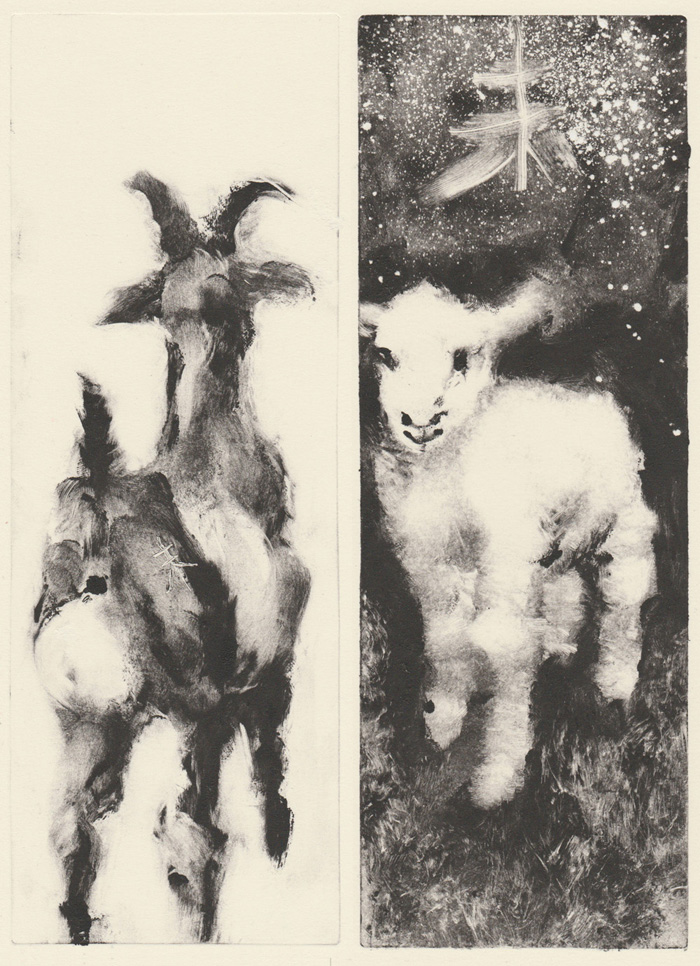
Blossom, seedlings, stalks, twigs, branches and trees. January the start of a new cycle of seasons. Depicted by: Ban Kôkei (1733-1806) Kamo Suetaka (1752-1842) Azuma Tôyô (1755-1839) Haruki Nanko (1759-1839) Sakai Hôitsu (1761-1828) Tani Bunchô (1763-1840) Kikuchi Gozan (1769-1849) Uragami Shunkin (1779-1846) Ôtagaki Rengetsu (1791-1875) Suzuki Kiitsu (1796-1858) Mori Ippô (1798-1871) Mihata Jôryû (act 1830-1843) Ema Tenkô (1825 -1901) Yasuda Rôzan (1830-1882) Okuhara Seiko (1837-1913) Suzuki Shônen (1848-1918) Watanabe Seitei (1851-1918) Murata Gyokuden (1853-1918) Hashimoto Kaikan (1854-1935) Uejima Hôzan (1875-1920) Imao Keishô (1902-1993) Yûsui (dates unknown) Chokushû sanjin (dates unknown)
Catalogue 24 Times change and so do we. Internet is increasingly taking over. We have not given up on the on the old paper medium, but...
The present catalogue opens with two early pieces of painters’ pottery, a fine chawan by Matsumura Go Shun and another by Mokubei with an important reference by Gengensai, 11th generation tea master of the Urasenke School.
Some interesting accents can be found with Chikuden, the numbers 51-53. He is known as a painter, but don’t underestimate his skills as a potter. Three different styles of his pottery are shown here.
No. 50: accidental, but nevertheless. When the Tôdai-ji celebrated the anniversary of the rebuilding of its Buddha Hall, it published a reproduction of the congratulatory calligraphy by its former head abbot, Shimizu Kôshô. We managed to find both the reproduction and one of the originals.
Also some modern paintings, traditionally mounted though. These are a relatively new aspect of Japanese painting offered by Oranda Jin. They may take some getting used to, but times change and so does taste. Do not hamper progress; try to see what is nice about them. It is beauty in another form.
We would like to express our thanks to Henri Kerlen for his expertise and translations.
Jon de Jong
October 2014
Please view the catalogue
PAN FAIR AMSTERDAM 2014
As in previous years Oranda Jin will participate again in the PAN fair from 23-30 November
We look forward to welcome you in our booth # 78, Amsterdam RAI (Hall 8).
An important section of this November up-date is dedicated to “Zen zien”, See(ing) Zen. “Zen zien” is a small show inside the exhibition of Sekimori-ishi in Museum Het Kruithuis in ’s-Hertogenbosch. The exhibition opens on Nov. 16 and will last until Dec. 22.
On Sunday morning, December 7 at 11.00 a.m. Jon de Jong will talk, explain and answer questions (hopefully) on Zen paintings. A week later on December 14 at the same time, 11.00 a.m. the ‘talk’ will be on Japanese painting in general.
Somewhat later this month, when issued, catalogue 24 will be online.
For now:
Kusumi Morikage (c.1620-1690)
Ekaku Hakuin (1685-1768)
Minagawa Kien (1734-1807)
Nagazawa Rosetsu (1754-1799)
Utagawa Kunihisa I (act 1801-1818)
Kawamura Bumpô (1779?-1821)
Tanaka Nikka († 1845)
Yokoyama Seiki (1792-1864)
Tomioka Tessai (1837-1924)
Tomioka Haruko (1847-1940)
Suzuki Shônen (1848-1918)
Sugawara Jihô (1866-1956)
Kôshitsu Chokuô (1867-1937)
Sôtaka Taikô (1871-1968)
Kiyomizu Rokubei V (1875-1959)
Genjô Seisetsu (1877-1945)
Tanaka Tesshû (1879-1937)
Keijû Reikyô (1881-1935)
Deiryû (1895-1954)
Itô Shinsui (1898-1972)
Kasumi Bunshô (1905-1998)
Yurimoto Izuru (born 1939)
Reishû (dates unknown)
Chawan
October still will remain a kind of quiet. November though …
On November 15 the new exhibition of Sekimori Ishi modern will be held at a new venue, in the Kruithuis, ‘s-Hertogenbosch. Some Zen paintings from Oranda Jin will add a little extra to the show, which will last until December 21.
From November 23rd until November 30 the PAN fair in the RAI, Amsterdam, we will give acte de présence with catalogue 24 and lots of new paintings and ceramic wares in booth 78.
But first the theme of this month:
Chawan.
A significant part of Oranda Jin’s inventory consists of decorated pottery produced as gassaku, a cooperative work of art between potters and painters, or priests. The influence, as well as the physical ‘fingerprint’, of painters on the ornamentation of ceramic wares is an intriguing one. Such objects are quite rare with their use by and large reserved for use as tea ceramics, including tea bowls (chawan), in the tea ceremony (chanoyu).
Chawan were made in a range of sizes and styles. Different styles are used for ‘thick’ and ‘thin’ tea: shallow bowls, which permit the tea to cool rapidly, are employed for summer, while deep bowls are for winter. Irregularities and imperfections are prized, and they often feature prominently as the ‘face’ or front of the bowl.
Macha, green powder tea makes high demands upon the bowl, it must look superb.
Painters like Chokunyū and Tessai, associated with the Chinese-orientated and intellectual literati (bunjin), produced many tea wares. And as ‘tea’ has close links with Zen Buddhism, a number of Buddhist priests contributed designs—often calligraphy—for tea utensils.
Tea-master:
Kobori Enshū IIX (1786–1867)
Painters:
Nakajima Raishō (1796–1871)
Tanomura Chokunyū (1814–1907)
Suzuki Hyakunen (1825–1891)
Kawabata Gyokushō (1842–1913)
Hirao Chikka (1856–1939)
Takeuchi Seihō (1864–1942)
Yamamoto Sekisō (1872–1944)
Shimizu Kōshun (d. 1945)
Shoda Kakuyū (1879–1948)
Yamashita Chikusai (1885–1973)
Deiryû (Kanshū Sōjun) (1895–1954)
Hayashi Ekyō (Kaishū) (1896–1979)
Yamada Mumon (Taishitsu) (1900–1988)
Tokuriki Tomikichirō (1902–2000)
Kasumi Bunshō (1905–1998)
Shimizu Kōshō (1911–1999)
Onozawa Kankai (b. 1934)
Potters:
Takahashi Dōhachi II (Nin’ami) (1783–1855)
Hozen Eiraku XI (1795-1854) (Nishimura Zengorō XI) (Konan Hozen)
Suzuki Harukō (dates unknown)
Takahashi Dōhachi IV (1845–1897)
Kiyomizu Rokubei IV (1847–1920)
Yōhei Seifu III (1851–1914)
Takahashi Dōhachi VI (1881–1941)
Matsumoto Shigenobu (1864–1950)
Takahashi Dōhachi V (1869–1914)
Yoshimura Yoshirō (dates unknown)
Kiyomizu Rokubei VI (1901–1980)
Kawasaki Kizō (Waraku VII) (b. 1936)
Samukawa Seihō II (b. 1946)
Fushimei (dates unknown)
Kilns and yaki, ceramic styles:
Tairaku (Hara Shōyū)
Waraku
Tokoname
Isuzu
Kosōbe
Kiyowa
Uchide
Kagura
Hakone
Kishū
New and interesting
So we kept quiet for two months. May be a relief, may be you missed us.
Meanwhile we worked on the new catalogue (# 24) and started to make the preparations for the PAN fair in November.
In order to feed both these ‘events’ we managed to acquire a wide range of new (and interesting) paintings. September at Oranda Jin will look good.
Okada Beisanjin (1744-1820)
Go Shun (1752-1811)
Okamoto Toyohiko (1773-1845)
Okada Kanrin (1775-1849)
Yokoyama Seiki (1792-1864)
Hirose Hakuen (act. 1850-70)
Shibata Zeshin (1807-1891)
Nakajima Yushô (1837-1905)
Kôno Bairei (1844-1895)
Sôhan Gempô (Shôun) (1848-1922)
Hakuhô, Takebe (c. 1850-1920)
Nakajima Shûgaku (act Meiji)
Nishimura Goun (1877-1938)
Ogawa Sen’yô (1882-1971)
Ishizaki Kôyô (1884-1947)
Nohara Ôshû (1886-1933)
Yamamura Kôka (1886-1942)
Tatewaki Taizan (1886-1970)
Sekida Kadô (dates unknown)
Fukuyo Etsuo (1901-1981)
Suzuki Sekôshi (b. 1904)
Kotozuka Eiichi (1906-1982)
Shimizu Kôshô (1911-1999)
Painting albums summer up-date.
Last year at Gallery Van Hoof we had the exhibition of painting albums. This year for the summer we do the trip again.
Books for the summer make one longing for beaches, finally time to read. When (still) being home you can riffle through the pages of the website.
22 albums, quite a number of gassaku-jô, albums done by several artists, but also albums by one painter, tan-gajô. Any rate, numerous paintings by numerous painters.
To mention a few of the known ones:
Watanabe Nangaku (1767-1813)
Rai Rissai (1803-1863)
Nishiyama Hôen (1804-1867)
Nakanishi Kôseki, (1807-1884)
Tanomura Chokunyû (1814-1907)
Maeda Chôdô (1817-1878)
Matsuoka Kansui (1818-1887)
Maekawa Bunrei (1837-1917)
Mori Shungaku (1837-1918)
Bokugyû Sôdô (1841-1920)
Miyoshi Rôseki (born 1841)
Fukui Rokusen (1843-1884)
Fujisawa Nangaku (1843 -1921)
Imao Keinen (1845-1924)
Tamura Gesshô (1846-1918)
Kondô Nanshû (1851-1923)
Hirao Chikka (1856-1939)
Kawamura Kôgai (1861-1932)
Kikuchi Hôbun (1862-1918)
Egami Keizan (1863-1924)
Ikeda Eisen (1863-1931)
Takeuchi Seihô (1864-1942)
Shimomura Izan (1865-1949)
Tanaka Hakuin (1866-1934)
Tanaka Shôsai (born 1867)
Kunii Ôyô (1868-1923)
Kajino Genzan (1868-1939)
Yamamoto Shôun (1870-1965)
Kubota Beisai (1874-1937)
Mochizuke Gyokkei (1874-1938)
Toya Hanzan (1876-1966)
Kuboi Suitô (born 1876)
Okumura Setsudô (born 1880)
Kawabata Shunsui (1882-1934)
Sugai Kôson (born 1890)
Inoue Sekison (1893-1975)
Fukuda Seitô (1897-1988)
Itô Itsuhô (born 1899)
Nishioka Tsuguji (born 1900)
Unseki (act c. 1940)
Asada Sosen (born 1911)
Modern landscapes
Surprises can be nice.
Surprising yourself can be a nice surprise.
As far as I know I always considered myself a black and white man; bold preferably.
Recently I found out that colours could be nice too.
A number of paintings from the second half of the twentieth century can be nice for that kind of colours.
After the war Japanese houses changed. So their interiors changed and with it sizes and formats. Paintings move into Western-style frames, and the horizontal formats are not explicitly meant for the tea ceremony anymore, but they might fit behind the couch as well and next to the TV. I am kidding, but I like the changes, that surprised me. Have a look and see what you think.
Japanese painters from the Twentieth century:
Tatewaki Taizan (1886-1970)
Matsumoto Shisui (1887-1972)
Suita Sôboku (1890-1983)
Kôno Shûson (1894-1987)
Hama Kosho (1894-1990)
Kawashima Baikyu (born 1896)
Fujiwara Shigetomi (born 1898)
Yamashita Iwao (1898-1977)
Hashimoto Okiie (1899-1993)
Satô Kôkan (1902-1975)
Anzai Keimei (1905-1999)
Toda Kôdô (1907-1982)
Kawai Kenji (1908-1996)
Kawajima Hiroshi (1910-1994)
Maeda Eki (born 1922)
Minami Yoshinobu (born 1934)
Sei (dates unknown)
Summery landscapes on fans.
From spring we’ll slowly wander into summer.
Fans to cool us, as maps show as the way through landscapes.
Not all the artists are equally famous, but certainly not less good.
Prices won’t make you sweat.
Enjoy!
Kikuchi Nantei († 1779)
Kôzan (act. c.1810)
Õoka Umpô (1765-1848)
Nagayama Kôin (1765-1849)
Hamada Kyôdô (1766-1814)
Maruyama Ôshin (1790-1838)
Hidaka Tetsuô (1791-1871)
Kondô Kôson (act. 1830s)
Hirano Gogaku (1810-1893)
Kanda Kôun (born 1817)
Nagusa Ippô (act. c. 1840s-1860s)
Akio Shôzan (act c.1850s)
Odaira Shôshû (1849-1930)
Mori Hankei (b. 1858)
Yamaoka Beika (1868-1914)
Chôshû (dates unknown)
Enzan (dates unknown)
Ôgai (dates unknown)
Saihô (Gôkô)(dates unknown)
Sappô (dates unknown)
Shôkan (dates unknown)
Spring

It is spring for most of us.
It is a time to breathe, to smell the scents, a time to go out and walk, or even better hike.
It is the time to encounter youthful happiness, blossoms, and the melancholy of fresh green weeping willows.
These artists knew about Spring.
Tani Bunchô (1763-1840)
Kikuchi Gozan (1769-1849)
Chô Gesshô (1772-1823)
Niwa Hankanshi (1773-1841)
Uragami Shunkin (1779-1846)
Imaôji Yûzan (1790-1849)
Takaku Aigai (1796-1843)
Mihata Jôryû (act 1830-43)
Umemoto (?) Shôkei (act. 1830-40s)
Yamaoka Seiryô (1807-1869)
Mochizuki Kimpô (1846-1915)
Watanabe Seitei (1851-1918)
Kikuchi Hôbun (1862-1918)
Maeda Kimpû (1863-1945)
Otaki Uzan (1871-1939)
Konoshima Ôkoku (1877-1938)
Ikai Shôkoku (1881-1939)
Suda Katei (born 1882)
Deiryû (1895-1954)
Kawashima Baikan (1902-1977)
Nyoseki Dates unknown)
Late Nanga painting.
This news update showcases paintings in a style that I admire greatly—Nanga (literati) works from the second half of 19th century. This is not the easiest genre to acquaint oneself with, but it is one well worth looking at and one that might well open up a new visual world. A world of brushstrokes as turbulent as the late Edo/Meiji period in which these Nanga painters lived.
In the late Edo period (1850s–1860s), ‘bunjin’ literati studied foreign science and became increasingly aware of the larger world outside Japan. They were also acutely aware of the winds of change stirring within Japan, including the efforts to keep the emperor in Kyoto instead of forcing him to move to Edo. These were turbulent times indeed.
With the advent of the Meiji era (1868–1912), influences from foreign countries came into focus, and of these Chinese painting stood out. Some Japanese painters went to China, and they returned with new ideas and were inspired to reinvigorate Nanga painting. Moreover, women were allowed to travel after 1865, which meant that female Nanga artists like Okuhara Seiko who lived in provincial regions were able to have a presence in the Tokyo art world.
The ‘brush workers’:
Fujimoto Tesseki (1817–1863)
Yamanaka Seiitsu (Shinten’ō, 1823–1885)
Konō Tettō (1825–1867)
Ema Tenkō (1825–1901)
Yasuda Rōzan (1830–1882)
Sekiguchi Rōun (1836–1901)
Okuhara Seiko (1837–1913)
Himejima Chikugai (1840–1928)
Asai Hakuzan (Ryūtō, 1842–1907)
Yoshitsugu Haizan (1846–1915)
Okuhara Seisui (1854–1921)
Hashimoto Kaikan (1854–1935)
Kawabe Seiran (1868–1931)
Kashibachi
As a special feature for February we picked the Kashibachi, bowl for “kashi” cakes, sweets (and fruits). The bowls to be used in the tea ceremony are executed in regular earthenware as well as in porcelain.
The painters and potters and a rare poet who made the bowls are:
The painters:
Asai Chû (1856-1907)
Ueda Tangai (1863-1939)
Hattori Sekisen (1864-1920)
Anan Chikuda (1864-1928)
Tanaka Hakuin (1866-1934)
Suma Taisui (1868-1955)
Okutani Shûseki (1871-1936)
Yamamoto Sekisô (1872-1944)
Mitsui Hanzan (1880-1934)
Ikai Shôkoku (1881-1939)
Okada Sekirei (1886-1960)
Gôtô Shûgai (born 1886)
Yokoyama Shunkei (1900-1979)
Kuwana Seika (c. 1900-50)
Tanomura Chokugai (1903-1997)
Korei
The potters:
Miura Chikusen I (1854-1915)
Suda Seika (1862-1927)
Daimaru Hôpô (1879-1959)
Takahashi Dôhachi VI (1881-1941)
Shunji Katô (1892-1979)
Sawamura Tôsai I († 1941)
Unrin in Hôzan XX (born 1938)
Hakuun
Sôkitsu
The poets:
Ikebe Yoshikata (1861-1923)
Raisuijin
A Happy New Year

We wish you a good, healthy and happy year of the horse 2014.
2014 An unwritten page still. Blank, or white as snow, full of promises...
Ki Baitei (Kyûrô ) (1734-1810)
Go Shun (1752-1811)
Nagayama Kôin (1765-1849)
Nishimura Nantei (1775-1834)
Shibata Gitô (1780-1819)
Mochizuki Gyokusen (1794-1852)
Õhara Donshû († 1857)
Fujimori Koan (1799-1862)
Kishi Renzan (1804-1859)
Nakanishi Kôseki (1807-1884)
Kita Kadô (1812-1877)
Ôta Bunki (1832-1904)
Suzuki Shônen (1848-1918)
Tsuji Kakô (1870-1931)
Hirafuku Hyakusui (1877-1933)
Kawabata Shunsui (1882-1934)
Yazawa Gengetsu (1886-1952)
Kabata Tôsen (1897-1985)
Chokushû sanjin (dates unknown)
Hôjô (dates unknown)
Ukiyo-e drawings
Thank you too for making the Pan fair successful for us.
Not paintings but Ukiyo-e drawings to end this year with. Once a field in which we could be more active when prints were still the main part of our business and because of that situation harder to get.
Still it remains a most interesting area to meet with the handwriting of the artists who have been responsible for this huge number of the popular woodblock prints. Compared to the output prints sketches are rare.
In this web up-date we mainly present anonymous drawings by artists from the Utagawa school, but also signed drawings by Sadahide, Yoshitora, Hiroshige II, Hiroshige III and Utatora with a few additions of the later artists Natori Shunsen and 2 sketches attributed to Ishii Hakutei.
PAN FAIR AMSTERDAM 2013
PAN FAIR AMSTERDAM 2013
As in previous years Oranda Jin will participate again in the Pan fair in Amsterdam.
We look forward to welcome you in our booth # 78.
This year the Pan Fair will be held from 24 November until December 1st.
This up-date is a minimal introduction of what we will bring with us.
A general overview of different styles: Ukiyo-e, Nihonga, Shijô, Zenga and Nanga, but also different catagories: pottery, albums and paintings
Artists:
Õta Nampo (1749-1823)
Rokujuen (1752-1829)
Magao (1753-1829)
Kubo Shumman (1757-1820)
Shibata Gitô (1780-1819)
Eiraku Hozen XI (1795-1854)
Takaku Aigai (1796-1843)
Nakajima Raishô (1796-1871)
Utagawa Kunifusa (act 1804-30)
Mori Jihô (1818->1891)
Tomioka Tessai (1837-1924)
Imao Keinen (1845-1924)
Yoshitsugu Haizan (1846-1915)
Anan Chikuda (1864-1928)
Takeuchi Seihô (1864-1942)
Suma Taisui (1868-1955)
Yamamoto Sekisô (1872-1944)
Kato Eishû (1873-1939)
Sawamura Tôsai I († 1941)
Sakamoto Kôjô (1875-1969)
Natori Shunsen (1886-1960)
Okada Sekirei (1886-1960)
Shunji (1892-1979)
Modern landscape paintings
PAN FAIR AMSTERDAM 2013
As in previous years Oranda Jin will participate again in the Pan fair in Amsterdam.
We look forward to welcome you in our booth # 78.
This year the Pan Fair will be held from 24 November until December 1st.
At the summer exhibition in July this year we showed a couple of modern landscape paintings. The look of them was surprising, completely different to what we are used to. So, why not make an up-date with modern landscapes and other landscapes that might look surprising too. Gan Ku (1749-1838) Kamo no Suetaka, (1752-1842) Naitô Tôho (1728-1788) Ukita Ikkei (1795-1859) Tanomura Chokunyû (1814-1907) Tazaki Sôun (1815-1898) Ôtani Shôchin (1817-1894) Sô Shukuju (born 1825) Kaikôden Shingi (1832-1906) Imura Jôzan (1843-1925) Hashimoto Dokuzan (1869-1938) Kodera Ungai (1871-1930) Yamamoto Shunkyo (1871-1933) Iguchi Kashû (1880-1930) Funakawa Kashû (born 1880) Matsuyama Shôzan (born 1884) Kobayashi Zentei (1893-1972) Kojima Ikkei (1900-1974) Kitsuda Eihô (1902-1974) Endô Sôju (1917-2011) Suda Kanko (dates unknown) Saishô (dates unknown) Raseki (dates unknown)
Van hier tot Tokyo
On September 21st Gallery Contrast in Tilburg (Besterdring 46, 5014 HL), will have the opening of their exhibition called "Van hier tot Tokyo", http://www.contrast-kunst.nl/nieuwsoverzicht/. The exhibition will last until November 2nd and show the work of some of their artists inspired by Japanese art. Oranda Jin will hang some of the inspiration, a small selection of the scroll paintings in distinguished styles represented in this up-date.
Artists in this up-date:
Yokoi Yayû (1702-1783) (Haiga)
Naitô Tôhô (1728-1788) (Kanô)
Ôta Nampo (1749-1823) (Kyôka poet)
Gan Ku (1749-1838) (Kishi)
Chôbunsai Eishi (Hosoda) (1756-1829) (Kanô/Ukiyo-e)
Mochizuki Gyokusen (1794-1852) (Shijô)
Mihata Jôryû (act 1830-43) (Kansai Ukiyo-e)
Shiokawa Bunrin (1801-1877) (Shijô)
Okamura Sekiran (1834-1895) (Shijô)
Nantembô (1839-1925) (Zenga)
Watanabe Seitei (1851-1918) (Nihonga)
Maeda Kimpû (1863-1945) (Neo Rimpa)
Fukuda Kodôjin (1865-1944) (Nihonga)
Kamisaka Sekka (1866-1942) (Neo Rimpa)
Yamamoto Shunkyo (1871-1933) (Nihonga)
Konoshima Ôkoku (1877-1938) (Nihonga)
Tanaka Tesshû (Chishô) (1879-1937) (Zenga)
Ikeda Terukata (1883-1921) (Nihonga)
Kawamura Riken (born 1896) (Nihonga)
Kasumi Bunshô (1905-1998) (Zenga)
Introduction
Maybe it’s boring. Another new field: painting albums! But we feel it is just fascinating. And we are proud to be able to present so many wonderful examples. Keibun’s handscroll, for instance, and albums by his pupils; rare and early albums by Shunkin and Nammei; a wonderful set by Kôseki and Taizan. And let us not forget paintings and calligraphy by the priest Seisetsu, a collection of sketches of women by Terukata, and a large group of delicate kimono designs.
The cradle of many forms of Japanese art stood in China; painting albums are no exception. The first albums came to Japan at the time of Toyotomi Hideyoshi (1537-1589). Another important moment was 1614 when the Ôbaku Zen sect settled in Nagasaki which brought Chinese monks and their heritage to Japan.
It was common to mount shôhin, small paintings, side by side, but rolling and unrolling in due course damaged the pictures. So when shôhin had the same size, they were folded in the centre, which made them less vulnerable. Covers were added, which resulted in an orihon, a leporello-style album. It started with this type of album, other forms came later.
Depending on the contents, the albums have different names. Albums with just pictures are called gajô. If they have calligraphy as well as paintings, they are known as shoga-jô. When there is a substantial number of poems: shiga-jô. An album by a single painter is called tan-gajô, or jiteki-jô; when there are several painters, the term gassaku-jô is used. When a collector compiled the album, we call it shûga-jô, but shûga-jô written with different kanji, means an album made for practice with keiko, sketches, or mosha, copies.
All of these types are represented in this catalogue.
If you are interested in the subject, see if you can find Rose Hempel, Zeigen der Freundschaft, Maler-Alben . Fächer . Rollbilder aus Japan, Hamburg 1998.

Oranda Jin te gast bij Jan van Hoof galerie
tentoonstelling van japanse rolschilderingen en schilderskeramiek uit de 18e t/m 20e eeuw, met speciale aandacht voor schilderingen albums.
Exhibition of Japanese scroll paintings and painters’ ceramics from the 18th / 20th century. The show will have an emphasis on gajô, painting albums and will be accompanied by a catalogue.
You are cordially invited at the opening at 2.00 PM on Sunday July 7th.
Gallery Jan van Hoof
Vughterweg 58-60
5211 CM ’s-Hertogenbosch
Opening hours from 2 pm. - 6 pm. from Thursday - Sunday and by appointment.
The exhibition will last until July 28, 2013.
Meanwhile this up-date is entirely dedicated to sets of ceramic utensils: porcelain, sometsuke, as well as earthenware, yaki, decorated by painters and often produced in cooperation with potters and kilns. It is hard to imagine but it is a very rare and underestimated field of collecting.
The painters:
Nichôsai (1751-1802/3)
Tanomura Chokunyû (1814-1907)
Tomioka Tessai (1836-1924)
Himeji Chikugai (1840-1928)
Irie Shikai (1862-1940)
Yamamoto Sekisô (Sekiyô) (1872-1944)
Ôbaku Dôgen Ninmyô (1877-1966)
Mitsui Hanzan (1881-1934)
The potters:
Seifu Yôhei III (1851-1914)
Suwa Sozan (1852-1922)
Miura Chikusen I (1854-1915)
Miyanaga Tôzan (1865-1941)
Takahashi Dôhachi V (1869-1914)
Takahashi Dôhachi VI (Kachûtei) (1881-1941)
Kiyomizu Rokubei V (1875-1959)
Wada Tōzan I (Kikusono) (1888-1967)
Kiyomizu Rokubei VI (1901-1980)
Miura Chikusen IV (1911-1976)
Takano Seihô (Goun) (dates unknown)
Mokusen (dates unknown)
Kyôshô (dates unknown)
Kiln
Inuyama
Zen
A little bit of Zen painting in this month of May.
It will give us time to make preparations for the exhibition in July.
The show in July of paintings and painter’s ceramics will have an emphasis on painting albums (and hand scrolls).
The exhibition will be at the same marvellous place as last year, the Jan van Hoof gallery, along the Dommel, overviewing the polders around ‘s-Hertgenbosch and looking out at the St. Jan (our cathedral). Just that should be enough the make the visit during the show.
The opening is on Sunday July 7th and the exhibition will last until the 28th.
More details next month.
For now the priests:
Nantembô (1839-1925)
Gempô Daiin (1842-1933)
Murakami Mutei Mutei (1863-1923)
Hashimoto Dokuzan (Gengi)(1869-1938)
Sôtaka Taikô (Furukawa) (1871-1968)
Seisetsu Genjô (1877-1945)
Tanaka Tesshû (Chishô) (1879-1937)
Keijû Reikyô (1881-1935)
Deiryû (1895-1954)
Kasumi Bunshô (1905-1998)
Hyakkô (dates unknown)
Kadô dôjin (dates unknown)
Reishû (dates unknown)
Tendô (dates unknown)
NANGA style painting
As March was in the Shijô style, April will have the colours Nanga.
More specific the colours of the artists from the third generation mainly: the theorists.
In the west Nanga painting is considered to be the least accessible of the Japanese painting styles. But if one takes the time Nanga will open up to show beautiful paintings of highly personal Japanese interpretations of Chinese art.
Nanga is a literati style based on Chinese models. Bunjin, amateur scholars, according to the Chinese tradition were involved in a lot of all amateurish occupations like painting, poetry, calligraphy, making music and the art of tea ceremony.
After the national closure of Japan in the early 18th century Nanga painters were artistic rebels and intellectually adventurous, turning to the Chinese literati tradition in an attempt to break away from the dominance of Kanô school aesthetics. Due to the isolation of Japan, a direct understanding of later Chinese paining was not at all easy to acquire.
In the next five different generations of Nanga painters, Nanga changed from free interpretation to a deliberately conservative attitude during its third generation towards what was supposed to be Chinese. After a development of increasing rough brush work in the Meiji period the cycle was complete; an art that had been born as a challenge to tradition, with influence from abroad, was now itself a tradition.
Tatebe Ryôtai (Kanyôsai, or Ayatari) (1719-1774) (2nd gen.)
Tanke Gessen (1721-1809) (2nd gen.)
Minagawa Kien (1734-1807) (2nd gen.)
Noro Kaiseki (1747-1828)
Totoki Baigai (1749-1804) (2nd gen.)
Takeda Unshitsu (1753-1827)
Ichida Banri (1770-1842)
Nakabayashi Chikutô (1776-1853)
Nukina Kaioku (Sûô) (1778-1863)
Rai San'yô (1780-1832)
Okada Hankô (1782-1846)
Imaôji Yûzan (Genshû)(1790-1849)
March will be in the Shijô style
In 1783 Go Shun (1752-1811) came to Shijôdori, Fourth Street in Kyoto to be a help his teacher Yosa Buson (1716-1783) who was seriously ill. He established his studio only a few doors away from his teacher and close the studios of Maruyama Ôkyo (1733-1795), Komai Genki (1747-1797) and Itô Jakuchû (1716-1800).
After he moved away from the Buson’s Nanga style he developed a style of his own, closely related to that of Maruyama Ôkyo (1733-1795), but less focussed to the shaseiga, painting from nature, that Ôkyo taught.
His most important pupils were his 27 years younger brother Matsumura Keibun (1779-1843), Okamoto Toyohiko (1773-1845) and Shibata Gitô (1780-1819).
Although their mutual styles are close, they still quite distinguished from each other. All three seemed to have used different aspects of Go Shun’s work. Keibun was the more formal one and relatively closer to shaseiga,, Toyohiko painted dreamy, suggestive landscapes using broad washes and Gitô, the youngest was a good and talented follower, but he died to young to really grow in to the status for which Keibun and Toyohiko reached.
The differences in styles between Toyohiko and Keibun are clearly extant in the work of their many students. The most important pupils of Keibun were Yokoyama Seiki (1792-1864), Nakajima Raishô (1796-1871), Nishiyama Hôen (1804-1867) and Hasegawa Gyokuhô (1822-1879). As for Toyohiko Tanaka Nikka, Shiokawa Bunrin (1801-1877) and Shibata Zeshin (1807-1891) were amongst his most important.
A pity that we can’t show Toyohiko, but the Bunrin’s “Snowstorm” comes very close.
Go Shun (1752-1811)
Azuma Tôyô (1755-1839)
Hatta Koshû (1760-1822) (actually Maruyama)
Yoshimura Kôkei (1769-1836) (actually Maruyama)
Chô Gesshô (1772-1832)
Matsumura Keibun (1779-1843)
Shibata Gitô (1780-1819)
Ueda Kôchô (1788-1850)
Ônishi Chinnen (1792-1851) (actually Maruyama)
Yokoyama Seiki (1792-1864)
Mori Ippô (1798-1871)
Shiokawa Bunrin (1801-1877)
Mori Kansai (1814-1894)
Mihata Jôryû (act 1830-1843)
Murase Sôseki (1822-1877)
Hasegawa Gyokuhô (1822-1879)
Matsuo Shûzan (act early Meiji)
Kubota Beisen (1852-1906)
Snow
More officially now the year of the snake makes its start. So once again we wish you a happy and prosperous Year of the snake.
And we’ll start it white, with snow, finishing the winter and still with some patience preparing for spring.
The artists helping us through the winter are:
Ban Kôkei (1733-1806)
Azuma Tôyô (1755-1839)
Nishimura Nantei (1775-1834)
Ueda Kôchô (1788-1850)
Õhara Donshû († 1857)
Mochizuki Gyokusen (1794-1852)
Kishi Renzan (1804-1859)
Nakanishi Kôseki (1807-1884)
Kita Kadô (1812-1877)
Numata Kashû (1838-1901)
Suzuki Shônen (1848−1918)
Tsuji Kakô (1870-1931)
Yamamoto Shunkyo (1871-1933)
Shimomura Kanzan (1873-1930)
Hirafuku Hyakusui (1877-1933)
Iguchi Kashû (1880-1930)
Yazawa Gengetsu (1886-1952)
Sagawa Myôshun (1891-1988)
Kasumi Bunshô (1905-1998)
Gochiku
Happy new year

We wish you a good, healthy & happy year of the snake 2013, and hopefully wrapped in beauty.
The start of this year is in accordance with the (greater) Taishô conference in Leiden.
In this January up-date we have the pleasure of adding a little extra to this conference by illustrating two unusual (important?) documentary pieces:
A porcelain vase by Takahashi Dôhachi VI, which is painted by Ikeda Keisen in the presence the emperor Shôwa at the occasion of his inauguration on November 10, 1928.
And a New Year’s bowl produced by Manjudô for the New Year of 1935 and inscribed by a group of Japan's leading statesman, which commissioned Nishimura Goun to do the painting.
Most of the artists of this web up-date spent their fruitful years in this “greater Taishô” era.
It feels like a proper start of a New Year
Sô Shukuju (born 1825)
Tomioka Tessai (1836-1924)
Nantembô (1839-1925)
Mori Kinseki (1843-1921)
Imura Jôzan (1843-1925)
Odaira Shôshû (1849-1930)
Ikeda Keisen (1863-1931)
Ueda Tangai (1863-1939)
Hattori Sekisen (1864-1920)
Yamaoka Beika (1868-1914)
Tsuji Kakô (1870-1931)
Yamamoto Sekisô (1872-1944)
Nishimura Goun (1877-1938)
Takahashi Dôhachi VI (1881-1941)
Hayashi Buntô (1882-1966)
IkedaTerukata (1883-1921)
Satô Suikei (born 1884)
Gôtô Shûgai (born 1886)
Hirai Baisen (1889-1969)
CATALOGUE 22 - part 2
The Pan fair has been successful again and so was the catalogue.
Thank you for visiting and your support and we are happy that we made many of you happy.
This December we present the second and last part of the catalogue, in which we offering a substantial part of fine, rare and important ceramics by painters.
And for later this month we wish you a merry Christmas.
The artists:
Chikuden, Tanomura (1777-1835) & Hôko
Takahashi Dôhachi II (Nin’ami)(1783-1855)
Kobori Enshû IIX (1786-1867)
Tanomura Chokunyû (1814-1907)
Tomioka Tessai (1836-1924)
Nantembô (1839-1925)
Gempô Daiin (1842-1933)
Gempô Sôhan (Shôun) (1848-1922)
Shizan Eon (1859-1959)
Tsuda Hakuin (1862-1946)
Ikeda Keisen (1863-1931)
Fukuda Kodôjin (1865-1944)
Hashimoto Dokuzan (1869-1938)
Sakai Kuraki (1869-1945)
Tsuji Kakô (1870-1931)
Matsuoka Kankei (1876-1934)
Konoshima Ôkoku (1877-1938)
Iguchi Kashû (1880-1930)
Takahashi Dôhachi VI (1881-1941)
Kimura Kyôen (1885-1957)
Mori Getsujô (1887-1961)
Hirai Baisen (1889-1969)
Kobayashi Zentei (1893-1972)
Saitô Shôun (born 1895)
Kaname Shuhei (1906-1994)
Shimizu Kôshô (1911-1999)
Yamabe Kazunobu (dates unknown)
Yûdô (dates unknown)
Yôraku Tôzan (dates unknown)
Beizan (dates unknown)
CATALOGUE 22
For 25 years Oranda Jin has been making catalogues; after the recent catalogue on Nakajima Kahô we now present a regular catalogue, number 22. We are proud, because we think that this one again is better than any of the previous ones.
For this issue I have been collecting lots of beauty and atmosphere in stains, smudges and wipes. The artists involved, eccentrics as well as traditionalists, are not equally famous, but at least the quality of the brushwork meets my standards.
It is interesting to see that Gan Ku, Chikutô and Bôsai who are represented with more than one painting, show distinct aspects of their work.
Half of the catalogue will be shown on this November update. The other half in the December, which will present more Nanga, Zen and Nihonga paintings and a nice selection of painters pottery.
PAN FAIR AMSTERDAM 2012
As in previous years Oranda Jin will participate again in the Pan fair in Amsterdam.
We look forward to welcome you in our booth # 78.
From November 18-25
It will be held at the RAI - Parkhal in Amsterdam.
Opening hours from 11 am. - 7 pm. daily.
Except for Thursday 22 and Sunday 25 when we close at 6 pm.
The Seihô Momeji painting, “red maple” and the Shunkyo tea pot are also Illustrated in the Pan Catalogue.
All the artist from the first half of the catalogue 22 are:
Kôun Sôryû (1598-1679)
Hanabusa Itchô (1652-1724)
Kusumi Morikage (c.1620-1690)
Katô Bunrei (1706-1782)
Naitô Tôho (1728-1788)
Ban Kôkei (1733-1806)
Gôjo (1733-1824)
Minagawa Kien (1734-1807)
Kihada Myôan (1745-1821)
Chikudô (Ki Nei) († 1825)
Totoki Baigai (1749-1804)
Gan Ku (1749-1838)
Go Shun (1752-1811)
Kameda Bôsai (1752-1826)
Azuma Tôyô (1755-1839)
Yamaguchi Sôken (1759-1818)
Takebe Sôchô (1761-1814)
Tani Bunchô (1763-1840)
Ishikawa Kansai (1764-1840)
Okamoto Toyohiko (1773-1845)
Nakabayashi Chikutô (1776-1853)
Matsumura Keibun (1779-1843)
Shibata Gitô (1780-1819)
Okada Hankô (1782-1846)
Oda Kaisen (1785-1862)
Ôtagaki Rengetsu (1791-1875)
Ônishi Chinnen (1792-1851)
Yokoyama Seiki (1792-1864)
Kanô Seisen'in (1796-1846)
Mori Ippô (1798-1871)
Okamoto Shûki (1807-1862)
Tomioka Tessai (1836-1924)


